Bangladesh Aims for Safe Rohingya Repatriation: Humayun Kabir
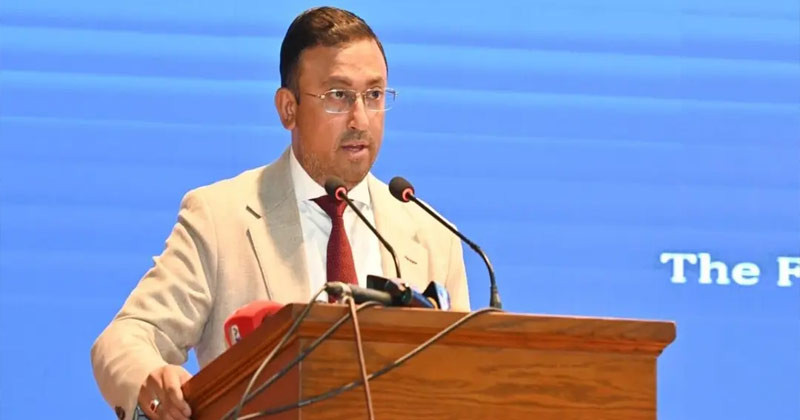
State Minister for Foreign Affairs Mr. Humayun Kabir reaffirmed Bangladesh’s firm position on the Rohingya crisis, asserting that the only permanent resolution lies in the safe, voluntary, dignified, and sustainable repatriation of the displaced population to Myanmar. Speaking on Thursday (September 10) at an international seminar at the Foreign Service Academy in Dhaka, he emphasized that repatriation involves far more than simply moving individuals across a physical border. Instead, it necessitates establishing a secure environment in their native homeland where returning Rohingyas can live with guaranteed rights, protection, and confidence.
The day-long conference, titled ‘Protracted Rohingya Crisis: In Search of a Comprehensive Approach,’ was jointly organized by Dhaka University’s Department of International Relations and Center for Genocide Studies, alongside the Foreign Service Academy and the UN Refugee Agency (UNHCR). The event convened amid growing international concern over the lingering conflict in Myanmar, declining global aid, and the expanding needs of displaced communities. Key discussions focused on formulating a holistic diplomatic strategy while addressing the ongoing domestic and international challenges that hinder the long-term resolution of this humanitarian emergency.
Highlighting the tremendous pressure on the host nation, State Minister Mr. Humayun Kabir noted that Bangladesh has provided shelter to more than one million forcibly displaced Myanmar nationals for nearly a decade. He stressed that while Bangladesh has honored its humanitarian commitment without hesitation, this obligation cannot be viewed as unlimited. The country’s economy, environment, local livelihoods, public infrastructure, and national security face severe strain. Since Bangladesh did not originate the crisis, Mr. Kabir argued that the international community must step up as active partners rather than offering passive sympathy.
Elaborating on long-term strategy, the State Minister pointed out that relief operations and financial aid, though essential for daily survival, cannot address the fundamental causes of displacement. He urged the international community to actively pursue diplomatic engagement with Myanmar to resolve the core drivers of the conflict. Sustainable repatriation requires systematic political dialogue, regional cooperation, and persistent pressure on Myanmar to build a peaceful environment. Without addressing these root causes within Myanmar, any attempts at returning the refugees will remain fragile and unsustainable over time.
The urgent need for continuous humanitarian support was a central theme, as severe funding shortfalls increasingly jeopardize relief operations in the camps. Under the revised 2026 Joint Response Plan (JRP), the United Nations and its humanitarian partners requested $710.5 million to meet the critical requirements of nearly 1.6 million individuals, including both Rohingya refugees and host community members. UN agencies warned that shrinking financial contributions threaten life-saving services, leaving essential programs in nutrition, education, sanitation, and physical security vulnerable to deep structural cuts and operational paralysis.
Further highlighting the impact of declining assistance, recent reports from the World Health Organization (WHO) revealed that critical health services are facing imminent disruption. Funding deficits are already hindering disease surveillance, infection tracking, and emergency health responses across the camps. Health sector coordination is expected to suffer significant strain starting in September, with several primary health centers and essential medical facilities risking operational shutdown by October. These disruptions pose severe health risks to the roughly 1.2 million Rohingyas residing in Bangladesh amidst escalating security concerns.
The seminar served as a broad platform for dialogue, featuring remarks from Foreign Secretary Mr. Asad Alam Siam and UNHCR Representative in Bangladesh Mr. Ivo Freijsen alongside opening and closing sessions. Across six specialized panel discussions, researchers, academics, foreign policy experts, government officials, civil society leaders, and international delegates analyzed potential solutions. Participants emphasized that addressing the protracted crisis requires synchronized efforts across political, financial, and humanitarian spheres, ensuring that both the refugees and the host communities receive the necessary protection and support until safe return becomes possible.