
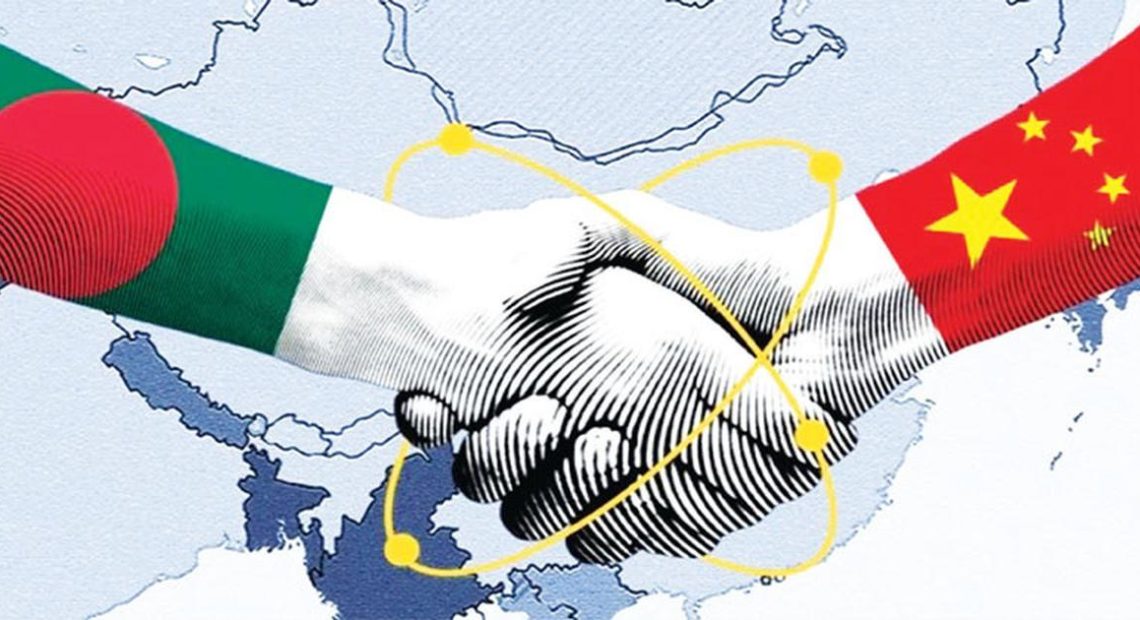
The Challenge of Maintaining Bangladesh’s Diplomatic Balance
Dr Mahroof Chowdhury
The harsh reality of international politics is that major powers rarely act towards smaller or medium-sized states without pursuing their own economic, strategic, military or political interests. Likewise, a smaller state should assess its relations with other countries not through emotion, historical affinity or temporary political benefits, but according to how effectively its own national interests are protected and advanced. The greatest diplomatic challenge is therefore to preserve and promote national interests amid competing interests. Bangladesh is facing precisely this reality.
Over the past several decades, the international system has gradually shifted from unipolarity towards multipolarity. China’s economic and technological rise, India’s growing regional influence, Russia’s strategic resurgence and Europe’s geopolitical and economic interests have changed the global balance of power. Competition over maritime security, trade routes, technology, energy, supply chains and regional influence has also intensified in the Indo-Pacific. As a result, relying on a single power for long-term security and development has become increasingly difficult.
Bangladesh’s importance stems not only from its population, market and economic potential but also from its geographical position. Its location in the Indian Ocean region, its potential connectivity between South and Southeast Asia, the resources of the Bay of Bengal and its links with regional supply chains have increased its geopolitical significance.
Thus, Bangladesh’s foreign policy is no longer simply about managing bilateral relations. It is also about creating maximum diplomatic and economic space for the country amid competing interests of major powers. This situation presents both opportunities and challenges. Multiple powers seeking closer relations with Bangladesh can create opportunities for development assistance, investment, technology, market access, security cooperation and diplomatic support. But these opportunities can become national assets only if Bangladesh can define its own priorities and manage each relationship accordingly.
The danger is that wrong decisions could turn Bangladesh into a victim or proxy of great-power rivalry. If a smaller state loses policy independence, its territory, economy or institutions may become platforms for implementing the strategies of others. Therefore, Bangladesh’s objective should not be to take sides for or against any major power, but to use their competition to advance national interests while protecting itself from their conflicts.
The realist theory of international relations views states as primarily driven by interests and security. Since there is no central global authority capable of enforcing its will on all states, each country must protect its own sovereignty and interests. Even friendly states cannot be expected to place another country’s interests above their own. Therefore, foreign policy should prioritise long-term national interests, state capacity and strategic calculations over permanent emotional attachments.
Small states generally have three options: bandwagoning with a major power, balancing against a rival power, or hedging by maintaining relations with competing powers simultaneously. For smaller and medium-sized states, avoiding excessive dependence and maintaining effective relations with multiple powers can often be safer and more beneficial. The goal is to preserve decision-making independence rather than become part of another power’s rivalry.
Bangladesh has historically attempted to follow this balanced approach. Article 25 of the Constitution reflects respect for national sovereignty and equality, non-interference in other states’ internal affairs, peaceful settlement of disputes and the principles of the UN Charter. Balanced foreign policy therefore has both constitutional and historical foundations.
Its modern form could be described as “strategic autonomy”—the ability to pursue national interests independently without fully joining any power bloc. Strategic autonomy does not mean staying distant from everyone or maintaining equal distance from all. It means judging each relationship according to national needs and ensuring that cooperation with one partner does not require damaging relations with another.
For Bangladesh, this could mean economic and technological cooperation with China, mutually beneficial relations with India, trade and technology cooperation with the United States and Europe, development partnerships with Japan, and need-based cooperation with Russia and other countries. Such multidimensional relations are not a sign of weakness; they can strengthen national capacity and policy independence. The most important condition for strategic autonomy is that Bangladesh must define its own interests. Economic growth, sovereignty, security, technological capacity, energy security, export expansion, employment, human-resource development and regional peace should form a clear framework of national priorities. A state that cannot define its priorities clearly will easily become reactive to the priorities of others.
Currently, the interests of several major powers are active around Bangladesh. China sees Bangladesh as part of its regional connectivity, trade and infrastructure strategy. India considers Bangladesh important for its security, northeastern connectivity and Bay of Bengal strategy. The United States views Bangladesh as an important partner in its broader Indo-Pacific strategy. Japan is strengthening its presence through infrastructure, development assistance and economic partnerships, including projects such as Matarbari. The European Union and others also have significant interests in Bangladesh’s market, trade, climate, labour and regional stability.
The key question is whether Bangladesh should lean excessively towards one power or strengthen its position by maintaining relations with all. Excessive economic, military, technological or diplomatic dependence on one major power can increase that power’s influence over national policy. At the same time, maintaining relations with everyone at the expense of a clear national position can also weaken strategic autonomy. Therefore, balance does not mean simply taking a middle position. It means maintaining clear positions on national interests while developing relations with different powers based on mutual benefit and national needs.
The experiences of Singapore, Vietnam and Indonesia offer useful lessons. These countries have maintained relations with major powers while seeking to preserve their national interests and decision-making independence. Singapore, for example, has developed economic and strategic relations with China, the United States, India and Japan without allowing close ties with one power to become hostility towards another. Vietnam has also sought to maintain its strategic space while engaging major powers.
These countries cannot be directly copied because their histories, political systems, economies and security environments differ from Bangladesh’s. However, they demonstrate an important principle: maintaining relations with powerful states is not the same as becoming dependent on them.
For Bangladesh, diplomatic balance should therefore mean “good relations with everyone, submission to no one.” Economic and technological cooperation with China, good-neighbour relations with India, trade and technology cooperation with the United States, development partnerships with Japan and export and investment relations with Europe can all contribute to national development.
These relationships should be viewed as complementary rather than mutually exclusive. Bangladesh should avoid any diplomatic arrangement in which cooperation with one power automatically damages relations with another.
Maintaining this balance, however, requires more than diplomatic efforts. Bangladesh needs a clear national strategic framework to assess which country’s cooperation is needed in which sector, what risks accompany each form of cooperation, which projects strengthen national capacity and which dependencies could create future strategic vulnerabilities.
If Chinese infrastructure and investment serve national interests, Bangladesh should utilise them. If access to the US market and technological cooperation strengthens the economy, those opportunities should also be pursued. If connectivity and trade with India promote economic growth, they should likewise be considered national interests. Cooperation from Japan, the European Union, South Korea and other partners should be evaluated on the basis of its contribution to productivity, technology, human resources and economic capacity—not geopolitical allegiance.
Ultimately, Bangladesh’s foreign policy should be guided neither by allegiance to any major power nor by unnecessary opposition to one. Its core principles should be independent decision-making, cooperation based on mutual interests and maximum national welfare.
Competition among major powers will continue, but Bangladesh itself must decide how to protect its interests. The country’s greatest diplomatic strength will lie in becoming not an arena or proxy of others’ rivalry, but a dignified and strategically autonomous state capable of choosing partners according to its own national interests. Such capacity will strengthen Bangladesh’s sovereignty and help secure a meaningful position for the country in the changing global order of the 21st century.
The author: Visiting Faculty Member at the University of Roehampton, UK.