

Two Election Commissioners Objected to Commission Decisions 14 Times in 10 Months
Unprecedented Differences Emerge Within India’s Election Commission
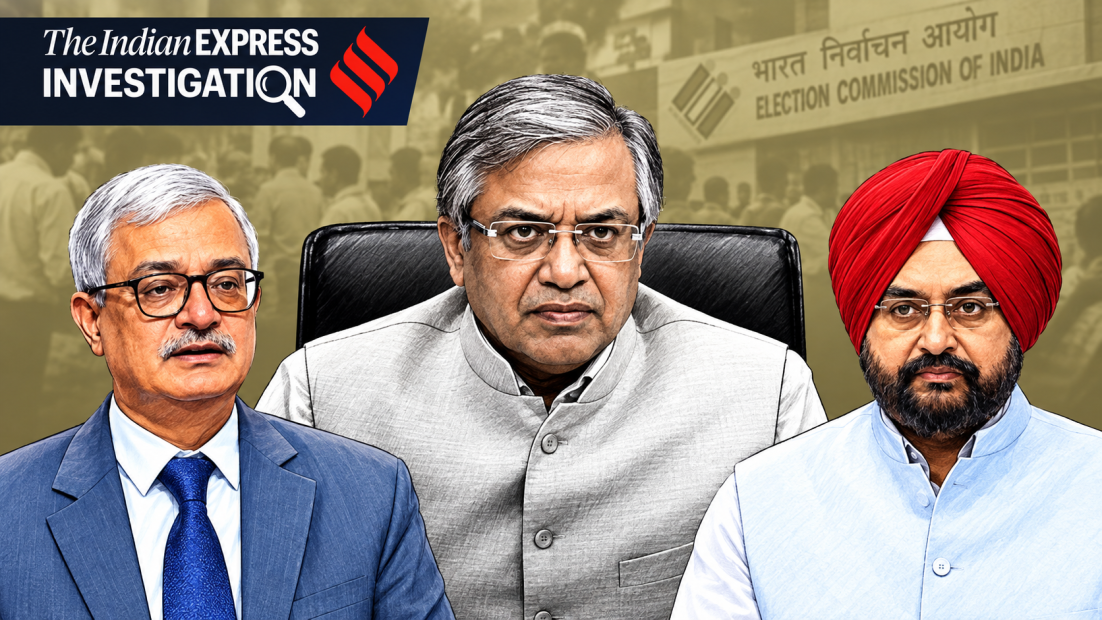
Unprecedented differences have emerged within India’s Election Commission (ECI) over several important issues, including the revision of electoral rolls. According to an investigative report by The Indian Express, Election Commissioners Sukhbir Singh Sandhu and Vivek Joshi formally raised objections at least 14 times over the past 10 months. On one day alone, they raised four objections.
According to the report, the objections mainly concerned the registration of new voters, deletion and restoration of voters’ names, appeals related to electoral rolls, and the digital management of the entire voter list. The two commissioners alleged that some decisions and instructions were issued in the name of the Election Commission without informing them. Copies of these objections were also given to Chief Election Commissioner Gyanesh Kumar.
A large part of the differences has emerged over the Special Intensive Revision (SIR) of electoral rolls. The exercise began in Bihar in June 2025 and was later expanded to 30 states and Union Territories. According to the report, more than 130 million names were excluded from the draft electoral rolls.
Objections Over Changes to Form 6
A new question was added to Form 6, which is used to register as a new voter, in July this year. The question asks whether the applicant, or their parents or grandparents, had been included in the electoral roll during an earlier SIR. Election Commissioner Vivek Joshi had noted in documents in May that the form could not be changed in this way without an amendment to the government rules. Sukhbir Singh Sandhu also agreed with him. After the change was implemented, Sandhu described it as “unauthorised and illegal” on August 13 and demanded its immediate withdrawal.
Questions Over Electoral Roll Software
The two commissioners also raised concerns about the digital management of electoral rolls. They alleged that access to the software used by local-level officials to add and remove names from electoral rolls was being restricted and that control over the system was becoming increasingly centralised in New Delhi. They also reportedly called for an audit of the system.
In one case in Goa, the names of 97 voters could not be included in the final electoral roll. The officials concerned had determined that the voters were eligible. However, according to the report, their names could not be restored because the software did not provide an option to reverse the earlier decision to delete them.
Letters to the Cabinet Secretary
Towards the end of July, after the Election Commission issued a new order concerning the administrative responsibilities of the commission and IT management, Sandhu and Joshi separately wrote to Cabinet Secretary T. V. Somanathan. They alleged that changes had been made to the allocation of responsibilities in a way that could reduce oversight of the IT infrastructure used for electoral rolls. They also alleged that the changes had been made without informing them.
The following day, the two commissioners jointly cancelled the changes, according to the report. Meanwhile, Election Commission officials said on Wednesday that although the commissioners had raised concerns and questions on various issues, decisions related to the SIR were taken unanimously by the commission. Under Article 324 of the Constitution of India, the Election Commission is a constitutional body consisting of the Chief Election Commissioner and two Election Commissioners. The differences revealed in recently published documents have therefore raised fresh questions about the management of electoral rolls and the conduct of elections in India.
Source: The Indian Express