The Rising Prices of Essential Commodities Must Be Brought Under Control
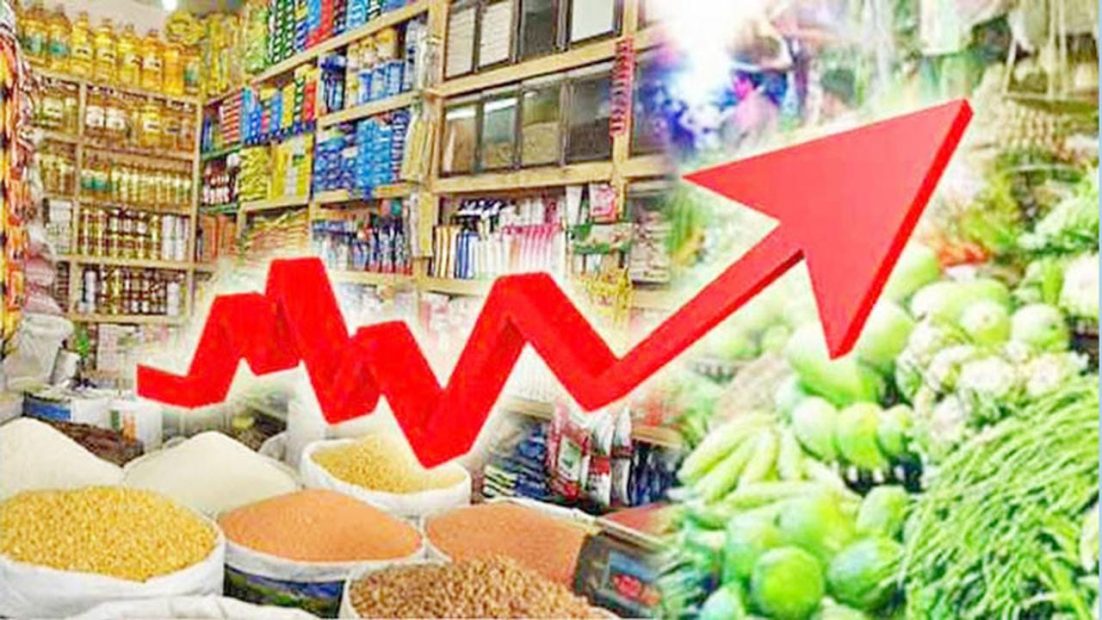
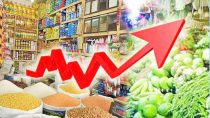
Bangladesh has been experiencing high inflation for a prolonged period, making life increasingly difficult for ordinary people. Low-income people, particularly those who live from hand to mouth, are suffering the most. A worker with a limited income is struggling to support a family of four or five.
The goods consumed by low-income people for their basic survival are generally referred to in economics as Giffen goods. These mainly include coarse rice and inexpensive clothing, which are staples for poor people. When the prices of these goods rise, people’s real income or purchasing power declines. They can no longer afford to consider buying fish, meat or better-quality clothing. To fill their stomachs or meet their basic clothing needs, they are forced to cut spending on other necessities and buy more coarse rice or inexpensive clothing than before.
In such circumstances, the conventional laws of economics do not work as expected. Normally, demand is supposed to decline when prices rise. In the case of Giffen goods, however, demand increases when prices rise and decreases when prices fall. This essentially occurs because of extreme poverty and the struggle for survival. Therefore, rising prices of essential commodities severely undermine the living standards of the poor. What, then, is the way out of this situation?
In economic terms, when inflation rises, employment is generally expected to increase in a stagnant economy, along with an increase in the money supply. However, according to official figures, Bangladesh currently has around 3.5 million unemployed people, with an unemployment rate of 4.5 percent. The ongoing fuel crisis is expected to make another 600,000 people unemployed. Thus, the conventional economic principles are not functioning as expected in Bangladesh. In other words, the country is experiencing what can be described as classical stagflation.
Classical stagflation is an unusual and complex economic situation in which high inflation and economic stagnation occur simultaneously. Under normal economic conditions, rising inflation is generally associated with lower unemployment and an expansion of business and trade. During stagflation, however, the opposite occurs, which is currently being witnessed in Bangladesh.
A look at newspapers published between September 16 and 18 this month shows that the prices of essential commodities have increased, with newspapers giving the matter considerable coverage. For example, one report stated: “Loose flour is being sold at Tk 50 per kilogramme, up from Tk 45. Loose refined flour is being sold for Tk 65-70 per kilogramme, compared with Tk 55-60 a month ago. Broiler chicken is being sold at Tk 190-200 per kilogramme, about Tk 20 higher than it was a month and a half ago. Earlier, broiler chicken had sold for Tk 140-150 per kilogramme. The prices of fish such as rohu, tilapia, pangas and pabda have also remained relatively high. Rohu weighing 2.5-3 kilogrammes is being sold for Tk 400-420 per kilogramme, while katla is being sold for Tk 420-440. Depending on size, farmed pangas is being sold for Tk 250-300, tilapia for Tk 250-280 and pabda for Tk 400-450 per kilogramme.” (The Daily Ittefaq, September 18, 2026).
Another newspaper headline read, “The price of bun bread rises while the weight of cake falls.” This is not birthday cake; rather, it refers to the type of cake sold on the streets that serves as one of the few lunch options for working people. Many labourers, low-income workers and rickshaw pullers consume such products to satisfy their hunger. When the prices of these basic food items rise, their already difficult lives become even more unbearable.
Therefore, the state must consider how the lives of low-income people can be made easier. Bakery owners, however, said that over the past one and a half to two years, the prices of flour, sugar, dalda, soybean oil, gas and other inputs had increased. Citing these higher costs, they also raised the prices of their products, in some cases by 10 to 20 percent. Bakery owners said they were compelled to increase prices to keep their businesses afloat.
Commerce Minister Khandaker Abdul Muqtadir, however, held a meeting with business leaders from the sector. Following the meeting, a decision was taken to examine the production and marketing costs of bakery products.
Data released by the Bangladesh Bureau of Statistics (BBS) on inflation in July showed that overall inflation fell slightly to 8.32 percent in July. Food inflation declined to 7.16 percent. At a programme in the capital, Finance Minister Amir Khosru Mahmud Chowdhury attributed the decline in inflation to lower prices of rice and meat in July, saying, “Rice and meat prices fell in July. Therefore, inflation declined somewhat. The information regarding the price reductions was properly verified.”
A report published in The Daily Ittefaq on June 19, 2026, showed that according to TCB data, the prices of fine varieties of rice, including Nazirshail and Miniket, had risen by Tk 2 per kilogramme the previous day to Tk 72-85, depending on quality. Medium-quality Paijam/Atash rice was selling for Tk 55-68 per kilogramme, while coarse Iri/Swarna rice was selling for Tk 52-60. A month earlier, the respective prices had been Tk 52-68 and Tk 48-60.
Regardless of how the situation is described, Bangladesh is passing through a critical period. The people who suffer the most during such a crisis are ordinary working people. Although the government is taking various initiatives to provide relief to low-income people, one manifestation of these efforts is the sale of products through the Trading Corporation of Bangladesh (TCB).
TCB products, however, have remained unavailable for a long period. In the market, it can be observed that rice prices remain high, while there is a significant disparity between rice prices and the prices of paddy. Even when farmers do not receive Tk 25 per kilogramme for their paddy, the rice produced from that paddy is being sold at nearly twice the price per kilogramme.
In Bangladesh, one of the groups involved in price increases is what is commonly referred to as syndicates.
Working people want relief from the rising prices of essential commodities. Many of them say that even if their incomes do not increase, they at least want a life in which they can afford basic food and necessities. The state must succeed in ensuring this and continue its efforts in the future.
Writer: A banker and author.