Hasina’s Return Announcement: A Plot to Destabilise the Country
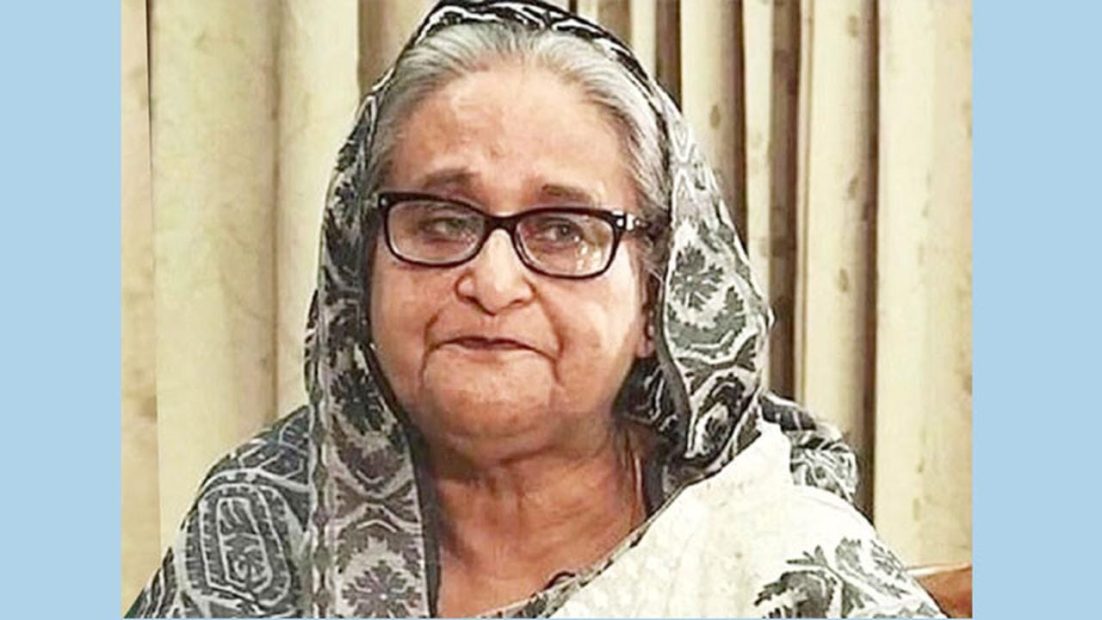
Sheikh Hasina, who was ousted in the 2024 mass uprising and fled to India, announced that she would return to Bangladesh in December and face the law. The announcement generated considerable excitement in the political arena. Government ministers and lawyers said she would be arrested at the airport and face the death sentence handed down by the court.
Leaders and activists of the banned Awami League and its affiliated organisations soon became energised. Some activists hiding in the country brought out flash processions early in the morning or after Friday prayers before quickly disappearing. Those who fled abroad have remained active on social media, conducting campaigns and propaganda. They appear to believe that Hasina will return, bring down the government and regain power.
Long before the announcement, both the interim government and the current government had sent several letters to India seeking Hasina’s return. India has not responded positively. If Hasina genuinely wanted to return, she could have done so when the government requested it and faced the law. Why did she announce her return herself instead?
Political analysts have offered several explanations. Some describe the announcement as a stunt to energise her supporters. Others say that by announcing her return while remaining in a safe place, Hasina has put her supporters in greater danger. Encouraged by the announcement, those hiding in the country may take part in processions and face arrest. Some also believe that if she does not actually return, Awami League leaders and activists could become deeply disappointed.
Two
Awami League supporters on social media have been celebrating Hasina’s announced return. They are posting videos and messages, attacking the government and issuing threats. Their main target is now the BNP government, whereas they previously focused more on the interim government and the NCP.
Journalists sympathetic to the Awami League are also appearing on television talk shows and promoting a narrative for the party’s rehabilitation. Many of the same journalists criticised the Awami League after the mass uprising. Now, with an elected government in place, they appear to have regained confidence and are seeking to restore the Awami League and Hasina to political relevance.
The most alarming issue is that some of these voices have avoided discussing the violence during the mass uprising. Law enforcement agencies loyal to Hasina were accused of firing on students and members of the public, resulting in large numbers of deaths, including children. Instead, some commentators on YouTube and social media have claimed that the shootings were carried out by forces other than law enforcement agencies or Awami League and Jubo League cadres.
Some have also expressed hope over Hasina’s return, claiming on social media that the government is frightened or its position is collapsing. Pro BNP journalists have meanwhile criticised television channels that they believe remain influenced by people associated with the former regime.
Three
Hasina’s return announcement has generated enthusiasm among leaders and activists of the banned Awami League and its affiliated organisations. Supporters who remain inside the police and administration are also alleged to be sympathetic to her.
A leaked phone conversation involving the withdrawn officer in charge of Cantonment Police Station recently circulated on social media. He was heard saying that the Awami League would return and that nothing would happen once it did. He also reportedly said the police were weak and that Hasina should have returned in December because the police would not be able to stop her.
Observers say the conversation may reflect the views of supporters of the former regime who remain within the police and administration.
Questions have also been raised over the flash procession held by the Awami League after Friday prayers in Gulshan 1 on September 11. A September 19 report in Jugantor said protesters received assistance from several members of Gulshan police. Screenshots of secret Awami League chat groups reportedly showed that the programme had been finalised the previous night and that assurances had been received from police members. When the procession took place, no police officers or responsible officials were reportedly present on the streets.
Similar allegations have emerged elsewhere in Dhaka and across the country. Seven or eight cocktail explosions were reported in different parts of the capital on September 18. Observers view such incidents as attempts to create instability ahead of Hasina’s announced return.
A perception has consequently emerged that the government has yet to bring the administration and law enforcement agencies fully under its control. Observers argue that officials associated with the former regime should have been removed from the police within three months of the BNP government taking office, with new officers recruited through a special BCS examination. Instead, many former regime officials have reportedly only been transferred.
Four
The activities of banned Awami League leaders and activists following Hasina’s announcement, the activities of its online supporters and threats by leaders of the Jamaat e Islami led alliance to bring down the government appear to be converging, raising concerns about an attempt to create instability.
On September 19, ahead of the 11 party alliance’s long march towards Rangpur, Jamaat e Islami Ameer Dr Shafiqur Rahman said their eight point demand could become a single point demand.
NCP Convener Nahid Islam said Prime Minister Tarique Rahman would have to decide how he would leave office, whether by helicopter or by resigning with dignity.
Yet the alliance leaders have not spoken about Hasina’s return or the Awami League’s alleged violent activities. This raises questions about whether they want the party, which was removed from politics through the mass uprising, to return.
Political analysts say the government and opposition may disagree on various issues and that opposition parties have the right to pursue lawful and peaceful movements. However, they argue that there should be political unity against the Awami League’s return.
If the government falls and the Awami League is rehabilitated in politics, questions will arise over whether the demands behind the current movements, including implementation of the July Charter referendum result, can be fulfilled.
The government must recognise that the road ahead is becoming increasingly difficult. Those allegedly working to rehabilitate the Awami League while occupying important positions in the administration and police should be identified and removed. The police and administration must be freed from the influence of the former regime.
The government should also engage the opposition in dialogue on how to address the alleged activities of the Awami League and resolve outstanding political demands. Political consensus is needed on this issue.
As the saying goes, a hidden snake can strike at any time.