Long Marches Continue Amid Fuel Crisis, Political Tensions Cause Public Suffering, Uncertainty Grows Over Local Government Elections
Political Tensions Intensify as Opposition Non-Cooperation Disrupts Daily Life
In a democratic system, one of the main responsibilities of the opposition is to highlight the government’s mistakes, raise public demands in Parliament and ensure effective oversight. Opposing government decisions is part of the opposition’s political rights, while active participation in parliamentary proceedings is also an important responsibility. However, political distance between the government and opposition is increasing over repeated parliamentary walkouts, committee meeting boycotts and successive street programmes, affecting public life, according to political analysts.
Recently, several walkouts, committee meeting boycotts and long marches by the 11-party alliance led by Jamaat-e-Islami have drawn criticism. On September 19, the alliance held a long march from Dhaka to Rangpur and earlier, on September 5, held a Dhaka-Chattogram long march. The alliance claims its views are not being properly considered regarding important reforms, the referendum verdict and legislation. The government, however, says that despite opportunities to express their views in Parliament, the opposition is giving greater importance to street programmes.
Analysts say political differences are a normal part of democracy. Opposition to government decisions and peaceful programmes to press for public demands are democratic rights. However, there is a difference between opposition and non-cooperation. If effective parliamentary opposition is not coordinated with peaceful political programmes outside Parliament, political tensions may increase and ordinary people may suffer.
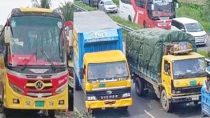
Tuhin Mia, who has worked in passenger services at Gabtoli Bus Terminal for 22 years, expressed frustration over the movements and long marches. He said, “Nobody cares about the poor’s livelihood. There are movements every two days, and now the long march has started again. On the day of a movement, there are hardly any people on the roads, and even before and after the programme, fewer people move around. We have to stay without food with our families.”
Several walkouts and boycotts of parliamentary activities by the Jamaat-led opposition have also occurred this year. On August 30, two opposition members walked out of a meeting of the Parliamentary Standing Committee on the Ministry of Home Affairs over the ‘Enforced Disappearance Prevention and Redress Bill, 2026’.
Professor Dr Mohammad Almozaddedi Alfechani, Pro-Vice Chancellor (Administration) of Dhaka University, said opposition and non-cooperation are not the same. “If the opposition played a constructive and responsible role, the people would benefit more,” he said. According to him, the opposition may walk out if a decision of national importance goes against public interests. However, repeated walkouts over minor issues can damage the parliamentary environment. Since Parliament provides an opportunity to discuss and resolve issues, repeated walkouts are not appropriate.
On September 21, BNP Acting Secretary General Ruhul Kabir Rizvi also questioned the nature of political programmes. Speaking at a rally in Nayapaltan, he said the opposition could hold democratic programmes, but if such programmes create instability or public suffering, the concerned party must take responsibility.
He also questioned the necessity of a long march from Dhaka to Rangpur with around 450 vehicles, although, according to their estimate, the number was more than 1,000. He questioned whether the alliance had no leaders and activists in Rangpur. He said that during a fuel crisis, the fuel expenditure resulting from such a large convoy should also be considered when assessing the social and economic impact of political programmes.
Jamaat, however, says ordinary people are under pressure because of the fuel crisis, rising prices of essential commodities and other crises, and that its programmes are intended to protest those problems. Thus, the two sides have clear differences over the necessity of political programmes and their social impact.
Tanvir Ahmed Robin, Member Secretary of Dhaka South Metropolitan BNP, criticised the opposition’s political activities. He said some recent activities of the opposition are questionable. According to him, while recent activities of the banned Awami League have increased, the opposition is holding successive programmes that, on the one hand, support the absconding “fascists” in creating anarchy and, on the other, attempt to worsen the country’s situation.
Mr. Robin said the opposition has become involved in a “dirty game” of trying to prove the BNP government unsuccessful. “They have forgotten that BNP is a party of the masses. The more you try to keep people away, the closer they will come to the nationalist ideology,” he said.
He said the global situation has created pressure on fuel prices and the supply system. At such a time, the government is trying to provide relief by controlling the prices of fuel and essential commodities. He questioned how politically effective long road journeys and provocative statements made during them could be. He said the opposition should present its views in Parliament regarding government mistakes, shortcomings or important decisions and seek to resolve differences through parliamentary discussion and political dialogue.
Police said peaceful programmes do not create much difficulty for them. However, when a political party organises a large-scale programme, forces have to be collected from different parts of the city and deployed at the venue. As a result, disorderly situations can develop in the areas from which the forces are brought.
Professor Alfechani said the opposition should allow the government to work and play a cooperative role for the welfare of the country and its people. He said the opposition’s non-cooperative attitude had created an opportunity for fascism to rise again. He said the current crisis is also part of a global crisis and cannot be resolved overnight. Problems created by the prolonged political crisis also cannot be resolved by any single individual or party.
According to him, collective efforts, political consensus and responsible roles in the national interest are necessary. He stressed putting national interests above partisan interests. He also said not much time had passed since the current government took office, so it is necessary to consider how reasonable it is to comprehensively evaluate a government within such a short period. While the government needs time to overcome long-standing crises, cooperation from all political sides is also necessary.
Meanwhile, political observers believe the tensions in national politics could also affect local government elections. Institutions such as union parishads, upazila parishads, municipalities and city corporations are directly connected with people’s daily lives and civic services. Political party participation, candidate selection, the electoral environment and the law-and-order situation will therefore be important. If a major political party boycotts an election, questions may arise over participation and representation.
The Election Commission says that amid pressure on fuel supplies, inflation, industrial production and communication, political parties should consider minimising public suffering when organising large-scale programmes.
Both the government and opposition are part of the country’s democratic framework. Political differences and programmes will continue, but their burden should not unnecessarily fall on the lives and livelihoods of ordinary people, while parliamentary democracy must remain effective.