Lives Waterlogged in Jashore’s Bhobodoho as Government Officials Neglect Crisis
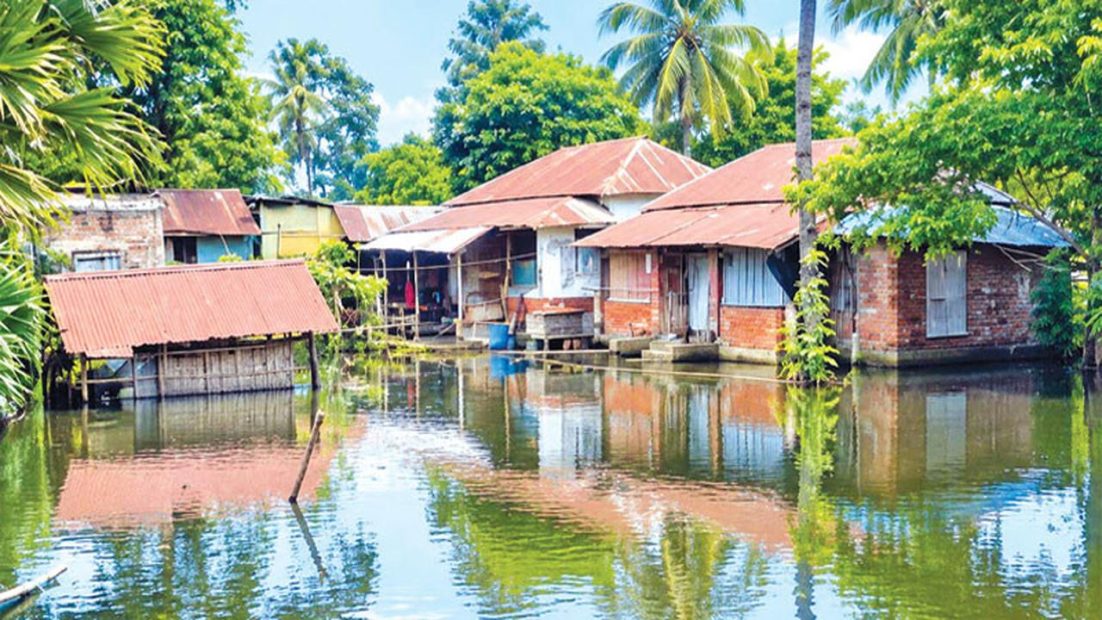
Water is everywhere–submerging yards, roads, and farmlands alike. People spend their days struggling against the water, navigating via boats, bamboo bridges, or wading through chest-deep floods. Though accustomed to this life year after year, Shibali Das, a housewife from Dumurtola village in Abhaynagar, Jashore, refuses to accept this state of affairs in the sorrow-stricken Bhabadah region.
“We have become aquatic creatures, living alongside snakes and frogs,” she said with a mixture of anger and despair. “The government and bureaucrats together turned us into aquatic animals. We do not want to live like this.”
Shibali Das’s statement reflects not just one individual’s anger, but the long-standing helplessness of the waterlogged residents of Bhabadah. Waterlogging has become a permanent reality for them. Every monsoon brings heightened suffering–delayed drainage causes diseases, damages crops, and disrupts education and daily transportation. For many families, home turns into an isolated island during these times.
Three months after the onset of waterlogging in Bhabadah, the water level has yet to recede. Consequently, nearly 200,000 residents across Abhaynagar, Manirampur, and Keshabpur upazilas remain stranded in floodwaters. Instead of eating three meals a day, they struggle to manage cooking even once.
The 21-vent, 9-vent, and 6-vent switch gates constructed over the Sri River in Bhabadah, located in Abhaynagar upazila of Jashore, were once the largest project during the East Pakistan era. Over time, however, the structure turned into a source of suffering for the locals. Despite a recent project worth 140 crore BDT supervised by the Bangladesh Army, residents have not been relieved from the persistent waterlogging.
Shipada Biswas, a schoolteacher from Dumurtola village in Abhaynagar, stated that out of 155 houses in their village, all except six have yards submerged under two to three feet of water. With just light rainfall, residents are forced to leave their homes for higher ground.
Bithi Rani, a housewife from Sujatpur village in Manirampur, said, “We have nowhere to stay. Our cooking, eating, and living are all happening on the road.”
Iqbal Kabir Zahid, Chief Advisor of the Bhabadah Water Drainage Movement Committee, remarked, “The re-excavated river has silted up again, and the embankment constructed was not completely removed. As a result, the Water Development Board’s irresponsibility is primarily to blame for this emerging situation.”
Palash Kumar Banerjee, Executive Engineer of the Jashore Water Development Board, said, “About 73 percent of the project work has already been completed. Locations where water flow is obstructed are being identified during implementation, and necessary measures are being taken. Once the river excavation is fully complete, water flow will normalize, and waterlogging will decrease significantly. We expect that once the project yields results, there will be no waterlogging issue in this region for the next five to seven years.”