Proper inputs, training and guidance needed to make peanuts and foxtail millet profitable crops in five districts of Greater Rangpur
Farmers’ Fortunes Could Change with Peanut Cultivation in Rangpur’s Char Areas
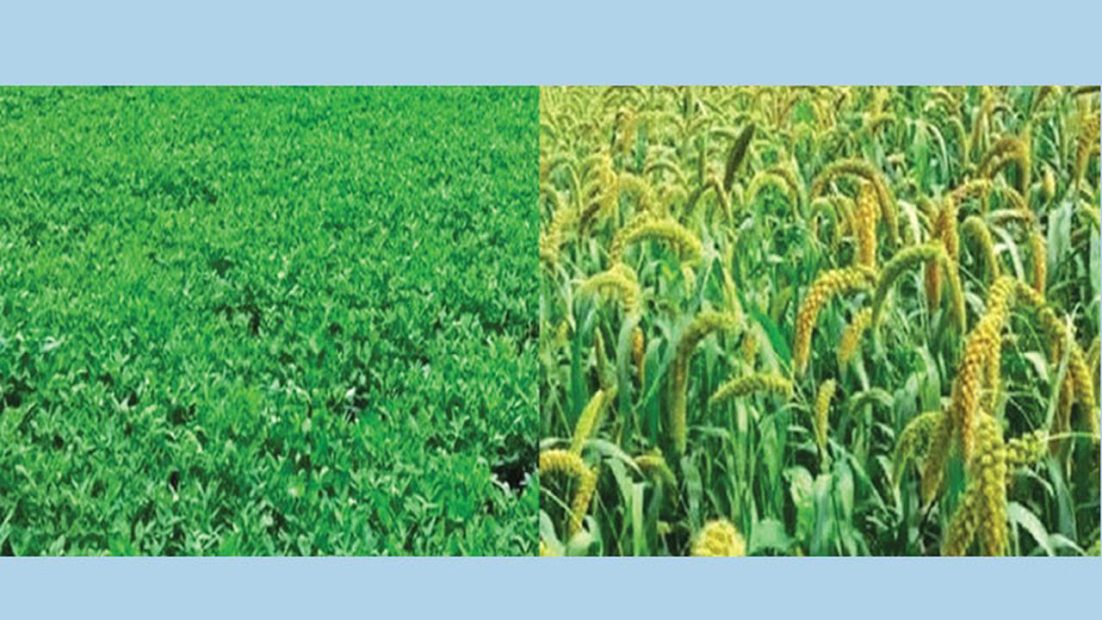
Farmers in the riverine char areas of Greater Rangpur are turning to peanut and foxtail millet cultivation, hoping to improve their livelihoods. The numerous chars that have emerged along the rivers flowing through the region’s five districts are highly suitable for cultivating the two crops. With good yields reported in different chars, farmers are now dreaming of making peanuts and foxtail millet major cash crops. They believe proper guidance, advice and training could further improve their prospects.
Greater Rangpur comprises Rangpur, Nilphamari, Lalmonirhat, Kurigram and Gaibandha districts. The Teesta, Dharla, Brahmaputra, Dudhkumar, Ghaghat, Jamuneshwari, Karatoya and Ghirnai rivers flow through these districts.
Every year, thousands of hectares of cropland and homesteads are washed away by river erosion. People living along the rivers are repeatedly affected by erosion and floods. At the same time, silt carried downstream by strong currents is gradually filling riverbeds, while changes in river courses are creating numerous chars. These silt-rich lands are highly suitable for growing rabi crops, giving riverbank communities new hope.
A visit to different char areas in Rangpur, Nilphamari, Lalmonirhat, Gaibandha and Kurigram found numerous chars emerging along the Teesta and other rivers. In Rangpur, Nilphamari and Lalmonirhat, chars have emerged along the Teesta, Jamuneshwari, Ghaghat and Karatoya rivers; in Kurigram, along the Dharla, Brahmaputra and Dudhkumar; and in Gaibandha, along the Teesta, Brahmaputra and Ghaghat.
Many of these chars are now covered in green fields. Farmers are cultivating peanuts, foxtail millet, sweet potatoes, sweet pumpkins, maize and various other crops. The extensive peanut and foxtail millet fields in Lalmonirhat and Kurigram appear to have spread a green carpet across the chars, with peanut plants swaying in the breeze.
Several farmers in the char areas said peanut and foxtail millet cultivation is relatively easy, inexpensive and requires little effort. Floods leave fertile silt on the Teesta chars, making them suitable for peanuts, foxtail millet, watermelons, sweet pumpkins and other rabi crops. As these crops provide good yields and comparatively higher returns, farmers are increasingly turning to peanut and foxtail millet cultivation.
Farmers have already begun preparing land for peanut cultivation. They said the char areas of Greater Rangpur could become an important contributor to the agricultural economy if the government’s agriculture department provides farmers with proper training, advice and necessary inputs.
According to the Department of Agricultural Extension in Kaunia upazila, peanuts have been cultivated on around 700 hectares of land in the current season, including approximately 550 hectares in the Teesta char areas.
Peanut is generally an oilseed crop and grows well in sandy, loamy and clay-loam soils. As a result, it is being widely cultivated in the chars and river-adjacent areas of the Teesta, Dharla and Dudhkumar rivers.
According to the upazila agriculture department, BARI Chinabadam-7 and BARI Chinabadam-8 are the most widely cultivated varieties in the char areas. BINA-4 and BG-2 also produce good yields. Peanuts generally mature within 120 to 150 days of sowing. Peanuts sown at the beginning of the season have already been harvested.
Several farmers cultivating peanuts in the chars said they usually plant peanuts after harvesting early potato varieties at the beginning of the season. The cost of cultivation is around Tk 6,000 to Tk 7,500 per bigha from sowing to harvesting. Once planted, the crop requires little care compared with other crops, and no chemical fertiliser is needed. Apart from labour costs for sowing and harvesting, there are virtually no other major expenses.
With an average yield, farmers get around eight to 10 maunds of peanuts per bigha, while good yields can reach 10 to 12 maunds. Peanuts are currently being sold at Tk 2,500 to Tk 2,800 per maund in the market. After deducting all expenses, farmers can make a profit of around Tk 15,000 to Tk 17,000 per bigha. Farmers describe it as a low-cost and relatively hassle-free crop.
Peanut seeds are generally sown from Ashwin to Kartik, while foxtail millet is sown from Agrahayan to Magh in the Bengali calendar.
Peanuts are being cultivated extensively not only in the char areas of Kaunia but also in Domar and Dimla of Nilphamari; Kaliganj, Aditmari and Patgram of Lalmonirhat; Rajarhat, Ulipur and Chilmari of Kurigram; Gangachara, Kaunia and Pirgachha of Rangpur; and Sadullapur, Saghata and Sundarganj of Gaibandha.
During a field visit to various char areas in Gaddimari, Singimari, Sindurna and Dawabari unions of Hatibandha upazila in Lalmonirhat, it was found that many areas once affected by the Teesta’s destructive erosion have now turned into farmland. Various crops are being cultivated on the silt-rich chars, including maize, tomatoes, peanuts, watermelons, potatoes, eggplants, chillies, onions, garlic, sweet potatoes, sweet pumpkins, jute and different vegetables and rabi crops.
The chars emerging from the river have brought some relief and hope to landless people living in the area.
Farmer Mr. Mofizul, who was tending a vegetable field, told Inqilab that he cultivated peanuts on four bighas of land last year at a cost of Tk 25,000 to Tk 26,000. He harvested nine to 10 maunds per bigha. Peanuts were sold at Tk 2,400 to Tk 2,600 per maund last year.
He said he plans to cultivate peanuts on twice as much land this year because the crop provides a good yield with relatively little labour and expense. Many other farmers are also preparing to expand peanut cultivation this year.
Farmers said they would become more interested in and skilled at peanut cultivation if riverbank and char farmers were provided with proper training, guidance and necessary inputs. They believe this would help establish peanuts as one of the major cash crops of the char areas.