Dengue Breeding Grounds Spread Across Dhaka
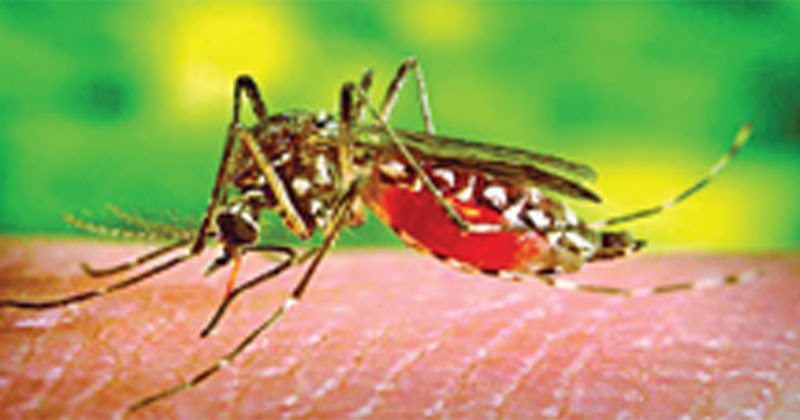
Dhaka’s two city corporations have spent around Tk 825 crore on mosquito control over the past 11 years. However, they have failed to prevent the recurring spread of dengue, a disease transmitted by Aedes mosquitoes. Fogging, larviciding and cleaning drives are being conducted every year. Yet, questions remain over whether such large spending is playing any effective role in permanently destroying Aedes breeding grounds.
The risk of Aedes-borne dengue is now widespread across both city corporation areas of Dhaka. From drains and damp places to narrow lanes around homes and flower pots, dengue risks are everywhere. Two more people died of dengue in the past 24 hours, while another 955 were hospitalised.
Dhaka has thousands of high-rise buildings. Narrow gaps often exist between these buildings where daylight barely reaches. Rainwater remains trapped there, while broken containers, plastic boxes and pieces of construction materials are scattered around. These places are not easily visible from outside. Yet such dark and damp spaces are becoming dangerous breeding grounds for Aedes mosquitoes.
Recently, mosquito-control workers from Dhaka North City Corporation (DNCC) found Aedes larvae in stagnant water at a place in New Colony in Lalmatia. Larvae were also found in water accumulated inside and around a small room beside a building. According to the workers, the highest number of larvae are being found in the gaps between two buildings and around makeshift rooms used by security guards or caretakers. Similar scenes can be seen across much of Old Dhaka.
According to the Directorate General of Health Services (DGHS) dengue update issued on Friday, two people died of dengue in the country in the previous 24 hours. This brought the number of dengue deaths in September alone to 114.
According to DGHS data, a total of 211 people have died of dengue in the country so far this year. Monthly figures show that two people died in January, two in February, one in May, 13 in June, 36 in July and 43 in August. However, the situation has deteriorated sharply since the beginning of September. As many as 114 people have died of dengue in the first 25 days of September.
The DGHS said 955 new dengue patients were admitted to hospitals in the past 24 hours. Of them, 76 were admitted to hospitals in Dhaka North City Corporation areas and 133 in Dhaka South City Corporation areas. Another 241 patients were admitted to hospitals outside the Dhaka city corporation areas.
Among the divisions outside Dhaka, Chattogram recorded the highest number of new hospital admissions, with 246 patients. In addition, 130 patients were admitted in Khulna, 44 in Barishal, 37 in Mymensingh, 44 in Rangpur and four in Sylhet. The DGHS update did not include data for Rajshahi division.
According to DGHS figures, a total of 70,104 dengue patients were admitted to hospitals across the country from January 1 to September 25 this year. Of them, 64,827 recovered and were discharged. Data analysis shows that 58.4 percent of the total dengue patients were male and 41.6 percent were female. The pattern is reversed among dengue deaths, with women accounting for 53.3 percent and men 46.7 percent of the deaths.
A field visit found that Aedes mosquitoes are breeding in stagnant water in damp spaces between buildings across Dhaka, as well as in flower pots and containers kept on home balconies. A survey by the two Dhaka city corporations found the highest share of larvae, 35.23 percent, in high-rise buildings. Stagnant floor water, buckets and plastic drums were also identified as major breeding grounds.
The dengue risk is not limited to the spaces between buildings. It is now also hidden inside people’s homes. Flower pots on balconies, trays under pots, vases, buckets, drums, air-conditioner trays, corners of rooftops and unused water containers can all become breeding sites when even a small amount of water accumulates.
A recent survey by Dhaka South City Corporation (DSCC) identified high-rise buildings as one of the major breeding grounds for Aedes mosquitoes. The survey found that 35.23 percent of larvae were found in high-rise buildings, followed by single-family houses and construction sites.
In terms of breeding sites, 12.26 percent of larvae were found in stagnant floor water, 10.34 percent in buckets and 8.89 percent in plastic drums.
According to doctors, dengue in the capital is no longer only a seasonal problem. It has become a structural urban health crisis. They say dengue transmission can be reduced significantly if specific breeding sites are regularly monitored and destroyed.
Flower pots, unused water tanks, air-conditioner trays and basements of buildings under construction have also been identified as highly risky places. This means Aedes mosquitoes do not need a large body of water to breed. Even a small amount of water left in a container on a home balcony can be enough. The risk can also remain even after the water is thrown away if the container is not properly cleaned.
Experts say Aedes eggs can remain attached to the surface of a container even after the water is removed. Therefore, simply throwing away the water does not completely eliminate the risk. The container must be thoroughly scrubbed and cleaned.
The dengue outbreak is rising rapidly again this year. According to figures available up to September 23, 67,367 dengue patients had been admitted to hospitals across the country and 201 had died. The total number of infections had already surpassed the full-year figure for 2022. However, the number of deaths was still somewhat lower than in previous years.
According to DGHS data, 102,861 people were infected with dengue in 2025 and 413 died. Before the end of September this year, the number of infections had already reached around 65.50 percent of last year’s total, while the number of deaths had reached 48.70 percent of the 2025 figure.
The situation becomes clearer when the figures from previous years are considered. In 2024, 101,214 people were infected and 575 died. In 2023, a record 321,179 people were infected and 1,705 died. In 2022, 62,382 people were infected and 281 died. This means that by the middle of September this year, the number of dengue cases had already exceeded the full-year 2022 figure by around 8 percent.
Entomologist Professor Kabirul Bashar of the Department of Zoology at Jahangirnagar University said the main task in controlling dengue is to destroy Aedes breeding sites and maintain regular surveillance.
“Just identifying patients and preparing for treatment cannot stop the main source of infection. In metropolitan areas, dengue is no longer only a seasonal problem; it has become a structural urban health crisis. If specific breeding sources can be destroyed through regular monitoring, dengue transmission can be reduced significantly.”
Dr Mushtaq Hossain, former chief scientific officer of the Institute of Epidemiology, Disease Control and Research (IEDCR) and a public health expert, said the fight against dengue must begin not only in hospitals but also from people’s homes, schools, workplaces and local communities.
“The fight against dengue must begin not only in hospitals, but also from people’s homes, schools, workplaces and local communities. If we see rain only as a natural event responsible for dengue, the crisis will deepen. But if preventive measures are strengthened after rainfall, the country can gradually be freed from this annual suffering caused by dengue.”
Experts have said the two city corporations have failed to control Aedes mosquitoes. They allege that although the corporations show expenditure on mosquito control, more money is being misappropriated for personal benefit. However, citizens should not rely only on the city corporations to control dengue. They also have responsibilities.
At the same time, it would not be appropriate to place all responsibility for Aedes mosquitoes on ordinary citizens. The responsibilities of both sides need to be clearly defined, with regular monitoring ensured.
Landlords and residents are responsible for preventing water from accumulating inside homes or in surrounding areas. Flower-pot trays, air-conditioner drains, buckets, drums and unused containers should be cleaned at least once a week.
On the other hand, the city corporations are responsible for regularly cleaning roads, drains, public and private open spaces, and major waste-disposal sites.