
Acute Urea Shortage Hits Cox’s Bazar as Fertiliser Smuggling to Myanmar Continues
The fertiliser crisis in Cox’s Bazar shows no sign of ending. Farmers in different upazilas of the district are frustrated and angry as they are unable to obtain the required fertiliser at government-fixed prices. The shortage of urea fertiliser has become particularly severe in Ramu, Ukhiya and Teknaf.
Farmers allege that the situation has become complicated due to irregularities in allocation and distribution, an artificial shortage created by a syndicate, and the smuggling of fertiliser to Myanmar through the border.
The Department of Agricultural Extension (DAE) claims that there is no shortage of fertiliser in the district. It says allocations have been made according to demand. However, the situation on the ground tells a different story.
In many areas, fertiliser is unavailable even when farmers are willing to pay more than the government-fixed price. In some places, farmers and dealers have even been involved in scuffles and clashes over the purchase of fertiliser.
Cox’s Bazar’s minister in charge, Saching Pru Jerry, warned all concerned about fertiliser smuggling at a meeting held at the district administration conference room last Thursday. He said the government was supplying sufficient fertiliser.
However, if there were any discrepancies in allocation and distribution, they must be stopped immediately. He instructed the concerned authorities to remain alert so that fertiliser meant for farmers does not get smuggled or illegally diverted elsewhere.
Those concerned allege that fertiliser allocated for Cox’s Bazar is being illegally smuggled to Myanmar through several border points. There are also allegations that some members and activists of an influential political party are involved in the smuggling through several border points in Ukhiya and Teknaf.
Ukhiya BNP leader Advocate Rezaul Karim expressed his anger over the issue and said, “If some leaders of the ruling party are involved in fertiliser smuggling, then what is there left to say about others?”
The Agriculture Department said the dealerships of three dealers in the district have already been cancelled over allegations of irregularities in fertiliser distribution. It has also demanded that district seals be used on fertiliser sacks allocated for Cox’s Bazar. According to concerned officials, this could somewhat reduce the opportunity to bring fertiliser allocated for other districts into Cox’s Bazar and smuggle it across the border.
A meeting was held at the district administration conference room last Thursday to discuss the fertiliser crisis and distribution system. Cox’s Bazar-3 MP Lutfur Rahman Kajal suggested that fertiliser should be allocated based on the number of farmers rather than on a union-by-union basis.
Agriculture officials said arrangements had been made to allocate fertiliser under farmer cards for around 23,000 farmers across the district’s 10 upazilas.
The meeting also warned the concerned authorities to prevent fertiliser smuggling. It was said that although there was no overall shortage of fertiliser, it must be ensured that there is no irregularity or misuse in allocation and distribution.
Dr Bimal Kumar Pramanik, assistant director of the Department of Agricultural Extension, said that against a demand for 4,075 metric tonnes of fertiliser for the Boro season in September of the 2026-27 fiscal year, the same amount had been allocated.
The allocation included 2,343 metric tonnes of urea, 475 tonnes of TSP, 889 tonnes of DAP and 368 tonnes of MOP. He also said that as of last Thursday, a total of 1,787 metric tonnes of the four types of fertiliser were stored in district warehouses.
According to Agriculture Department statistics, there should be no fertiliser shortage in the district. However, locals said farmers and dealers were involved in scuffles and even clashes while trying to collect fertiliser in Gorjonia and Kachhapia of Ramu.
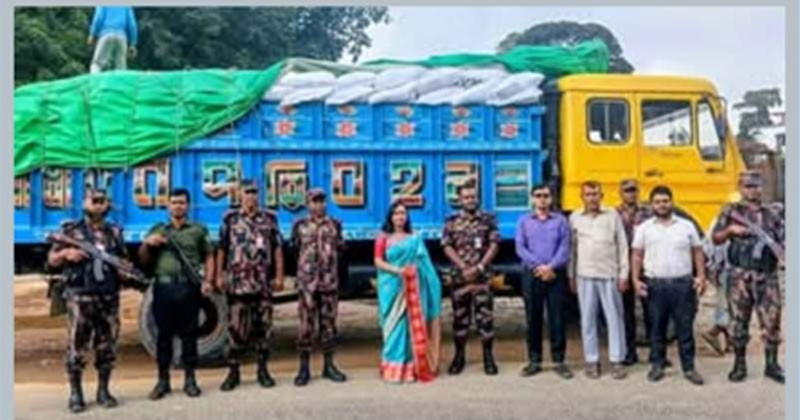
There are also allegations of regular smuggling of urea through several border routes in Ukhiya and Teknaf. Although law enforcement agencies have seized fertiliser at different times, the smuggling has not stopped completely, increasing frustration among farmers.
Several farmers from Jhilongjha and PM Khali said the government-fixed price of urea is Tk 27 per kilogram, or Tk 1,350 for a 50-kilogram sack. However, they have to buy urea from the market at Tk 30 to Tk 33 per kilogram. A 50-kilogram sack is being sold for Tk 1,500 to Tk 1,600.
Farmers said the same situation exists with DAP and MOP fertilisers. They have to buy them at prices higher than the government-fixed rates. In many areas, even after paying higher prices, farmers cannot obtain the required amount of fertiliser.
Farmers Abul Kashem and Jasim Uddin of Gorjonia in Ramu said it is extremely important to apply fertiliser to the fields at the right time. However, dealers are supplying only small quantities compared to their needs.
They said, “We are being told, ‘Take 5 kilograms.’” They fear that rice production may decline this year if they cannot apply fertiliser according to their requirements.
Discussions with officials, farmers and dealers to identify the causes of the fertiliser crisis revealed that there are also shortcomings in assessing the district’s actual fertiliser demand.
Besides regular crops monitored by the Agriculture Department, significant amounts of fertiliser are also used for tobacco cultivation, fish farms, betel-leaf gardens, rooftop gardens and fruit and forest plantations by the Forest Department in different parts of Cox’s Bazar.
However, those concerned allege that the fertiliser demand for these sectors is not properly included in calculations, creating a gap between actual demand and allocation. Transport costs, limitations in the distribution system, the tendency to stockpile fertiliser amid rumours, and allegations of smuggling through the border are also contributing to the crisis at the field level.
Nurul Alam, general secretary of the Cox’s Bazar district branch of the Bangladesh Fertiliser Association (BFA), said transporting fertiliser from Chattogram to different upazilas of the district costs Tk 60 to Tk 140 per 50-kilogram sack. He said the cost could be reduced to Tk 20 to Tk 50 if BCIC buffer warehouses were established.
He said the distance from the Chattogram fertiliser factory to Teknaf is more than 200 kilometres. Dealers have to load and unload fertiliser up to four times when transporting it to Kutubdia. They also have to bear warehouse rent, employee salaries, electricity bills, bank interest and other expenses.
However, dealers are still operating their businesses with a commission of only Tk 2 per kilogram, which was fixed in 2009. As a result, many dealers are facing losses.
According to him, BCIC buffer warehouses should be established in Cox’s Bazar quickly, and dealers’ commissions should be revised based on transportation distance.
The Upazila Department of Agricultural Extension has appointed tag officers to monitor fertiliser sales by dealers. However, farmers have questioned the effectiveness of the system at the field level.
They allege that even when complaints are made against dealers for selling fertiliser at higher prices, effective action is not always taken. There are also allegations that some farmers are turned away without fertiliser when they protest against higher prices.
This is increasing tensions between farmers and dealers and creating unwanted situations in different areas. Regarding the fertiliser shortage and smuggling allegations, Dr Bimal Kumar Pramanik, deputy director of the Department of Agricultural Extension in Cox’s Bazar, said there was no shortage of fertiliser in the district.
He said teams were working continuously to monitor the market. Regarding the alleged smuggling of fertiliser to Myanmar through covert methods, he said special monitoring was in place for fertiliser sales in Ukhiya and Teknaf.
He said every dealer is required to update fertiliser sales information online in addition to maintaining a sales register. If fertiliser is not sold according to the rules, action will be taken against the concerned dealer based on specific complaints.
Agriculture officials say failure to apply fertiliser to fields at the right time during the Boro season could disrupt production. Therefore, reassessing the actual demand for fertiliser, increasing allocations according to need, modernising the supply system, strengthening border surveillance and ensuring strict monitoring at the dealer level have now become urgent priorities for the sake of agriculture.