PM’s Successful Visit to the US
- New Horizons in Diplomatic Achievements Through Multiple MOUs
- India’s Dream of a “Permanent Seat” on the Security Council Shatters
- Bangladesh Wins International Support to Resolve the Rohingya Crisis
Sadman Safi Pratik
The 81st session of the UN General Assembly has become an extraordinary chapter of success for Bangladesh. Bangladesh joined this global gathering in New York under the leadership of Prime Minister Mr. Tarique Rahman. The country held several important bilateral meetings and multilateral talks there. It also signed strategic memorandums of understanding that strengthened Bangladesh’s international standing.
Analysts view this session as a new milestone in diplomacy for Bangladesh. It addressed global challenges such as Bangladesh’s democratic transition, economic reforms, the Rohingya crisis, and climate change. The Prime Minister’s visit proved successful and fruitful. Additionally, Hindu nationalist India’s dream of becoming the Security Council’s “sixth member” collapsed through diplomatic maneuvering.
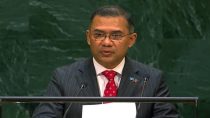
On Thursday, the third day of the session, Prime Minister Mr. Tarique Rahman delivered his first speech at the UN General Assembly’s main stage. He gave this speech entirely in Bangla, creating a rare chapter in UN history. Never before in the General Assembly’s history had three members of the same family, a father, a mother, and a son, all addressed the assembly as heads of state or government.
Mr. Tarique Rahman made this rare history as the third generation of his family to do so. He began his speech by remembering the martyrs of the 1971 Liberation War and those killed or injured in the July 2024 uprising. He told the world that Bangladesh continues moving forward toward democracy, justice, and human rights.
In his speech, the Prime Minister reaffirmed Bangladesh’s steady support for Palestinian independence. He said Bangladesh renews its firm support for the just demands of the Palestinian people, including their right to self-determination and to an independent Palestinian state. He also made a forward-looking call to resolve global conflicts.
He said that reason, diplomacy, education, and humanity, rather than deadly weapons, should become the tools of change. This statement earned wide praise from international security and diplomacy analysts. They believe Bangladesh’s firm commitment to global disarmament and nuclear non-proliferation has brightened the country’s image on the world stage.
Prime Minister Mr. Tarique Rahman also outlined the government’s “Three R Strategy” for rebuilding the nation. He said the government follows Recovery, Restoration, and Reconstruction, together called the Three R Strategy, to repair a Bangladesh damaged by one and a half decades of misrule and exploitation. He noted that detailed steps have been taken to create widespread employment and build Bangladesh into a manufacturing hub.
He also mentioned that the government has allocated fifty million dollars this fiscal year for startup initiatives for young entrepreneurs, researchers, and innovators. Environment and climate experts praised the Prime Minister’s roadmap to plant 250 million trees and implement the Teesta master plan with Chinese financing. They called it a bold and timely step toward securing climate justice and compensation on the world stage.
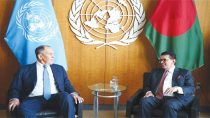
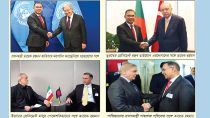
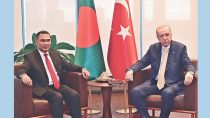
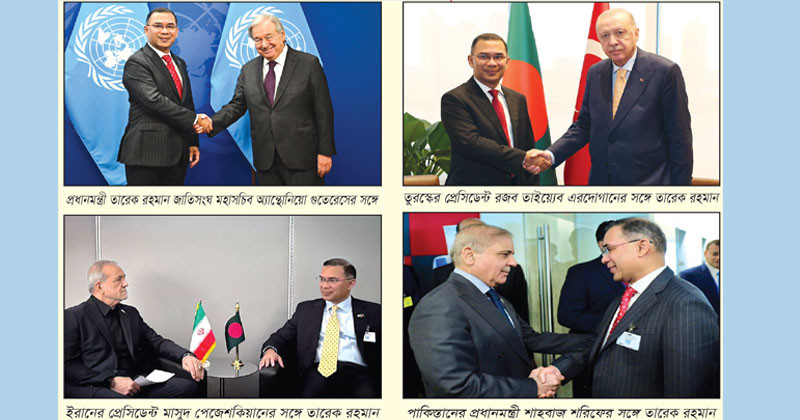
On the sidelines of the session, Prime Minister Mr. Tarique Rahman held several important bilateral meetings with world leaders. One key meeting took place with Turkish President Mr. Recep Tayyip Erdogan at the Turkish House in New York. Both leaders pledged to further strengthen the historic and friendly relationship between Bangladesh and Turkey.
Both sides agreed to formalize bilateral ties further through an annual “2+2 dialogue” involving foreign and defense ministers, along with political consultations. They also agreed to cooperate in the defense industry and work together at international forums for a sustainable solution to the Rohingya crisis. Mr. Erdogan expressed deep gratitude to the government and people of Bangladesh for sheltering over one million Rohingya refugees.
He promised that Turkey would stand by Bangladesh until the safe and dignified repatriation of the Rohingya is ensured. Prime Minister Mr. Tarique Rahman also met UN Secretary General Mr. Antonio Guterres. Their discussion covered the Rohingya crisis, climate change, and Bangladesh’s development agenda in detail.
The Prime Minister urged the UN to play a strong role in finding a permanent and sustainable solution for the Rohingya Muslims forcibly displaced from Myanmar. In response, the Secretary General highly praised Bangladesh’s role in maintaining world peace, addressing climate risks, and providing humanitarian aid. He assured continued cooperation in all these areas.
Bangladesh also called for securing adaptation funds for countries like itself that face severe climate change risks. Prime Minister Mr. Tarique Rahman held his first ever meeting with Pakistani Prime Minister Mr. Muhammad Shehbaz Sharif. They reviewed bilateral relations between the two countries during the meeting.
Both leaders renewed commitments to strengthen cooperation in trade, investment, communication, education, tourism, and people to people contact. The Pakistani Prime Minister congratulated his Bangladeshi counterpart and said his country remains firmly committed to deepening ties with Bangladesh based on mutual interest. Mr. Tarique Rahman expressed satisfaction with the positive direction of relations between the two nations.
Notably, fascist Ms. Hasina had fallen into India’s strategic trap and built hostile relations between Bangladesh and Pakistan for a decade and a half. A meeting with Iranian President Mr. Masoud Pezeshkian covered the ongoing Middle East crisis in detail. They discussed the safety of Bangladeshi workers in Iran and the safe passage of Bangladeshi cargo ships stuck in the Strait of Hormuz.
Deputy Foreign Minister Mr. Humayun Kabir said in a briefing that Bangladesh wants a quick resolution. He said Bangladesh has sought Iran’s cooperation so the ships can return home safely once the conflict ends through diplomacy. On the sidelines of the session, Bangladesh signed an MOU with Trinidad and Tobago to establish a bilateral consultation mechanism.
Deputy Foreign Minister Mr. Humayun Kabir and Trinidad and Tobago’s Foreign Minister Mr. S. M. Sobers, MP, signed the memorandum on behalf of their respective countries. Mr. Humayun Kabir said Bangladesh wants to deepen friendly ties with Trinidad and Tobago as partners in the Commonwealth, the UN, and the G77. He expressed hope that the MOU will serve as an effective platform for regular review of bilateral relations.
It will also help expand trade, economic, scientific, technical, and cultural cooperation between the two countries. The Prime Minister also held two important sideline meetings with Ms. Julie Bishop, the UN Secretary General’s Special Envoy on Myanmar. These meetings focused on building international pressure on Myanmar for the safe, voluntary, and dignified repatriation of the Rohingya.
In a meeting with the CEO of the Bill and Melinda Gates Foundation, discussions covered Bangladesh’s health sector development, use of technology, vaccination programs, and poverty reduction. They also discussed the foundation’s ongoing and future projects in Bangladesh. During the session, Bangladesh Biman signed a supplementary agreement with Boeing to purchase 11 new aircraft.
The deal includes five Dreamliners and six 737-8 models. US President Mr. Donald Trump posted about this agreement on his social media platform, Truth Social. He welcomed the Boeing deal with Bangladesh and expressed hope for deeper economic and trade ties between the two countries.
Observers see this agreement as a new milestone in modernizing Bangladesh’s aviation sector and in bilateral relations. Deputy Foreign Minister Mr. Humayun Kabir also showed diplomatic skill in several high level meetings during the session. He spoke about the outcomes of these meetings at a press conference.
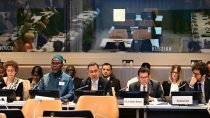
At a ministerial meeting of the UN Peacebuilding Commission, he presented five specific proposals for establishing sustainable peace. In a press briefing, he outlined the main goals of Prime Minister Mr. Tarique Rahman’s visit and the vision for a “New Bangladesh.” He urged continued international financing to resolve the Rohingya crisis.
He also highlighted progress on international cooperation to recover money laundered abroad from Bangladesh. Meanwhile, as President of the UN General Assembly, Dr. Khalilur Rahman took a firm and significant stance on Security Council reform. Right from the start of the session, he stressed the need for structural reform of the Security Council.
He said that in today’s global reality, the Security Council must become more transparent, effective, and representative. He clearly noted that a large continent like Africa has long been denied permanent representation on the Security Council. He said this contradicts the UN’s founding principles.
He strongly argued for the legitimate claim of Africa and other underrepresented regions to gain permanent membership. Following Dr. Khalilur Rahman’s remarks, UN Secretary General Mr. Antonio Guterres also commented that Africa should have representation on the Security Council. This stance taken by Bangladesh’s Foreign Minister and UN General Assembly President Dr. Khalilur Rahman set back India’s long standing dream of gaining a permanent Security Council seat.
India had long presented its claim for a permanent seat as its top priority. It had spent large sums hiring lobbyists for this purpose. But the General Assembly President’s statement made it clear that there is no scope for granting India a permanent seat while bypassing Africa’s fair claim.
Dr. Khalilur Rahman’s position strengthened the case for Security Council reform. At the same time, it weakened the basis of India’s one sided claim to membership. President Mr. Mirza Fakhrul Islam Alamgir praised Prime Minister Mr. Tarique Rahman’s successful diplomatic visit and extended his warm congratulations.
He said the Prime Minister delivered a visionary, resolute, and directional speech at this session of the UN General Assembly. He added that expatriate Bangladeshis responded with great enthusiasm and positivity after hearing the Prime Minister’s full speech in Bangla and his clear message about the country’s democratic journey. International security analysts call Mr. Tarique Rahman’s call to end the arms race and use reason, diplomacy, and education as tools of change highly visionary.
They say Bangladesh’s commitment to global disarmament has brightened the country’s image on the world stage. Overall, the UN’s 81st General Assembly session will remain a historic chapter of success for Bangladesh. It will further strengthen the country’s position in foreign policy and international diplomacy in the years ahead.