Unlocking New Energy Horizons: Bangladesh’s Path to Bay of Bengal Resources

The offshore energy resources in the Bay of Bengal have emerged as a pivotal avenue to define the future of Bangladesh’s energy security and macroeconomic stability. Following over sixteen years of stagnant contracts, failed tenders, and the eventual exit of foreign exploration companies, the ongoing offshore bidding process is finally gathering substantial momentum. The vast potential of the country’s maritime blocks, combined with an internationally competitive investment framework, was recently presented on the global stage during a ministerial address at the ‘World Energies Summit’ in London, where foreign firms were formally invited to participate in the ‘Bangladesh Offshore Bidding Round 2026’ covering 26 exploration blocks.
At the London summit, State Minister for Power, Energy and Mineral Resources Anindya Islam Amit outlined the nation’s rapidly rising energy demand and reaffirmed the government’s commitment to ramping up domestic exploration. Calling upon international oil companies (IOCs) to invest in the Bay of Bengal, he noted, ‘We are determined to boost domestic gas and energy exploration and production to align with our national growth trajectory.’ Complementing this vision, Chowdhury Ashik Mahmud Bin Harun, Chairman of ‘Invest Bangladesh’, showcased the country’s stable macroeconomic fundamentals and investor-friendly climate, emphasizing that supportive government policies have been structured to ensure full protection for foreign capital.
Moving beyond public declarations, summit sources confirmed that the Bangladeshi delegation held strategic bilateral meetings with representatives from four major international energy companies on the event’s opening day. Government delegates actively detailed the specific technical and financial advantages of the blocks and solicited formal proposals, departing from previous passive administrative routines. Reflecting on past lost opportunities, Minister for Power and Energy Iqbal Hasan Mahmud observed, ‘Despite years of celebrating maritime boundary victories, our offshore potential remained unexploited while neighboring nations extracted resources from adjacent zones.’ He revealed that several prominent foreign entities, including U.S. energy giant ExxonMobil, have expressed strong confidence in the current tender.
The standardized legal and commercial basis for these prospective investments is governed by Petrobangla’s updated ‘Bangladesh Offshore Model Production Sharing Contract’ (PSC). Key financial incentives incorporated into the PSC feature gas pricing pegged directly to global crude oil (Brent Crude) prices, complete duty exemptions on imported exploration equipment, tax waivers, and up to a 100% cost recovery mechanism. While the primary mandate requires extracted gas to be fed into the domestic grid to satisfy local industrial and power demands, foreign contractors may export or sell surplus volumes with Petrobangla’s explicit approval. Furthermore, a mandatory 10% equity share is reserved for state enterprise Bapex in shallow-water blocks to strengthen national operational expertise.
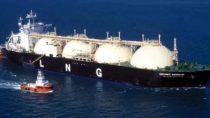
This proactive push follows a prolonged period of operational inactivity spanning back to 2008, when an initial contract with U.S. firm ConocoPhillips ended without physical exploration work. Subsequent ventures with India’s ONGC Videsh Limited in 2012 and South Korea’s POSCO Daewoo in 2017 similarly stalled, with the latter surrendering its offshore block in 2020. A previous tender launched in March 2024 saw seven international companies purchase documentation, yet no bids were formally submitted due to political unrest and macroeconomic uncertainty, leaving Bangladesh heavily dependent on expensive imported Liquefied Natural Gas (LNG) and placing immense pressure on state foreign exchange reserves.
To rectify past structural flaws, the interim administration established an investigation committee to evaluate the failure of the 2024 bidding round and overhaul the investment climate. Acting upon expert recommendations, Petrobangla revised the Model PSC parameters, raising the benchmark gas purchase price from 10% of Brent Crude to 11% for deep-water blocks and 10.5% for shallow-water blocks. Tarikul Islam, Deputy General Manager at Petrobangla, confirmed that seven international companies have established formal contact during the active round, with two firms officially purchasing the final bidding documentation package to prepare their commercial offers for the Bay of Bengal blocks.
Industry reports indicate that Turkey’s state-owned Turkish Petroleum Overseas Company (TPAO) and China’s China National Offshore Oil Corporation (CNOOC) acquired the formal tender packages, while seven global firms purchased detailed seismic data sets. Addressing widespread speculation regarding offshore gas reserves, Mo. Arif Sadeq, Information and Public Relations Officer at the Ministry of Energy, clarified the official stance, stating, ‘It is technically impossible and inappropriate to announce specific reserve figures or production capacities before physical drilling; final estimates can only be established after exploratory operations are completed’.
Providing a macro-level evaluation of the ongoing initiative, Dr. Khondaker Golam Moazzem, Research Director at the Centre for Policy Dialogue (CPD), described the exploration drive as a major prospective turning point for the national economy. Highlighting the geological continuity with neighboring offshore discoveries, Dr. Moazzem stated, ‘Given the geological similarities with rich fields in adjacent Indian and Myanmar waters, the probability of discovering substantial natural gas reserves within Bangladesh’s economic zone is exceptionally high.’ However, he stressed that state negotiators must maintain transparent dealings to secure balanced, win-win terms regarding pricing structures and strict project timelines.
In conclusion, successful offshore exploration and the subsequent integration of natural gas into the domestic supply framework could fundamentally reshape Bangladesh’s economic landscape. By developing indigenous reserves in the Bay of Bengal, the country stands to significantly reduce its reliance on costly spot-market LNG imports, alleviate persistent balance-of-payments pressures, and secure an affordable energy foundation. This reliable supply will prove essential in powering vital domestic sectors, including heavy manufacturing, power generation, industrial processing, and chemical fertilizer production, ensuring long-term macroeconomic stability and sustainable growth across the nation.