A One-Minute Apocalypse in Nepal
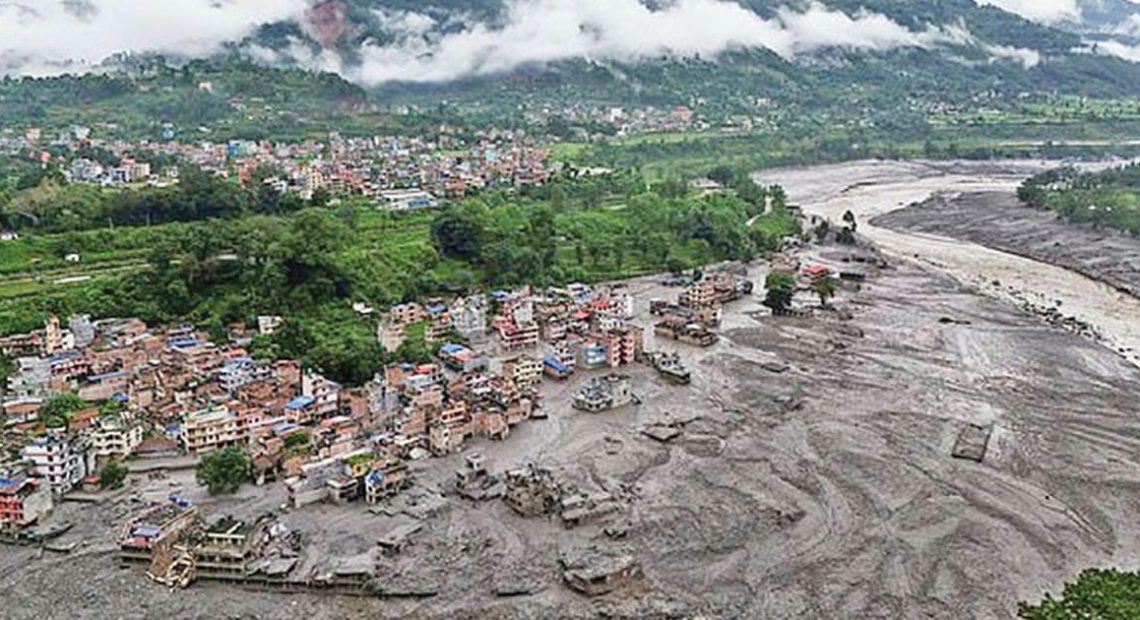
The sky was completely clear, with no forecast of rain. Yet, in the blink of an eye, a devastating torrent of mud, rocks and ice came rushing down from the mountains. A rare glacial collapse and flash flood in the Nepal-China border region, including Tibet, submerged one settlement after another. Locals described the disaster as an “apocalypse” that unfolded in just one minute. At least 362 bodies have been recovered so far, while more than 1,500 people– including children and over 800 foreign tourists– remain missing.
The disaster struck last Wednesday when a glacial collapse triggered torrents of muddy water and mountain runoff across large areas along the Nepal-China border. Major bridges and highways were destroyed, cutting off communications and making it difficult for rescue teams to reach remote areas. Officials fear the death toll could rise further. According to the Nepal Tourism Board, at least 644 tourists are missing from the flood-hit areas. Of them, 517 are foreign nationals and 127 are Nepali tourists. Mountain rivers rose sharply after the flooding, destroying homes, roads and bridges. Rescue workers are continuing to search for the missing among mud and debris.
Among the missing tourists are citizens of several countries. According to Reuters, Indian tourists account for the largest group. In addition, 63 Americans, 53 Ukrainians, 34 Australians, 33 Britons and 25 Canadians are reported missing. However, figures provided by individual countries differ somewhat from Nepal’s list.
Rescue operations have been intensified in the affected areas. Nepal’s army and security forces are searching riverbanks, downstream areas and debris. In Timure, Rasuwa, 123 stranded people were rescued by army helicopters. With roads cut off and many mountainous areas inaccessible, rescue and relief supplies are being delivered by air. The floods damaged 35 motorable bridges, 45 suspension bridges and around 40 kilometers of roads. This has created major obstacles for rescue teams searching for the missing and delivering relief to affected communities. The full extent of the damage is not yet known. Preliminary investigations indicate that a powerful flow caused by an ice and rock collapse near the Nepal-China border rushed down the Lhende River, triggering severe flooding in the Bhotekoshi River. The disaster also caused extensive damage in Tibet, China.
Risk of Another Disaster as Artificial Lake Forms
As Nepal struggles to cope with the devastating floods, a new and potentially serious threat has emerged. An artificial lake has formed after the natural flow of a river was blocked, and its water level is continuing to rise. Nepal’s disaster management authorities have warned that the blockage could collapse at any moment, triggering another major flood downstream. Authorities have urged local residents and rescue workers to immediately move to a safe distance from both banks of the river and surrounding areas. With communications severely disrupted in the mountainous region, monitoring the situation and managing the risk have become increasingly difficult.
9,260 Security Personnel Deployed for Rescue
A major nationwide rescue operation has been launched following the floods. Nepal’s National Disaster Risk Reduction and Management Authority said a total of 9,260 personnel from the army, police and Armed Police Force (APF) have been deployed for rescue and search operations. Landslides and flash floods have severely disrupted road communications in many areas. Despite the difficult conditions, rescue teams are searching for missing people, evacuating those stranded and delivering emergency relief to affected communities.
Glacial Collapse, Not an Earthquake, Behind Disaster
The disaster was initially thought to have been caused by a magnitude 4.4 earthquake. However, the U.S. Geological Survey (USGS) later rejected that explanation. According to the agency, the catastrophe was caused not by an earthquake but by a massive glacial collapse and rockslide. After analyzing satellite imagery, data from seismic centers and long-term seismic waves, the USGS concluded that excessive ice melt had created slippery conditions beneath the glacier. This triggered a massive collapse of ice and rocks. The resulting vibrations were detected by instruments as seismic activity.
India, China, US and Others Offer Assistance
India, China, the United States and several international organizations have stepped forward to support Nepal following the disaster. India’s Ministry of External Affairs said it had sent 10 metric tons of emergency relief supplies to Nepal, including tents, blankets, hygiene kits, solar lamps and medicines. Later, Indian Foreign Minister S. Jaishankar said a second aircraft carrying another 37.5 tons of relief supplies, food and medicines had departed for Nepal. China is also coordinating emergency relief supplies and financial assistance. The United States has announced plans to send a disaster-response expert team to Nepal and provide $500,000 in initial assistance. UK Prime Minister Andy Burnham announced nearly £5 million in financial aid, while European Commission President Ursula von der Leyen pledged further assistance to Nepal if needed.
The United Nations has allocated $2 million from its emergency humanitarian fund for Nepal. The International Federation of Red Cross and Red Crescent Societies has released 1 million Swiss francs in emergency funding for the Nepal Red Cross. The World Health Organization (WHO) has also sent essential medical supplies, medicines and tents. Rescue operations are still underway following the devastating disaster. Restoring communications, locating missing people and preventing further flooding are now among the Nepalese government’s biggest challenges.
Sources: BBC, Reuters, The Kathmandu Post.