A plan to unleash violence
- Dhaka in the grip of the “Battery Rickshaw League”
Sayed Ahmed
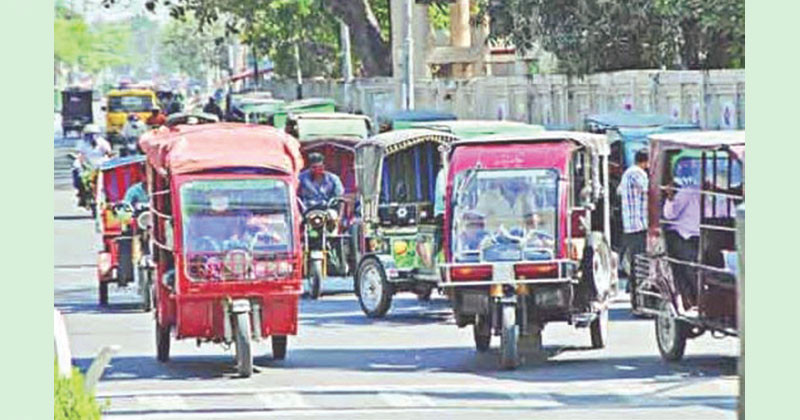
Battery-powered auto-rickshaws are taking over the capital’s streets with what looks like a resolve for violent politics. After Sheikh Hasina fled to India in the July uprising of ’24, groups calling themselves the “Battery Rickshaw League,” “Bonchito League,” “Ansar League,” and various other formats suddenly made their presence felt on the streets. At the time, the stunned and weak interim government of Dr. Muhammad Yunus struggled to control the situation, with law enforcement standing by as silent onlookers. That counter-uprising attempt later failed in the face of united resistance from the students and public who had led the July uprising.
The context now is different. The country is run by an elected government led by Mr. Tarique Rahman, which naturally rests on a far stronger foundation. The banned Awami League cannot openly mobilize against the government directly. But undeniable realities remain — the electricity and gas crisis, rising prices, the law-and-order situation, drugs, unemployment, and one factory after another shutting down. These inherited crises have little chance of quick resolution, raising the question of how long public anger can be contained. Meanwhile, along the thin thread of these undeniable crises, what might be called “the rat of old loyalties” is climbing back up, with the Awami League trying to poke its head out of its hole. The “Anti-Terrorism (Amendment) Ordinance-2025” has officially banned the organizational activities of the Awami League and its affiliates, but the banned party’s musclemen and foot soldiers have begun becoming active again under various names and formats. The party’s shrewder class fled by various means right after Hasina’s fall; now out of reach, they attack the government unchecked on YouTube and social media, spreading dramatic tales of how they cowardly escaped public wrath with their lives, while also plotting how to create instability inside the country. To this end, they are said to be organizing sympathizers embedded within the civil administration and police, while releasing the party’s “hammer and helmet” enforcers into the field disguised under various informal, labor-based professions. A large section of these, it is claimed, are now drivers of battery rickshaws — dubbed “Dhaka’s Tesla” — a worrying finding that has emerged from a recent survey.
Available information suggests at least 25 percent of the battery-rickshaw drivers who have taken over the capital’s roads are connected in some way to the banned Awami League. Thousands of Awami activists have reportedly also disguised themselves as motorcycle riders under the “Pathao” app. Many local-level Awami cadres named as accused in July-uprising killing cases, now forced out of their home areas, are said to be using battery rickshaws and Pathao motorcycle riding as a safe hideout and a source of extra income.
According to the information gathered, since the July uprising, battery-powered rickshaws and motorcycles have taken over the capital’s main roads, side streets, and even VIP roads, with cadres and beneficiaries of the ousted Awami League allegedly using the rickshaw-driver disguise as part of a deliberate plan to create anarchy and violence.
The number of battery-powered rickshaws and motorcycles in the capital has risen alarmingly since the July uprising. Although a ban on battery rickshaws on main roads was imposed to prevent accidents and traffic congestion, it has not been effectively enforced. Illegal battery rickshaws are occasionally seized, yet countless new ones hit the road every day. Neither BRTA nor the city corporations keep any official count of battery rickshaws, but data from various studies and media reports paints a worrying picture: a BUET study found that in just the few months after the political change in August 2024, more than 400,000 battery rickshaws entered the capital’s streets; over the past two years, that number has now exceeded two million.
Another private survey suggests that armed Jubo League and Chhatra League activists who were driven out of their home areas over cases related to the killing of students and civilians are now on Dhaka’s streets disguised as battery-rickshaw and motorcycle drivers. They station themselves at intersections across the capital, allegedly creating traffic jams even where none should occur, running rickshaws into pedestrians, and causing extensive damage to private vehicles by ramming into them. Their dominance on the roads is said to have grown to the point that anyone who objects is met with organized aggression from groups of rickshaw drivers, including confrontations with private car drivers and owners, with taunts telling them to travel by helicopter or plane instead. Many rickshaw passengers reportedly go along with these unruly drivers, and in doing so — the piece argues — reveal their true character.
Dhaka Bar lawyer Mr. Fazlur Rahman, discussing the political threat posed by battery rickshaws, offered his own observation that among battery-rickshaw drivers, older men tend to be Awami League members, middle-aged ones Jubo League, Krishak League, Tantee League, Motsyajibi League or Hawkers League, while younger drivers tend to be Chhatra League. He said some have changed their look, tying a gamchha around their head, or growing a light beard, taking up battery-rickshaw driving as a guerrilla-style way to survive in Dhaka. He said the appearance and manner of speech of these Awami battery-rickshaw drivers differs from that of professional rickshaw drivers — even amid nationwide load-shedding and a severe energy crisis, they never complain about the power situation. He said they charge fares out of proportion to distance, sometimes unusually low, sometimes unusually high; that they don’t know the back streets of their passengers’ destinations well, ignore traffic signals, drive inexperienced and too fast, don’t know where zebra crossings or speed breakers are, and drive against traffic — leaving passengers who ride with them rarely reaching their destination safely, with frequent accidents, some fatal, and injuries commonplace.
According to a private survey, ordinary battery-rickshaw drivers could be used, under the guise of a movement for “fair demands,” to create anarchy on the streets during a moment of government weakness — attacking law enforcement, blocking roads, setting fires, and vandalizing vehicles. They are also said to be plotting to spread misinformation on uncontrolled social media and to suddenly create artificial gridlock at key points in the capital.
The severe electricity and energy crisis in the country appears to be a windfall for battery-rickshaw drivers, among whom no resentment over the power crisis is observed. While the whole country suffers from an electricity shortage, illegal battery rickshaws are said to consume Tk 55 crore worth of electricity every day. A recent study by the private research organization Centre for Policy Dialogue (CPD) notes that battery rickshaws typically carry four to five 12-volt batteries; there are said to be at least six million battery rickshaws in the country. Charging each battery requires 900-1,100 watts of electricity per hour, and with an average of eight hours of charging a day, each rickshaw consumes 8-9 units (kilowatt-hours) of electricity. This means 800-850 megawatts of national grid power goes toward charging battery rickshaws every day, adding up to at least 300,000 megawatts a year — roughly 5 percent of the country’s total power generation.
According to Dhaka Metropolitan Police (DMP) figures, Dhaka alone has 48,136 illegal charging points and 992 garages. Of these, Wari division has 3,516 charging points and 136 garages; Gulshan division has 2,643 charging points and 128 garages; Mirpur division has 3,983 charging points and 259 garages; Uttara division has 1,305 charging points and 72 garages; and Motijheel division has 1,390 charging points and 60 garages. Each of these garages reportedly houses 80-150 rickshaws a day, offering battery-charging services for a fee.
Although these battery rickshaws first hit the streets with the patronage of the fallen Hasina government, they now pose a serious political threat to the current administration. Battery rickshaws are said to consume Tk 20,000 crore worth of electricity a year, costing the government Tk 5,000 crore in lost revenue annually. Despite repeated statements from the power ministry about the excessive electricity consumption of battery rickshaws, the government has taken no effective action.
They have also become a major nuisance in everyday civic life — causing traffic jams from main roads down to neighborhood alleys, increasing accidents, and now serving as a safe livelihood for ousted and banned Awami armed cadres. Yet the government appears indifferent to this quietly growing political security threat.
State Minister for Local Government, Rural Development and Cooperatives Mr. Mir Shahe Alam recently announced that city corporations and municipalities would take steps to bring battery-rickshaw registration under regulation, with the condition that registered rickshaws must charge only from solar power, with fines for non-compliance.
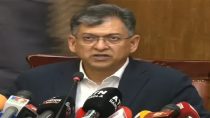
Last Tuesday, responding to a journalist’s question, Home Minister Mr. Salahuddin Ahmed himself acknowledged the lack of control over battery rickshaws. Journalists had asked whether it would be possible to reduce Dhaka’s traffic congestion given that millions of battery rickshaws are operating even as the government tries to manage traffic using artificial intelligence technology.
In response, he said thousands of battery rickshaws have appeared on roads across the country almost overnight, adding that the interim government had tried to control battery rickshaws, but that considering unemployment and humanitarian concerns, it would be difficult to remove them from the roads overnight.