Bangladesh-China Ties to Forge Ahead on the Foundation of Historic Bonds: China’s CPC Minister
Chinese Communist Party (CPC) Central Committee International Department Minister Liu Haixing has stressed the importance of strengthening mutual trust, cooperation, experience-sharing and people-to-people exchanges to advance the historic friendship between Bangladesh and China.
He said the friendship between the two countries was not the initiative of any particular individual or group but a shared consensus among people from all walks of life in both countries. Political parties could play an important role in strengthening the friendship through greater communication and cooperation, he added.
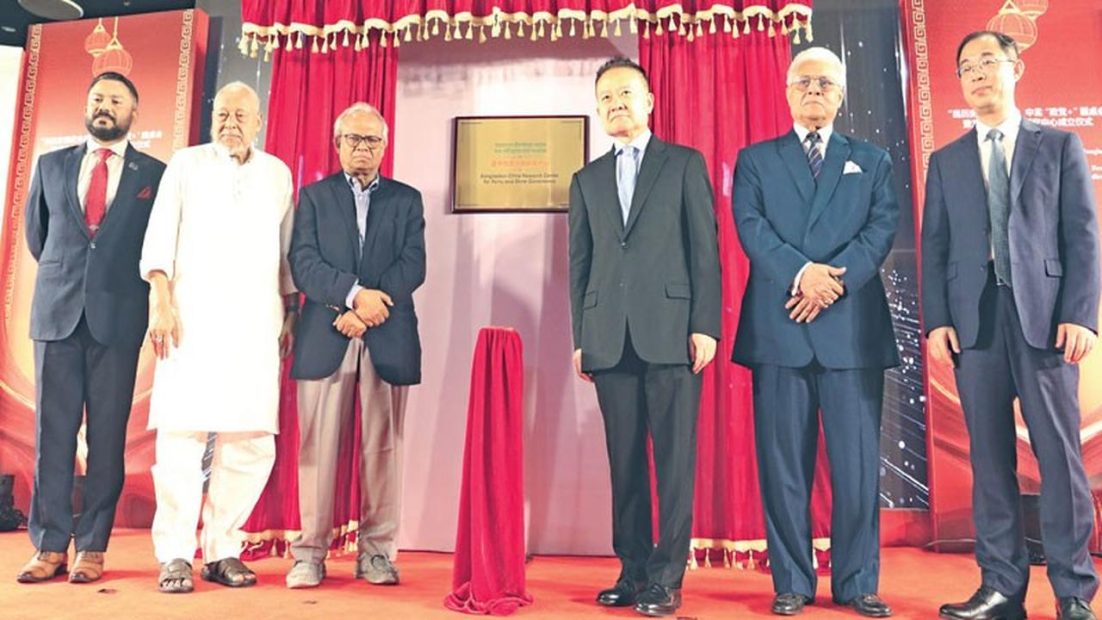
Mr. Liu made the remarks as the chief guest at a roundtable discussion titled ‘Where History Illuminates the Future: China-Bangladesh Political Parties Plus Roundtable’ and the inauguration of the Bangladesh-China Centre for Party and State Governance Studies at Hotel InterContinental in the capital on Wednesday.
He said mutual understanding, sincerity and cooperation were the foundations of Bangladesh-China relations. The common aspiration of the two peoples was shared development.
Mr. Liu said his father had served as China’s ambassador to Bangladesh 46 years ago. Since then, he had heard from his father about his deep affection for the hardworking and sincere people of Bangladesh. This experience had helped him understand the continuity of the friendship between the two countries and how it had grown stronger over time.
He said the relationship between the two countries was elevated to a strategic cooperative partnership during Chinese President and Communist Party General Secretary Xi Jinping’s visit to Bangladesh 10 years ago.
During his visit to China last June, Bangladesh Prime Minister Tarique Rahman met Mr. Xi. The two leaders announced the establishment of a China-Bangladesh community with a shared future in the new era, providing direction for a new chapter in bilateral relations.
Highlighting progress in economic cooperation, Mr. Liu said bilateral trade had increased from $15 million to more than $23 billion over the past five decades.
Bangladesh was the first country in South Asia to sign a memorandum of understanding with China on Belt and Road cooperation. Since then, several infrastructure projects, including highways, bridges and tunnels, have been implemented in Bangladesh, contributing to the country’s economic and social development.
He also mentioned progress on the Mongla Port Industrial Zone and the Teesta River Comprehensive Management and Restoration Project.
The Chinese minister said both countries needed to maintain mutual trust and support each other on issues of shared interest to further strengthen bilateral relations.
He also called for greater communication and coordination at the United Nations and other multilateral platforms to establish an equal and orderly multipolar world and inclusive economic globalisation. Such cooperation would protect the interests of China, Bangladesh and other countries of the Global South, he said.
Referring to the positive perception of China in Bangladesh, Mr. Liu said various surveys had shown that 90 per cent of Bangladeshis held favourable views of China. He described this as an important achievement of the longstanding friendship between the two countries.
He said political parties, governments, businesspeople, researchers, media organisations and social institutions should work together to deepen bilateral relations.
Describing the inauguration of the Bangladesh-China Centre for Party and State Governance Studies as a step towards implementing an important consensus reached by the leadership of the two countries, Mr. Liu said the centre would facilitate exchanges on governance systems, development philosophies and experiences.
He expressed hope that the centre would also strengthen communication among political parties, young people, businesspeople, media organisations and research institutions.
Mr. Liu further said China had begun implementing its 15th Five-Year Plan, while Bangladesh had entered a new phase following political changes. In this context, he described exchanges of governance experiences between political parties of the two countries as timely and important.
As the Communist Party of China approaches its 105th founding anniversary, he expressed interest in sharing China’s experiences in party management and good governance with political parties and people from different professions in Bangladesh.
Concluding his remarks, Mr. Liu said history had laid the foundation for a valuable friendship between the two countries, passed down from one generation to another.
He said China wanted to work with people from all walks of life in Bangladesh to carry forward this traditional friendship, deepen mutual understanding and strengthen people-to-people exchanges. These efforts would help take Bangladesh-China relations to a new height in the new era, he added.
Pays tribute at Ziaur Rahman’s grave
Meanwhile, visiting Chinese Communist Party International Department Minister Liu Haixing paid tribute at the grave of BNP founder Ziaur Rahman in Sher-e-Bangla Nagar in the capital.
On Wednesday morning, a BNP delegation led by the party’s Acting Secretary General Ruhul Kabir Rizvi visited Ziaur Rahman’s grave and placed a wreath there.
After laying the wreath, Mr. Liu stood silently for a while in honour of Ziaur Rahman. The delegation also paid tribute to the memory of former prime minister Khaleda Zia.
Mr. Liu later signed the guestbook. BNP Acting Secretary General Advocate Ruhul Kabir Rizvi welcomed the Chinese delegation and recalled the longstanding friendship and diplomatic cooperation between Bangladesh and China.
BNP Vice-Chairman Altaf Hossain Chowdhury, Joint Secretary General Khairul Kabir Khokon, Joint Secretary General and Munshiganj-2 MP Advocate Abdus Salam Azad, among others, and senior officials of the Chinese Embassy in Dhaka were present.