
Big Positive News for the Economy
Professor Abu Ahmed on Moody’s ‘Stable’ Outlook: Bangladesh’s Global Image to Improve
Bangladesh’s economic situation has improved due to the return of political stability, rising foreign exchange reserves and record remittance inflows. Against this backdrop, international credit rating agency Moody’s Ratings has revised Bangladesh’s outlook from ‘negative’ to ‘stable’. However, it has kept the country’s rating unchanged at ‘B2’ due to weaknesses in the banking sector and a high level of non-performing loans (NPLs). NPLs have nevertheless declined by 3 percent during the period.
In its latest assessment released on Tuesday, Moody’s said political uncertainty was no longer creating a major obstacle to reforms, citing the post-election political transition and broad public support for the new government.
Continued support from the International Monetary Fund (IMF) is also helping strengthen Bangladesh’s financing framework. Moody’s had downgraded Bangladesh’s outlook to ‘negative’ in March 2025 amid the country’s economic difficulties.
Economic sector experts believe the improved outlook will enhance Bangladesh’s international image and boost confidence among foreign banks, development partners and investors. They say this could help increase foreign banks’ lending and dollar exposure to Bangladeshi banks, facilitating imports and opening letters of credit (LCs) on easier terms.
According to Moody’s, foreign exchange reserves rose to around $32.9 billion by mid-2026 following the introduction of a market-based exchange rate and strong remittance inflows through formal banking channels. The reserves are sufficient to cover more than four months of imports, compared with $21.4 billion in 2024. Moody’s also said economic growth was gradually recovering, with GDP growth reaching 4.1 percent in FY2025-26 and expected to rise further in the coming fiscal years.
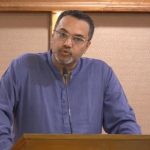
Financial sector analyst Professor Abu Ahmed told Inqilab that Moody’s decision to revise Bangladesh’s outlook from ‘negative’ to ‘stable’ was “big news” for the country and its economy.
“This will have several positive effects on import trade, foreign investment and the foreign exchange market. However, to achieve further progress, initiatives must be taken to ease doing business and increase investment and employment,” he said.
Welcoming Bangladesh Bank’s move to reduce lending rates, Professor Abu Ahmed said the central bank had lowered the policy rate by 50 basis points, from 10 percent to 9.50 percent, to encourage investment and employment. As a result, commercial banks will be able to borrow from the central bank at lower interest rates, which he expects will eventually reduce lending rates for customers.
He said lowering lending rates from the current 14-15 percent range would enable new entrepreneurs to raise capital at lower costs, helping revive business activity and investment. High borrowing costs, he said, make it difficult for both new and established businesses to operate and achieve desired growth.
He suggested expanding access to affordable, long-term loans through incentive schemes, simplifying the lending process, easing collateral requirements and offering temporary tax exemptions or reductions to businesses seeking to expand.
Professor Abu Ahmed, also chairman of the Investment Corporation of Bangladesh (ICB), stressed the importance of attracting major foreign investment. He said UAE-based DP World had proposed investing around $1 billion in Bangladesh’s logistics sector, including the operation of New Mooring Container Terminal and Chattogram Container Terminal at Chattogram Port.
He said the investment was important amid the current global economic situation and pressure on the country’s foreign exchange reserves. He added that Denmark’s APM Terminals, Singapore’s PSA and Saudi Arabia’s Red Sea Gateway Terminal were also interested in investing in Bangladesh’s port infrastructure.
He called for swift action to turn Chattogram Port into a regional trade hub and accelerate discussions and evaluation of proposals concerning the operation, maintenance and ground-handling services of the third terminal at Hazrat Shahjalal International Airport with a Japanese consortium.
“Delay in approval will create problems. It should be completed quickly and communicated to the world. This will enhance the country’s international image and open the way for new foreign investment,” he said.
Welcoming efforts to bring quality new companies to the stock market and expand direct listing opportunities, he said increasing quality IPOs and listings was important for strengthening the financial sector and sending a positive message to international rating agencies.
Professor Abu Ahmed said Bangladesh’s GDP growth is currently around 3 to 3.5 percent. To raise it quickly to 4.5 or 5 percent, he said, private investment must be encouraged through all possible measures.