‘Bismillah, C’est les Ténèbres’: Viral Arabic-French Slogan at Student Protests in France
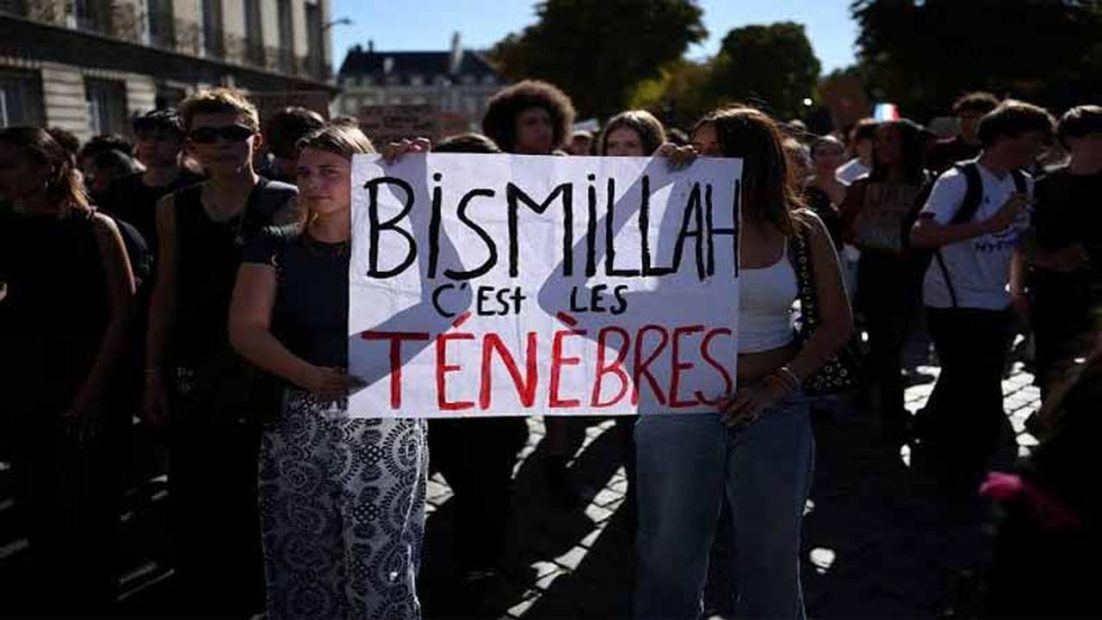
A slogan, “Bismillah, c’est les ténèbres,” has gone viral during student protests in France. Blending Arabic and French, the phrase may appear meaningless at first glance, but it has become a symbol of mockery among young people over alleged police surveillance, distrust of authorities and accusations of racial discrimination.
The exact origins of the slogan remain unclear. However, it came into the spotlight after screenshots of several messages circulated on Snapchat. The messages expressed interest in joining a private group related to student protests. After writing “Bismillah, c’est les ténèbres,” one message added, “We will smash everything.”
The wording and presentation of the messages led many students to suspect that someone might be posing as a young person to gain access to private groups used by protesters. Some accounts used names such as Mamadou and Abdellah, along with Algerian flag emojis. This fuelled suspicions that the messages might have been intended to gather information about the protests or monitor the movement. However, their actual source and any connection to the police have not been independently confirmed.
Students subsequently adopted the slogan as a way to ridicule what they perceived as attempts by the authorities to infiltrate their groups. The phrase began appearing on handwritten placards at demonstrations, following its circulation in social media screenshots. Its use has also spread beyond France, with the slogan appearing at student protests in Belgium and Germany.
“Bismillah” is an Arabic expression meaning “In the name of Allah.” Meanwhile, the French phrase “c’est les ténèbres” means “it is darkness.” When combined, the two expressions do not form a coherent meaning in ordinary usage. This very absurdity has turned the phrase into a source of humour among young people.
According to Sabrine Kharbach, a spokesperson for an influential student union in France, the phrase is clearly at odds with the way young people normally speak. She said young people had appropriated the slogan to signal that they were alert to possible surveillance or infiltration attempts during the protests. It also demonstrates their ability to organise themselves, she added.
Sadani Sabadi, a university student in Bordeaux, said the messages reflected a stereotype that young people from particular backgrounds were responsible for blockades or vandalism. Fédor Kemen, a student at a Paris high school, said the phrase had become a source of nationwide amusement because it appeared to be a failed attempt to imitate the way young people talk. In his view, it also suggested an effort to associate Arabs with acts of vandalism.
For years, some Black and Arab-origin communities in France have complained of discrimination and alleged bias in police conduct. As a result, the slogan has grown beyond an online joke, prompting broader discussions about the crisis of trust between younger generations, children of immigrant families and law enforcement agencies.
France’s Interior Ministry has not directly confirmed whether the messages in question were sent by the police. However, according to the ministry, investigators may use assumed identities under specific legal conditions to gather communications and evidence of crimes involving suspected individuals planning illegal activities. The existence of such legal powers, however, does not establish that the police sent the messages in question.
The student protests initially began over deteriorating school infrastructure, teacher shortages, overcrowded classrooms and lengthy academic schedules. The movement later expanded and spread across the country. Although many demonstrations remained peaceful, incidents of vandalism, arson and clashes occurred in some areas. Arrests and the use of force by police during these incidents also sparked controversy.
Several complaints concerning police conduct during the protests have been placed under investigation. These reportedly include an incident in which a 14-year-old boy was seriously injured by a tear-gas grenade fired at close range.
Thus, an apparently meaningless phrase originating on social media has added a new dimension to student protests in France. For young people, it has become both a slogan of ridicule and a means of expressing distrust of the authorities while challenging prevailing stereotypes about their identities.