Building a Poverty-Free Bangladesh Is Our Collective Commitment
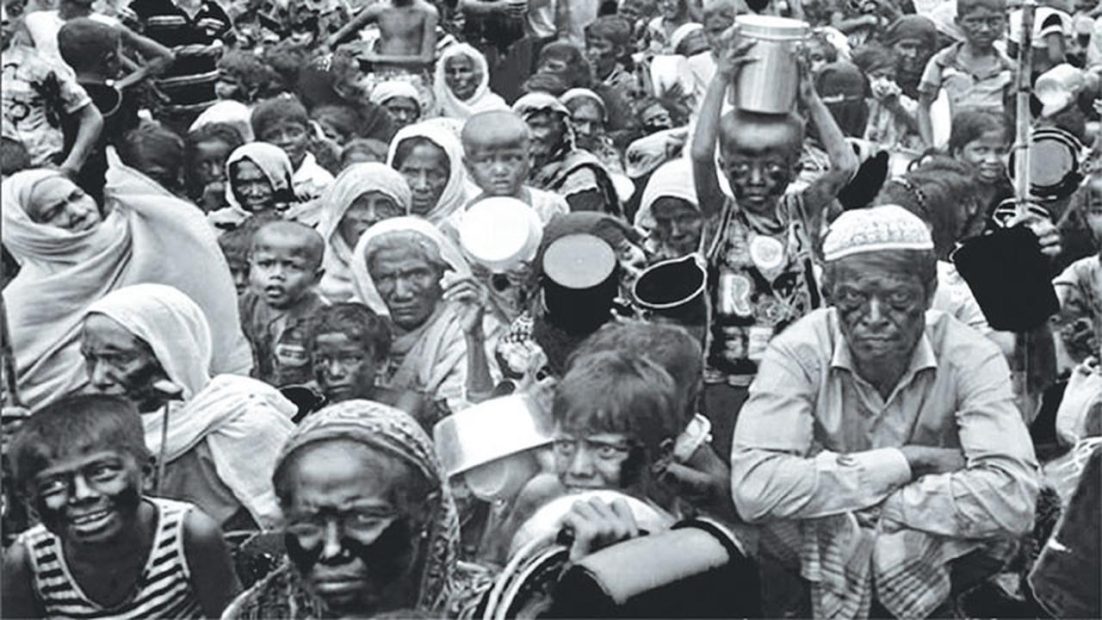
On Ring Road in front of Adabor Police Station in the capital, 90-year-old Shahjahan Mia sat with his pedal rickshaw after working all day. He had earned only Tk 150 and had not even eaten lunch. He had to pay Tk 100 to the rickshaw owner, leaving him with just Tk 50. He needed to buy food for his family but could not decide what to purchase.
According to a newspaper report, Mr. Shahjahan spoke about his family while talking to the reporter. He said he often had to go without one meal after eating another. Sometimes, there was no food at home, forcing him to ask neighbours for help. That day, too, he was worried about what his family would eat at night.
In 2026, millions of people in Bangladesh face hardships similar to those of Shahjahan Mia. Today is the International Day for the Eradication of Poverty. The gap between the stories of people going hungry and official statistics on poverty reduction reflects the reality of Bangladesh.
Why do people like Shahjahan Mia still struggle to survive? During the authoritarian rule of the Awami League, claims of poverty reduction and development were widely promoted. Why, then, are so many people still unable to afford food? To understand this, we must revisit the country’s history and examine the claims made during that period of authoritarian rule.
Bangladesh became independent in 1971 after the Liberation War. The country’s subsequent history is well known. Looking back at the famine of 1974, we can draw lessons from The Aid Lab, a book by Dr Naomi Hossain, Professor of Global Research in Development Studies at SOAS University of London.
Mr. Hossain wrote that Bangladesh also faced famine-like conditions in 1971–72, although much of the crisis shifted to India, which hosted around 10 million refugees displaced by the war. Bangladesh had faced conditions close to famine for years before the 1974 disaster. Large amounts of foreign aid flowed into the country in 1972 and 1973, but this assistance began to decline around 1974 as the focus shifted from emergency relief to long-term development.
A review of Bangladesh’s history since independence shows that the country has never completely overcome poverty. Considering the history, realities and statistics presented during the Awami League’s 15-year rule, we must ask why people like Shahjahan Mia still go hungry. To understand both his suffering and the political claims made during the Awami League’s rule, we need to examine two important economic ideas.
Poverty, purchasing power and inflation
In Poverty and Famines, economist Amartya Sen developed the entitlement theory, which explains that famines can occur not simply because food is unavailable, but because people lack the means to buy it. Rice may be available in the market, but a day labourer may not have enough income to purchase it.
This remains a central lesson for poverty reduction: people must have sufficient purchasing power to meet their basic needs, and the state must remain accountable to them. Inflation during the Awami League’s rule illustrates the problem. According to the World Bank’s calendar-year data, Bangladesh’s inflation rate reached 11.40 per cent in 2011, the highest level in that data series since 1987. The Awami League government, led by Sheikh Hasina, was in power at the time. Inflation also remained high in 2022, 2023 and 2024.
Even after the interim government took office in August 2024, inflation remained elevated. Bangladesh Bank’s annual report for the 2024–25 fiscal year recorded average inflation at 10.03 per cent. These figures show how rising living costs undermined the benefits of the development achievements promoted by successive governments.
However, the country had made substantial progress in reducing poverty before the recent reversal. The poverty rate fell from around 49 per cent in 2000 to 18.7 per cent in 2022. This achievement was made possible by the hard work of farmers, garment workers, migrant workers and small entrepreneurs.
After 2022, however, market prices and people’s purchasing power began moving in opposite directions. According to the World Bank, the national poverty rate rose to 19.2 per cent in 2023 and 20.5 per cent in 2024. The organisation noted that wages for low-income people had failed to keep pace with rising prices. The daily experiences of rickshaw pullers, day labourers and domestic workers are even harsher than these statistics suggest.
Why did a government that spent more than a decade promoting itself as the driver of development fail to prevent this crisis? I believe the answer lies in the nature of authoritarian rule. In Why Nations Fail, economists Daron Acemoglu and James A. Robinson explain that when political power is not subject to accountability, institutions tend to serve the interests of a small group. Instead of reaching ordinary people, the benefits of development accumulate among those at the top.
This theory has found a painful reflection in Bangladesh. According to the white paper committee formed by the interim government, around $234 billion was allegedly siphoned out of the country between 2009 and 2023, averaging approximately $16 billion a year. The committee identified the banking sector as one of the most corrupt sectors.
According to the World Bank figures cited here, the non-performing loan ratio reached 30.6 per cent in December 2025. Money that could have supported agricultural irrigation, employment and child nutrition instead flowed out of the country through financial irregularities and illicit transfers.
Comparing the scale of this alleged capital flight with the purchasing power lost by ordinary people through inflation helps explain how poverty can deepen despite claims of economic progress. Corruption also went hand in hand with repression. The United Nations Office of the High Commissioner for Human Rights (OHCHR) documented abuses during the crackdown on the student-led mass uprising in July and August 2024. Its fact-finding report estimated that around 1,400 people were killed between July 1 and August 15, with thousands more injured. Most of those killed were reportedly shot by security forces.
In Development as Freedom, Amartya Sen argues that political freedom and accountability are essential to the fight against poverty. A government that does not have to answer to voters is less likely to respond to the suffering of hungry people. When a government uses lethal force against its own citizens, expecting it to prioritise poverty reduction becomes difficult. This is where the roots of authoritarianism lie. Silencing dissent, protecting corruption and disregarding human dignity create a system in which poverty is not eliminated but merely concealed.
A new political mandate and the fight against poverty
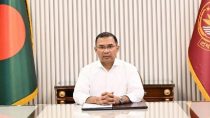
In the February 12, 2026 election, the people of Bangladesh voted against the injustices of the past. The Bangladesh Nationalist Party (BNP) secured a landslide victory, and Tarique Rahman was sworn in as prime minister on February 17. This mandate represents not only political power but also a major responsibility. The BNP has a historical connection to the struggle against poverty.
In 1977, Shaheed President Ziaur Rahman promoted self-reliance and launched a canal-digging programme, personally taking part in the work with a spade. During the early years of his administration, 193 canals stretching more than 675 miles were dug or re-excavated.
Today, his son, Prime Minister Tarique Rahman, is seeking to adapt that legacy to modern conditions. At the centre of his government’s philosophy is a simple but important idea that he expressed in parliament: “The main unit of development is not the individual, but the family.”
The Family Card is a major expression of this approach. On March 10, just 21 days after the government took office, the first phase of the programme distributed cards to 37,567 women, each receiving Tk 2,500 a month. The card uses chip, QR code and near-field communication (NFC) technology. Up to five family members can be included under one card.
However, the BNP’s poverty-reduction strategy extends beyond the Family Card. It aims to cover a broad range of people, from rural farmers to urban workers. Under the proposed Farmer Card programme, 4.25 million farmers are set to receive Tk 2,500 annually. The government has also waived agricultural loans of up to Tk 10,000, including interest.
Another major initiative is the nationwide canal-digging programme. On March 16, the prime minister formally launched a programme to dig and re-excavate canals and water bodies in 54 districts, beginning in Kaharole, Dinajpur. In line with its election pledge, the government plans to dig or re-excavate 20,000 kilometres of rivers, streams, canals and water bodies over the next five years. The programme is expected to reduce waterlogging, improve irrigation and increase agricultural production.
Healthcare and social protection
Illness is another major cause of poverty. A serious disease can push a family into financial ruin almost overnight. Research by the World Health Organization and the World Bank describes this as catastrophic health expenditure, which forces many households into poverty each year.
To address this problem, the government has launched an e-Health Card initiative, which is currently at the pilot stage. Under the pilot programme, around 2.5 million people in Khulna district are expected to receive access to digitally recorded healthcare services. At the same time, the allocation for healthcare has been increased from 0.58 per cent to 1.01 per cent of gross domestic product (GDP).
The government has proposed increasing the maximum financial assistance for patients suffering from serious diseases such as cancer, kidney disease and liver disease from Tk 50,000 to Tk 100,000. An allocation of Tk 6.5 billion has been set aside to provide Tk 100,000 each to around 65,000 patients. The social protection framework also includes support for religious leaders and those who serve places of worship.
On March 14, the prime minister launched a monthly allowance programme for imams, muezzins and religious workers from all faiths. Under the programme, imams receive Tk 5,000 a month, muezzins Tk 3,000 and mosque caretakers Tk 2,000. The scheme also covers Hindu priests and temple workers, Buddhist monks and Christian clergy. The government has said that 256,074 people will receive these allowances in the current fiscal year.
Existing social safety-net programmes are also being expanded. The monthly old-age allowance is set to rise from Tk 650 to Tk 700, while the number of beneficiaries will increase by 100,000 to 6.2 million. Similar increases are planned for widow allowances. Meanwhile, 3.45 million people with disabilities receive a monthly allowance of Tk 900.
The government has also proposed free train travel for people aged 65 and above. A new unemployment allowance programme is planned for people without work. Under the scheme, 15,000 unemployed workers will receive Tk 5,000 a month for up to three months. Overall, in line with the BNP’s election commitments, the government plans to bring around 10 million additional beneficiaries under social protection through six new programmes.
These initiatives indicate an effort to support different sections of society, including farmers, women, older people, unemployed young workers, patients and religious service providers.
Accountability is essential to ending poverty
Poverty declines when the state protects people’s incomes and the government remains accountable to the public. The previous authoritarian government weakened accountability, while corruption and the alleged looting of public resources allowed wealth to flow abroad. Ordinary people ultimately bore the cost.
The BNP’s stated approach is different. Since taking office following an electoral mandate, Prime Minister Tarique Rahman’s government has placed poverty reduction at the centre of its policy agenda. The employment and agricultural programmes introduced by Shaheed President Ziaur Rahman are now being combined with modern technology, digital beneficiary records and family-based social protection. This represents a continuation of the BNP’s longstanding political commitment to fighting poverty.
The government’s announced initiatives, budget allocations and implementation plans provide grounds for believing that it intends to work towards a poverty-free Bangladesh. However, the ultimate test will be whether these programmes are implemented effectively and deliver lasting improvements to people’s lives.
On the International Day for the Eradication of Poverty, the call is clear: let us support efforts to ensure that the benefits of these programmes reach households across the country. Under Prime Minister Tarique Rahman’s leadership, we must work together to build a Bangladesh free from hunger and poverty and move towards shared prosperity.
The writer is a Senate and Syndicate member of the University of Dhaka and a professor in the Department of Marketing at the university.