Century-Long Rope-Pulling Crossing Ends: Bridge Foundation Stone Laid After Daily Inqilab Report
Anwar Zahid
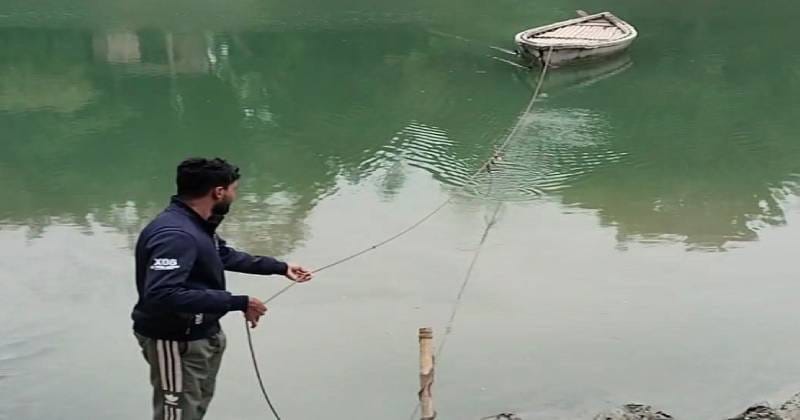
Ten villages in the Saltha and Nagaranda upazilas have suffered greatly for a century because there is no bridge at the Majhardia ferry ghat that crosses the Kumar River. To cross the river, thousands of daily commuters, local farmers, educators, and students must rely only on a wooden flat-bottomed boat pulled by a rope. The bridge links the eastern side at Nagaranda with Majhardia on the western bank, which is central to a significant agricultural market and a 150-year-old commerce center. The late national leader K.M. Obaidur Rahman’s home and a significant political stronghold are located on the eastern bank, which has historically caused infrastructure development in the area to be seriously neglected owing to political issues.
The absence of a bridge has resulted in ongoing challenges for local businesses and education, putting generations of farmers and students in danger every day. Majhardia Dakhil Madrasah and Majhardia Government Primary School are located on the western side of the river, while Ainpur Dakhil Madrasah and Ainpur Government Primary School are located on the eastern side. To go to Majhardia Bazar, farmers carrying harvested crops, jute, and onions on their heads must cross the risky path. Local retailers Mr. Alam, Mr. Aminur, and Mr. Mamun saw that their requests for a vital bridge were entirely ignored despite their frequent requests to public officials over the previous fifty years.
Due to the manual rope system’s high physical power requirements, female passengers and students are particularly vulnerable at the crossing. College students Ms. Ayesha and Ms. Salma talked about their everyday challenges, saying that ladies are unable to carry the large boat across on their own, which frequently leaves them stuck at the ghat during class. These difficulties increase during the rainy season, when students must wait hours for a male stranger to help them. This often leads to missed classes and upset returns home. These opinions were mirrored by elderly community members Mr. Idris Matubber, Mr. Nannu Matubber, and Mr. Jalal Molla, who emphasized that local mobility and economic potential have been severely hampered by a century of misery.
The turning point came when the newspaper Daily Inqilab released a thorough investigative article detailing the 10 impacted communities’ protracted suffering after the present administration took office. The media coverage effectively brought the region’s situation to the attention of high-level administrators, resulting in quick governmental action. Saltha Upazila Engineer Mr. Abu Jafar Mia attested to the prompt submission of a technical evaluation study, which declared the bridge to be an urgent need that is now finally accomplished. He reassured the locals that once the next economic budget is approved, work on the aesthetic structure will formally start.
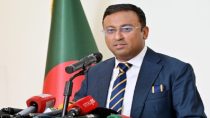
State Minister for Foreign Affairs, Ms. Shama Obaid Islam, formally dedicated a plaque for the construction of the outstanding bridge across the Kumar River at the Majhardia Bazar Bottola, marking a significant improvement for the area. On Friday, August 28, excited locals came together for an on-site visit to show their sincere appreciation for the discovery. The impending infrastructure, according to Elders Mr. Samed, Mr. Kolimuddin, and Mr. Ator Ali, will permanently remove the everyday threats faced by traders and small children. The people of Saltha and Nagaranda will always value journalism’s crucial role in ensuring their basic right to secure connectivity, community members sincerely declared.