Dhaka Moves Towards Company-Based Bus Services
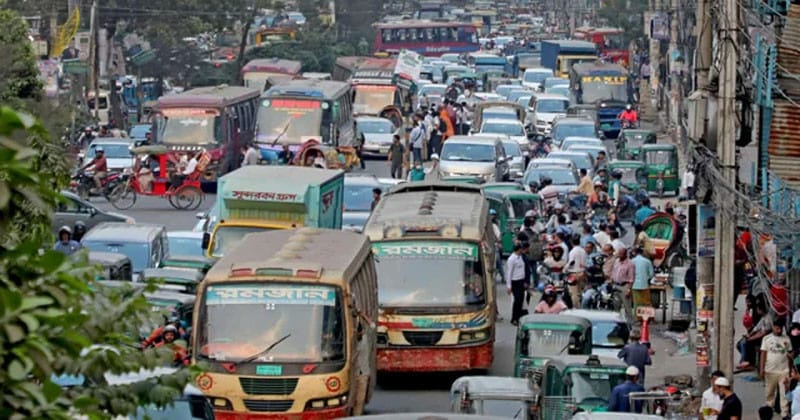
The Bangladesh government is set to launch company-based bus services on six routes starting November 1 to ease severe traffic congestion, stop reckless competition, and modernise Dhaka’s public transport system. Operating under a ‘One Company, One Route’ framework, individual bus operators will be consolidated into unified corporate entities, introducing fixed bus stops, electronic ticketing, and GPS tracking. Approved during an October 8 meeting chaired by PM Tarique Rahman, the initiative targets launching services on two routes within seven working days, finalising a franchise system across 32 restructured routes in two months, and completing a full rollout within six months.
Currently, around 7,500 buses from 66 companies operate on 98 active routes in Dhaka, where overlapping operations frequently cause chaotic traffic and unsafe driving practices. Based on a Dhaka Transport Coordination Authority (DTCA) survey analysing over 35,000 trips across 10,000 commuters, authorities plan to streamline the existing network into 32 routes. The initial phase will deploy 816 buses, including one air-conditioned and five non-air-conditioned routes, to link key areas in Dhaka and surrounding districts. To prepare for this shift, bus owners have been granted two months to repair and repaint dilapidated vehicles to ensure a uniform fleet design across the capital.
DTCA Executive Director Mohammad Mashiur Rahman stated that company-based bus operations will begin on six routes, noting that although buses from two to three companies may operate initially, they will eventually be unified under a single company framework. He highlighted that vehicles under the new management system will feature a standardised design and that repainting efforts are already underway. Meanwhile, relevant transport agencies and police authorities have been instructed to submit infrastructure development plans to the city corporations within seven working days, with all required construction and repair tasks targeted for completion within three months.
Dhruvo Alam, Deputy Transport Planner at DTCA, noted that a major reason behind the failure of past initiatives was the lack of proper engagement with bus owners’ associations. He explained that previous government decisions were imposed without adequate coordination, though concerns remain regarding whether utilising repaired existing buses will adequately address accessibility for persons with disabilities, persistent overcrowding, or broader service quality. To ensure smooth execution, the policy mandates strict legal action against unauthorised buses operating on fixed routes alongside continuous location monitoring to maintain discipline across the city’s expanding transit network.
Md. Saiful Alam, General Secretary of the Dhaka Road Transport Owners’ Association, highlighted that joint drives with transport workers and police were launched on October 11 across 17 locations to combat transport chaos, yielding visible traffic improvements. However, he emphasised the necessity of daily mobile courts led by executive magistrates at these checkpoints to penalise non-compliant drivers. He added that while city corporations have yet to construct all designated bus stops, active monitoring is underway to enforce passenger boarding strictly at official stops and eliminate haphazard roadside pickups.