Alternative Crops Transform Charghat Agriculture, Boosting Income and Jobs
The growing adoption of profitable alternative crops alongside traditional farming is paving the way for new agri-entrepreneurship in Charghat Upazila of Rajshahi. Driven by lower production costs, higher profit margins, efficient land utilisation, and strong market demand, alternative crop cultivation has unlocked fresh economic opportunities for local youth. Farmers who long relied on conventional options like paddy, sugarcane, and mangoes faced rising input expenses, higher labour wages, and price volatility. To overcome these hurdles, shifting toward high-value crops tailored to regional soil and climate conditions has gained significant momentum across the upazila.
According to the Upazila Agriculture Office, alternative farming initiatives have expanded across nearly 250 hectares of land. Key endeavours include the cultivation of malta, strawberries, grapes, oranges, year-round mangoes, hog plums, cotton, high-value vegetables, and sapling production in poly-net houses. These diversified ventures are enhancing local incomes, encouraging new entrepreneurs, and generating vital rural employment. Additionally, cotton farming has emerged as a major cash crop, occupying nearly 150 hectares this season under the guidance of the Cotton Development Board, which provides crucial technical support to incoming growers.
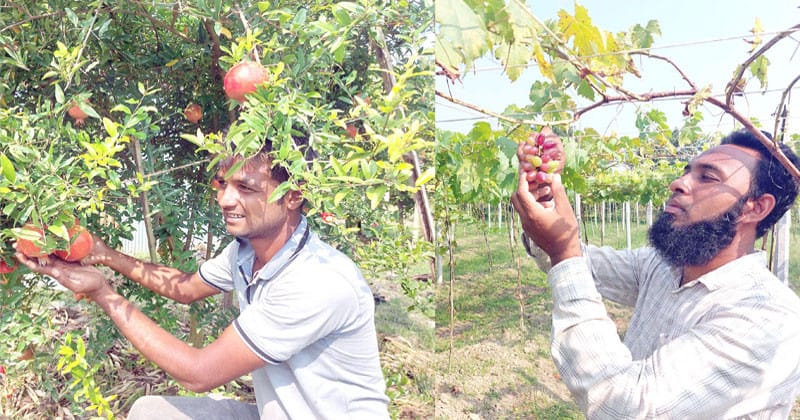
Local young entrepreneurs exemplify the transformative impact of this agricultural shift. Hanif Mondal from Fatehpur village, an educated youth, established ‘Hanif Agro Farm and Nursery’ on 16 bighas in 2019, earning substantial profits from diverse fruits and sapling sales. Similarly, Shibly Sadek from Halidagachi village initiated commercial pomegranate farming on two bighas in 2022, harvesting around 200 fruit-bearing trees. Mr. Sadek reported generating approximately 10 lakh BDT from his fruit yields alone, inspiring other educated local youths to pursue commercial fruit farming instead of traditional job hunting.
Highlighting the strategy behind this transition, Upazila Agriculture Officer, Agriculturist Al Mamun Hasan, stated that making agriculture profitable requires proper crop selection, production cost management, and clear market awareness. He noted that the upazila’s climate and soil are highly suitable for these high-value alternative crops. Mr. Hasan emphasised that expanding these initiatives will not only boost farmers’ incomes but also create sustainable localised employment opportunities across the region.