Dhaka Stands Firm on Hasina’s Return: India Must Hand Her Over Under Extradition Treaty, Not Through Passport
New and important questions have arisen in Dhaka and New Delhi diplomatic relations over the move by Bangladesh’s ousted Prime Minister Ms. Sheikh Hasina to seek a new passport and National Identity (NID) card. Many national and international media outlets reported yesterday Monday on a letter sent to the Bangladesh High Commission in New Delhi through the London based legal firm Matrix Chambers. The letter is linked to the plan for Ms. Sheikh Hasina, who is staying in India, to return home.
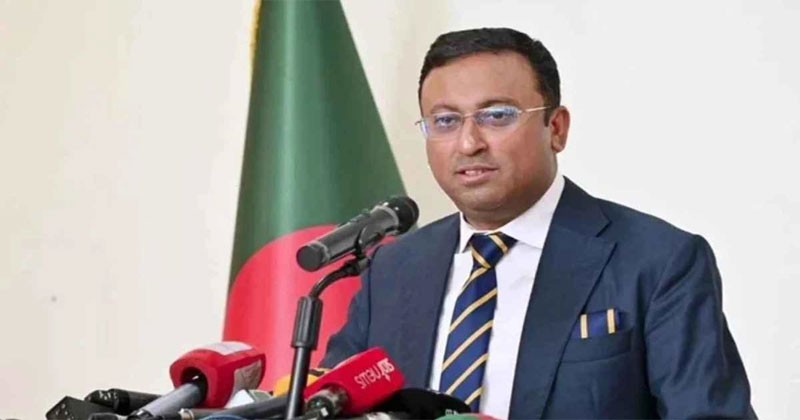
But the stand of the Bangladesh government is clear. Instead of returning Ms. Sheikh Hasina by issuing a passport or travel document, Dhaka wants to bring her back under the existing extradition treaty between India and Bangladesh. State Minister for Foreign Affairs Mr. Humayun Kabir called the move to seek her passport “utterly ridiculous”. He said Bangladesh does not give passports to terrorists.
He said that if Ms. Sheikh Hasina really wants to return home, she must be handed over to Bangladesh under the extradition treaty held by India. She must then surrender to court and serve her sentence. The State Minister’s words make it clear that the government does not see her return as an ordinary citizen’s administrative travel process. It sees it as part of judicial accountability and a bilateral diplomatic process.
The State Minister also said an ordinary passport application cannot work for fugitive criminals. Bangladesh and India have an extradition treaty, and under it the government will move to bring Ms. Sheikh Hasina back and put her on trial. Earlier, on 5 November, Mr. Humayun Kabir had also said there is no need to give her a new passport or travel document. He said the government’s aim is to bring her back through the extradition process.
Law Minister Mr. Md. Asaduzzaman also said on 8 November that necessary legal steps will be taken to bring Ms. Sheikh Hasina back under the extradition treaty. After the move to seek her passport and NID came up, the government also spoke of checking the legal position. Home Minister Mr. Salahuddin Ahmed said yesterday Monday that he had heard the news of her application, but its truth has not yet been checked.
He said the Ministry of Foreign Affairs and the Ministry of Law are looking into the matter. They will review whether the application was made properly, what its legal basis is and whether she has the right to apply. The next step will be taken after that. The Home Minister also said a letter has been sent to the Indian government to return Ms. Sheikh Hasina under the extradition treaty.
Her present judicial position is important behind this stand of the government. Last year in November, International Crimes Tribunal 1 sentenced her to death in her absence in the case of crimes against humanity during the July mass uprising. She was accused in that case of ordering the use of deadly force to suppress the movement of students and the public. She has denied the charges while living in exile.
But since the sentence against her still stands in the Bangladesh judicial process, the question of her return is far more complex than getting a passport. In this situation, the government sees the move to return with a new passport as a possible way to avoid the judicial process.
Another important question has also come up in diplomatic circles. Is this her own direct application, or a request sent by a legal firm on her behalf? According to sources at the Delhi High Commission, lawyers of Matrix Chambers asked the Commission to take the necessary steps to issue a new Bangladeshi passport and NID for Ms. Sheikh Hasina. The letter mentioned her Bangladeshi citizenship and Bangladesh’s obligations under various international human rights treaties.
But according to Dhaka diplomatic sources, the email sent to the High Commission did not carry any proof of her approval. It also did not show any power given to the law firm to apply on her behalf. So there is a question about whether this is her own proper application.
Mr. Saidur Rahman, Press Minister of the Bangladesh High Commission in Delhi, said the High Commission has sent the email to the Ministry of Foreign Affairs. He said the government is now considering how to check the truth and legal basis of the application.
The matter is diplomatically important because a claim for a passport on the basis of citizenship is not the same as the process of bringing back a convicted person who lives in another country through extradition. Issuing a passport is an administrative and legal decision of a state. Extradition is a legal and diplomatic matter between two states.
In the case of Ms. Sheikh Hasina, these two processes cannot be seen as one. Even if she claims citizenship, it does not automatically give her the right to a passport. This is more so when a sentence is pending against her and the government is following the extradition process to bring her home.
According to migration experts, her extradition has been one of the main unresolved issues in Dhaka and New Delhi relations since India gave her shelter. Bangladesh’s process to seek her return is going on. Now the move to seek her passport and NID has given the question a new dimension. In the view of the Bangladesh government, her way home should be through the court and the extradition treaty. It should not be by entering the country like an ordinary passenger with a new passport.
According to the existing extradition treaty between Bangladesh and India, there is a system to hand over accused or convicted persons under the judicial and legal processes of the two countries. But the treaty has certain legal conditions, exceptions and matters for the relevant authorities to consider. So India’s decision on returning Ms. Sheikh Hasina is not only administrative. It also depends on the relations between the two countries and on how the treaty is applied. Dhaka expects New Delhi to rise above political considerations and take the necessary steps under the treaty.
It is said that she has announced a plan to return to Bangladesh next December and surrender to court. Her associates have also said they will announce the date of return after completing various formalities. But in view of the Bangladesh government’s position, the path to carry out this plan is not easy.
According to legal experts, the extradition question is not only a judicial matter for Bangladesh. It is also important for deciding the future of relations with India. Her stay in India has created strain in the relations of the two countries. Although Bangladesh has asked for her return, India has not handed her over so far. The move to seek a new passport and NID has again brought Bangladesh’s extradition stand before India for consideration.
According to Dhaka’s diplomatic position, issuing a new passport is not a solution for her return. Instead, India must decide on handing her over to Bangladesh in light of the sentence and judicial process against her. India’s cooperation in this process can send an important message about the relations of the two countries. The expectation of justice by the people of Bangladesh and the question of state sovereignty are also linked to it.
According to geopolitical analysts, the move to seek a new passport for her is not limited to an application for a document. It has become an important test of Bangladesh’s judicial process, India’s stand on extradition and the diplomatic relations of the two countries. The government’s position is clear. Bangladesh wants to move toward bringing Ms. Sheikh Hasina home under the extradition treaty, not by passport, and to carry out the court verdict.