Crackdown Targets Only Licensed Bars
Drug Abuse Reaches Epidemic Levels as Narcotics Authorities Fail to Act
Hasan Uz Zaman
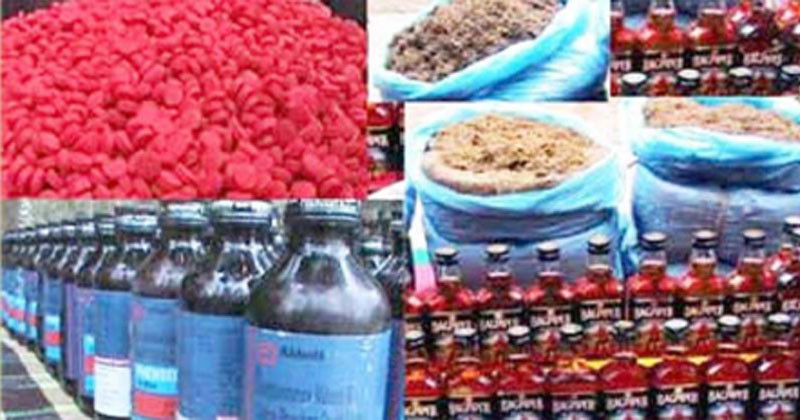
The spread of illegal drugs in the country is no longer only frightening. It has reached the level of an epidemic. Statistics of the Department of Narcotics Control say the country has 8.2 million drug users, but the real number is higher. Life destroying drugs like heroin, phensedyl, crystal meth or ice, fentanyl, krokodil (the flesh eating drug), cocaine and crack cocaine, MDMA or ecstasy and LSD are available at a hand’s reach. Yaba is now found everywhere.
The Department of Narcotics Control is the only agency to stop the spread of drugs, but it shows more interest in raiding legal liquor bars, which are less harmful. The owners of legal bars take licences under all government laws and run their business legally. They pay VAT and tax to the government regularly. The department raids these bars on the excuse of checking whether anyone drinks without a permit. The Home Ministry does not monitor or guide the agency properly. So some corrupt officers of the agency are becoming reckless day by day.
There are allegations that they raid the bars only when the regular monthly payment comes late. They do not look at the dangerous drugs that flood the country. Raids in bonded warehouses are not part of the Narcotics rules, but they raid there too and break the law. Recently they carried out several such raids in the capital, and people everywhere criticise the mysterious role of Narcotics. Big industrial groups also manage corrupt government officers to raid small and medium businesses. They do this to sell their own products at high prices in the market and to increase their promotion.
Almost all law enforcement agencies of the country work together to control drugs. Police, the Special Branch, the Border Guard Bangladesh and the Coast Guard go beyond their main duties and recover illegal drugs and arrest those involved. Narcotics, which has this as its only duty, cannot show even a quarter of their success. There are many allegations that Narcotics sometimes catches yaba and cannabis traders and then releases them for money. To keep their existence alive, they announce the small success of one or two raids loudly at big press conferences. They also spend money to show off their success on social media and other platforms.
On the spread of dangerous drugs, an officer of Narcotics spoke on condition of anonymity. He said that if drinking alcohol and entering liquor bars are made easy, people will lose interest in dangerous drugs. So he said alcohol should be made easily available.
A survey run in 2025 by the Department of Narcotics Control, Bangladesh Medical University and RMCL found 8,194,605 drug users in the country, or 8.2 million. This is 4.88 percent of the total population. By this count, the problem is moving toward an epidemic. One person can also be addicted to more than one kind of drug. 33 percent of users said they started using drugs between the ages of 8 and 17. 59 percent of users aged 18 to 25 said they started at that age. More than half said they started at the age of 20 or before.
The survey says the dangerous drugs come from outside the country, especially through the south eastern border. Phensedyl, cannabis and heroin come through the Indian border, but yaba comes through the Naf River at Teknaf, and it is made in Myanmar. Officers say they have found no yaba factory in Bangladesh. Pills made with birth control pills have been recovered, but they are only made to look like yaba. The only real yaba factory was inside the house of Mr. Amin Huda.
According to sources in Narcotics, it is true that drug godfathers exist, but they always stay hidden. Small players get caught. The country has about 23 thousand illegal drug sellers, big and small, though this number changes. In each quarterly survey, some of these sellers get arrested, some stay in jail, some flee abroad and some die. According to the Department of Narcotics Control, the country has about 243 bar licences. Of these, 127 are hotel bars, 64 are restaurant bars, 48 are club bars and 4 are resort bars. The department says the former Awami League government gave far more bar and liquor licences than any earlier time during its long rule. But after the political change of 2024, no new licence has been given, the department said.
Mr. Mukul Jyoti Chakma, Deputy Director (Operations) of the Department of Narcotics Control, told Daily Inqilab on Tuesday that it is really challenging to control the drug spread at this level. He said the family must take the first responsibility, so that no young person comes in contact with drugs. After that, it is a matter for the state. He said the judicial system must also take care that people involved in drugs do not get released easily. He said lawyers also have a role. It is better not to argue in court for people who face many drug cases.
On the social spread of drugs, Mr. Chakma said drugs are always sold in Geneva Camp. He said the location of the camp and the social standing of its residents make it hard to raid. He said the government should move the residents of Geneva Camp elsewhere, as it did with the Agargaon BNP slum, and build government offices and courts there. He said one agency alone cannot control drugs. A joint effort is needed. He said society is wrecked by the grip of drugs, but the main masterminds or godfathers stay out of reach, as they did in the past.
Meanwhile, dishonest officers of the Department of Narcotics Control build friendship with drug traders instead of controlling drugs, and they take financial benefit for themselves. There are also allegations that they take big bribes by threatening to trap innocent people in drug cases or by promising to remove an accused person from a case. They also reportedly return seized drugs or reduce the amount. They show less yaba, phensedyl or other drugs in court reports than they recovered in raids, or they remove seized evidence. There are also allegations that they collect monthly extortion money.
At a briefing on the law and order situation on 30 September, Home Minister Mr. Salahuddin Ahmed said the government has the list of terrorists, extortionists and drug traders. He said a strong crackdown is going on against them, and it will be made more intense.
On 11 August, there was an allegation of taking a bribe of 1 lakh taka and releasing an accused person during a raid by the Department of Narcotics Control (DNC) in Kadipur village under Damkura Police Station in Rajshahi city. Sub Inspector Mr. Al Amin led the raid under the direction of Inspector Mr. Helal Uddin of Circle B of the Rajshahi district branch. On 1 October, an allegation arose in Badalgachhi, Naogaon, against an assistant sub inspector of the department. He allegedly demanded another 40 thousand taka from a woman trader, after taking 10 thousand taka, during an anti drug raid.
In June, allegations arose against 10 officers of the Department of Narcotics Control. They allegedly took a bribe of 20 lakh taka, demanded extortion money and trapped a person in a false case. Mr. Farhad Billah Rubel, a businessman from the Nikunja area of the capital and owner of La Pesseta Fashion and Trading Corporation, gave written complaints about this to the Home Ministry, the Law Ministry and the Director General of the Department of Narcotics Control. It is known that officers at different levels of this agency, which works to stop the flow of drugs in the country, are often accused of immoral acts. Committees are formed over these allegations, but most of the time the reports of those committees stay in the dark.