Effective Measures Must Be Taken to Resolve the Gas and Electricity Crisis

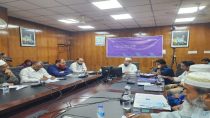
At a gathering of doctors held at the LD Hall of the National Parliament on Saturday (August 8) to mark the 37th founding anniversary of the Doctors Association of Bangladesh (DAB), Prime Minister Tarique Rahman said that a certain group was deliberately trying to create instability in the electricity and energy sectors by spreading misleading statements. The Prime Minister said the government had already begun working to bring the country and its people out of the crisis. When the government assumed office, he said, it inherited a fragile state characterised by a weak economy, a divided administration, and fragile education and healthcare systems. The government is working to rebuild the country and address the problems it inherited.
However, he said, beneficiaries of fascism remain present in various parts of the state and administration. Unplanned projects and initiatives undertaken in the past have pushed the energy sector into a vulnerable position. The government is working to correct these problems and bring the country out of the crisis. The gas and electricity crisis in Bangladesh is not new. Despite repeated efforts, a sustainable solution has yet to be found, and the situation has continued to deteriorate. After the current government came to power, the longstanding crisis was compounded by the global crisis arising from the war involving Iran, pushing the situation to the brink.
In this context, the possibility of conspiracies by associates of ousted former Prime Minister Sheikh Hasina who remain within different parts of the administration cannot be dismissed. Prime Minister Tarique Rahman referred directly to such a possibility in his speech. However, observers say there is no denying that the country is facing a serious gas and electricity crisis. The government must therefore take more effective measures to address it. Even if conspiracies exist, the government cannot rely solely on a “conspiracy theory” to explain the crisis. It must confront any attempts to create instability while taking practical steps to resolve the underlying problems.
A report published yesterday in the Daily New Age said that the electricity crisis has severely disrupted rural life. The situation in Rajshahi is particularly alarming, with people in the division reportedly experiencing nearly 20 hours of load-shedding within a 24-hour period. Rajshahi is one of the major centres of northern Bangladesh and an important hub for education, healthcare, and agriculture. The districts of the Rangpur Division are also closely connected with the region. Rajshahi, Rangpur, and surrounding areas have numerous educational institutions, including universities, making the region one of the country’s major educational hubs. When electricity is unavailable for 20 hours out of 24, the consequences for education, healthcare, agriculture, and everyday life are severe. The crisis is not confined to Rajshahi or northern Bangladesh; gas and electricity shortages are affecting the entire country.
The government knows better than anyone why this inherited crisis has persisted, why it has not yet been resolved, and where the obstacles lie. It must identify and address those barriers and take corrective measures. Gas and electricity are essential to modern life. Without reliable supplies, public life is disrupted and industrial production suffers. The inadequate supply of gas and electricity is also one of the principal reasons for the economy’s sluggish performance. The crisis is obstructing the investment and business activity needed to revive economic growth. The government’s efforts to attract domestic and foreign investment will produce results only when adequate and reliable supplies of gas and electricity are ensured. Investors are unlikely to respond positively to repeated invitations if they see that the country’s energy situation remains extremely poor.
The government’s six-month anniversary will come on August 17. During these six months, the government will assess its own performance, while the people will also judge its record. One of the first issues they will consider is how effectively the government has addressed the deepening gas and electricity crisis. There is little doubt that the government will face criticism on this measure. At the same time, given that it has been in office for only six months and inherited the crisis amid difficult global circumstances, people are likely to give it the “benefit of the doubt” and show some degree of tolerance. The public is being patient in the hope that the government will soon bring the country out of the crisis. However, if the government fails to improve the situation within a reasonable period, public confidence and trust could begin to erode. A perception that the government is unable to resolve the crisis could lead to growing frustration.
The government’s concern about conspiracies in the energy sector cannot simply be dismissed. Those seeking to destabilise the government would naturally try to exploit issues capable of generating public anger. At present, deepening the gas and electricity crisis could provide a powerful means of provoking public dissatisfaction and creating instability. The government’s policymakers should therefore recognise both dimensions of the problem: the possibility of deliberate attempts to create instability and the underlying weaknesses in the energy sector. The government must take effective action against any conspiracy while bringing the gas and electricity crisis down to a tolerable and manageable level. The crisis cannot be resolved merely by invoking a “conspiracy theory.” If the relevant ministries and authorities lack adequate planning, implementation capacity, or competence, those shortcomings must also be addressed.
To restore stability to people’s daily lives and revive the economy, the government must take all necessary measures to resolve the gas and electricity crisis.