
El-Sayed’s Primary Win Shakes Democrats
El-Sayed’s Primary Win Shakes Democrats
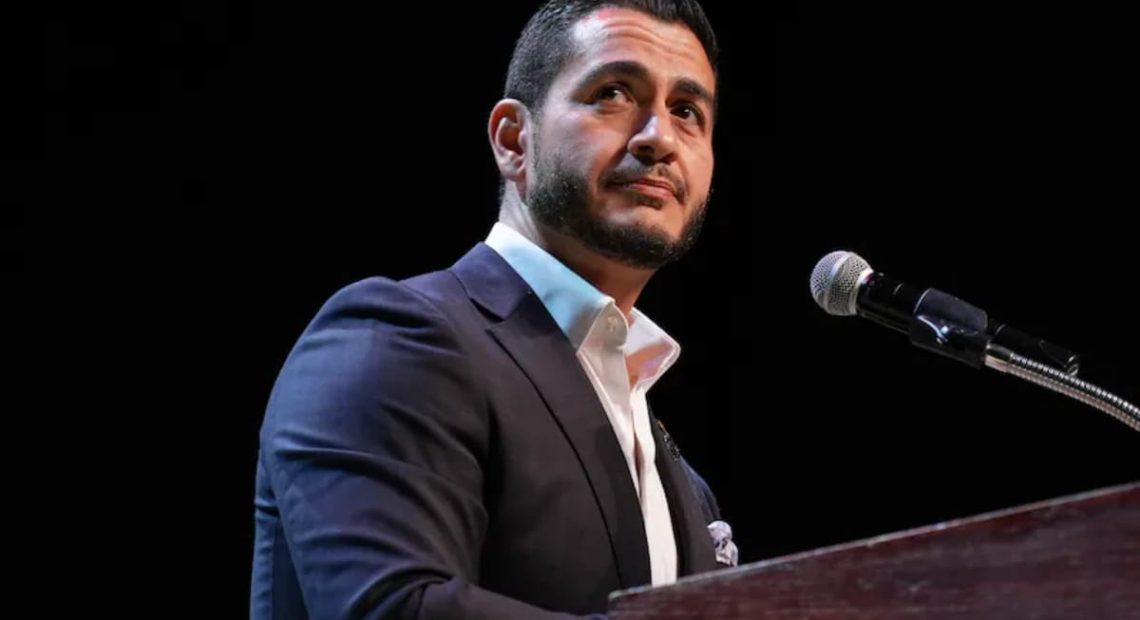
Abdul El-Sayed’s victory in Michigan’s Democratic Senate primary has jolted the Democratic Party leadership, as voters embraced an insurgent progressive candidate at a time when Republicans face growing electoral challenges. His win raises the stakes for the November Senate election, which could determine control of the chamber. Tuesday’s primaries in five states highlighted four major political trends.
A Progressive Upset
El-Sayed’s victory over Congresswoman Haley Stevens had been widely expected after he led in the polls for weeks, but the narrower-than-anticipated margin cast doubt on polling accuracy and dealt a significant blow to the Democratic establishment.
The son of an Egyptian immigrant, El-Sayed campaigned on a progressive platform endorsed by Alexandria Ocasio-Cortez, Elizabeth Warren, and Bernie Sanders. Stevens relied on her legislative experience, party support, and a financial advantage, outspending El-Sayed by roughly nine to one with backing that included $32 million from AIPAC. Despite the funding gap, El-Sayed prevailed.
He must now unite the party and win over lower-income voters who backed Stevens in Detroit and rural communities. Since no Michigan Republican has won a Senate seat since 1994, a Democratic loss to Republican Mike Rogers would damage the party’s hopes of regaining the Senate. A victory, however, would strengthen the party’s progressive wing ahead of the 2028 presidential election.
Setbacks for Pro-Israel Democrats
Haley Stevens was the highest-profile AIPAC-backed candidate to lose. In another Michigan contest, Democratic Socialist Donovan McKane defeated Representative Shri Thanedar, a strong supporter of continued U.S. military aid to Israel. William Lawrence also won a key House primary after campaigning for an immediate halt to U.S. arms shipments to Israel.
Results elsewhere were mixed. Representative Marie Gluesenkamp Perez, who supports military aid to Israel, comfortably defeated a progressive challenger in Washington state. In Missouri, Wesley Bell defeated former Representative Cori Bush, a founding member of the progressive “Squad,” after criticising her outspoken opposition to Israel.
Midwest Voters Reject Republican Measures
Several ballot measures reflected broader public sentiment. Missouri voters overwhelmingly rejected a Republican-backed proposal to make citizen-led constitutional amendments more difficult, a process previously used to expand abortion rights and raise the minimum wage.
Kansas voters also rejected a proposal that would have required state Supreme Court justices to stand for election rather than be selected through the existing commission system. Both Republican-backed initiatives were decisively defeated.
Trump’s Endorsements Mostly Hold
Most Republican candidates endorsed by Donald Trump won their primaries. John James secured Michigan’s Republican gubernatorial nomination despite facing a well-funded opponent, while Kansas Republicans selected Trump’s preferred candidate for governor.
In Washington, Amanda McKean, Trump’s endorsed candidate for the seat being vacated by Representative Dan Newhouse, finished first. Newhouse was one of two House Republicans who voted to impeach Trump after the January 6 attack. However, Trump suffered a setback in Michigan, where Thomas Smith defeated Trump-backed Amir Hasan despite having withdrawn from the race a month earlier.