
Farmers to Earn by Selling Solar Power
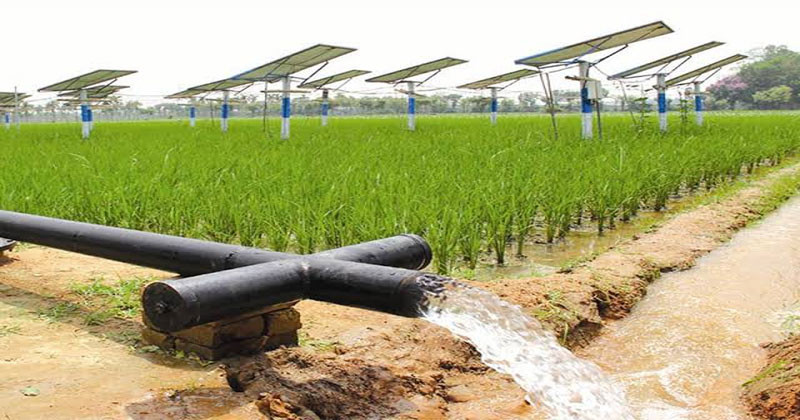
From Sun to Irrigation, From Irrigation to Income
This time, the country’s farmers will earn not only from crop yields but also from selling electricity generated using sunlight. To overcome the worries of load-shedding and rising diesel costs, the government has undertaken a major initiative worth 70 billion taka to fully convert the irrigation system to solar power. Under this plan, alongside irrigating fields, surplus electricity will be added to the national grid, creating a dual benefit for agriculture.
Under the project titled “Conversion of Existing Irrigation Equipment into Solar-Powered Irrigation Equipment Through the Use of Renewable Solar Energy,” the estimated cost is 6,999.55 crore taka. The project has been proposed for implementation over four years, from July 2026 to June 2030. The Bangladesh Agricultural Development Corporation (BADC), under the Ministry of Agriculture, will implement the project, with the entire funding planned to come from government sources. According to Planning Commission sources, the process of including this project in the list of unapproved new projects under the Annual Development Programme (ADP) for fiscal year 2026-27 is underway. The project has been proposed for implementation in 349 upazilas across 56 districts in eight divisions of the country.
Under the project, 250 diesel-powered low-lift pumps (LLPs) with a capacity of 2 cusecs, 550 LLPs with a capacity of 1 cusec, and 50,000 shallow tube-wells with a capacity of 0.5 cusec will be converted to solar power. Additionally, there are plans to run 100 electricity-powered deep tube-wells on solar power as well. These irrigation devices will make it possible to irrigate 262,500 hectares of land annually, and BADC expects this to result in an additional 459,375 tonnes of food grain production.
The use of diesel in the country’s irrigation system is very high. The project proposal states that the country currently has approximately 1,220,807 diesel-powered irrigation devices, and due to the lack of grid electricity access, about 71 percent of the country’s irrigation pumps run on diesel — requiring large quantities of diesel to be imported every year during the irrigation season. If the 50,900 diesel-powered irrigation devices under this proposed project are converted to solar power, it would save 26,711.26 tonnes of diesel annually, which BADC estimates would save 361.41 crore taka in foreign currency each year.
Another major aspect of the project is the net metering system, which will be installed on 25,000 solar-powered irrigation devices. When irrigation is not needed, or outside the irrigation season, surplus electricity generated from the solar panels will be fed into the national grid. The project proposal states that this could generate approximately 176.40 crore taka in income annually — meaning the solar pumps would not only be used for irrigating fields but would also create an opportunity to earn money by generating surplus electricity.
The project proposal notes that the National Renewable Energy Development Strategy 2026-2030 emphasizes the phased conversion of diesel-powered irrigation devices to solar power, and that the project aligns with the target of generating 10,000 megawatts of electricity from renewable energy by 2030. It notes that even as power generation capacity increases, many areas still face electricity shortages and low-voltage problems during irrigation periods, making it difficult to run electricity-powered pumps — a situation in which solar power can serve as an alternative irrigation solution.