From Farakka to Indus: India has turned even life saving water into a tool of geopolitical pressure!
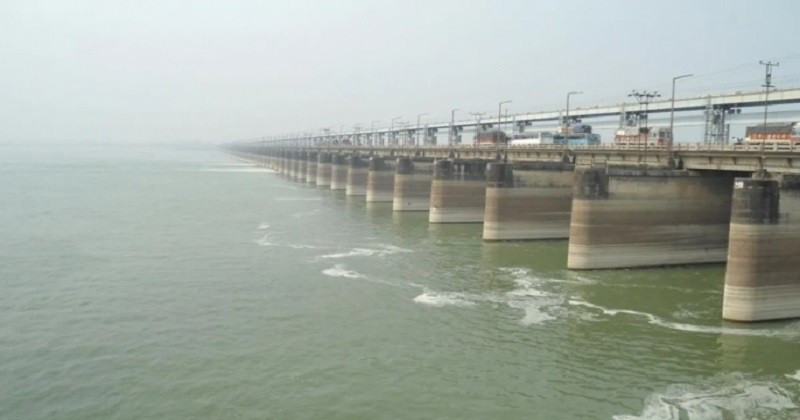
An article in Pakistan’s The Nation asks a direct question. Is New Delhi turning the shared rivers of South Asia into a tool of diplomatic blackmail or geopolitical pressure? The Ganges water sharing treaty with Bangladesh will expire this coming December. India has also put the Indus Waters Treaty with Pakistan on hold on its own. Both facts raise this very fear.
When lifelines become bargaining chips for political gain, the very existence of downstream countries falls into deep trouble. But India’s own position is now being questioned in the international arena because of this blunt and unfair upstream water diplomacy. China holds the same upstream position over India on the Brahmaputra river. So Delhi’s dominating behaviour toward its neighbours may give Beijing a fitting chance to teach India a big diplomatic and strategic lesson as a regional power. The article of The Nation is given below.
The Ganges water sharing treaty between India and Bangladesh will end on 12 December 2026. India has also kept the Indus Waters Treaty (IWT) with Pakistan on hold since April 2025. Together, these two events raise an uncomfortable question. Will India treat shared rivers as a base for cooperation, or will it turn water into a tool of geopolitical pressure?
Across South Asia, rivers are not just streams of water. They are the lifelines of people, not pieces in a political game. The Ganges and Padma river system of Bangladesh supports the country’s farming, fisheries and river transport. It also keeps the balance of fresh water in the delta region. When the flow drops in the dry season, salinity rises and the livelihoods of ordinary people come under threat.
In the same way, the Indus basin of Pakistan is the main base of the country’s farm economy. It is also the chief source of life for crores of people. So the future of these treaties is not only about how two governments share water. It is a question of safety for crores of people who depend on water that flows across borders.
In new talks at Farakka Point, it is important to balance two things. One is the water security of the downstream country. The other is the upstream country’s need for flexibility. Under the 1996 Ganges treaty, water is shared by a set formula in the dry season from January to May. If water availability falls below 50 thousand cusecs, the two countries must hold talks.
Bangladesh wants stronger protection of the minimum water flow in the dry season. India, on the other hand, wants more flexibility to meet the farm and industry needs of West Bengal and Bihar. To ease the worries of both sides, there must be a clear framework that both agree on. It must not leave downstream communities at the mercy of one sided decisions, even in times of water crisis.
The real trust in a treaty is proven only when a severe water shortage arrives. It is proven when public anger runs high and political leaders face hard choices.
The Indus water dispute sets an even more worrying example. After the terror attack in Pahalgam, India put the Indus Waters Treaty on hold on its own. This brought security conflict into the management of a shared river. Pakistan says the treaty is still legally binding. It also says any attempt to stop or divert its water flow will count as an “act of war”.
The international Court of Arbitration has ruled that the treaty is still in force. Yet India has rejected the authority and the decision of this court. The talks over the Ganges treaty have a different background. Still, in both cases the main test is the same. Can long standing promises survive when political tension rises?
India’s stand on the Indus treaty has raised doubts about the trust in rule based water management in this region. If a treaty works only as long as bilateral ties stay smooth, no treaty can give reliable protection. A successful renewal of the Ganges treaty will show that shared river water can be managed by agreed rules even when national priorities change. But if the Ganges talks also fail during the Indus deadlock, the fear of using upstream control as a political tool will grow deeper. The helpless people downstream will pay the heaviest price for this uncertainty.
The regional impact of this situation goes much further. On the Brahmaputra, India lies downstream of China. On the Indus and the Ganges, it lies upstream of Pakistan and Bangladesh. India expects fair rights and consideration from China as a downstream country. It cannot be reasonable to ignore the same expectations when it comes to its own neighbours.
The policy India follows with Pakistan and Bangladesh will also shape its future expectations and examples in bargaining with China. So the principles of transparency, dialogue and restraint should apply equally across the whole region.
The renewed Ganges treaty needs several practical safeguards. It should guarantee a minimum flow to ensure water in drought seasons. It should also have a clear formula for sharing water during unusual shortages. Real time sharing of water data, joint monitoring and open assessment will help avoid arguments over water availability.
A dispute settlement system with a fixed time limit will stop technical differences from growing into a big political crisis. The treaty could also allow a review at set intervals to deal with the effects of climate change. But this must happen through a process that both sides accept. The flexibility of the treaty should strengthen mutual cooperation and should not weaken binding duties.
These principles can be a big lesson for the Indus basin too. Instead of creating uncertainty through one sided announcements, existing treaties should be reformed and improved through talks. Climate change pressure, rising water demand and extreme weather make institutional cooperation more vital than ever. Shared rivers need a strong framework that keeps working even when political ties turn bad.
It should also assure farmers, city dwellers and marginal communities that their water rights will not become hostage to diplomatic disputes. People downstream need reliable information and real protection. Verbal promises that vanish the moment diplomatic ties worsen are not enough.
The renewal of the Ganges treaty gives India and Bangladesh a chance to show that water promises can outlast political differences. India and its neighbours do not need to settle all bilateral disputes before they cooperate on rivers. They need to build institutions that can keep working despite those disputes.
The success of a treaty is not measured only by how much water is shared in normal times. The real measure is how much trust the treaty holds when water flow drops and political tension rises. The rivers of South Asia cannot be run on doubt and mistrust. They need strong treaties that can survive any political storm.
Ms. Bakhtawar Raja is a Pakistani researcher in international relations. Her main fields of work are maritime security and regional cooperation.