From Potato Capital to Digital Empire: China’s Power Play for AI Supremacy
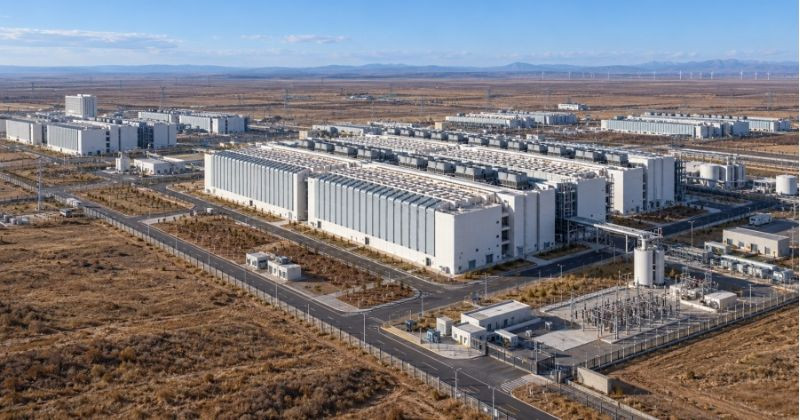
Once known primarily as China’s ‘potato capital,’ the Ulanqab region in Inner Mongolia is rapidly transforming into a massive computing hub driving the country’s artificial intelligence ambitions. Massive rectangular data center complexes are springing up across the expansive terrain under intense construction activity. An engineer on site vividly captured the relentless pace, remarking, ‘This is China Speed. We are obsessed with building infrastructure!’ These facilities support a national directive to integrate AI across 99% of Chinese industries and daily life by 2030.
This infrastructure boom across cold, sparsely populated regions like Ulanqab, Ningxia, Gansu, and Guizhou serves tech giants including Huawei, ByteDance, and DeepSeek amidst geopolitical rivalry with the United States. While Washington views China’s expansion as a strategic threat, Beijing dismisses such concerns as a Cold War mentality and advances low-cost, open-source AI models accessible globally. This approach allows Chinese tech firms to innovate rapidly while mitigating the pressure of US export restrictions on advanced computer chips.
China’s AI momentum is further fueled by a reversing brain drain, driven by tightening US immigration policies and rising political tensions. Young talent is increasingly returning home, supported by a massive domestic talent pipeline of nearly five million annual STEM graduates. Mr. Jack Zhang, a Yale- and Cambridge-educated researcher who returned to China, observed, ‘Securing resources or direct government support abroad is difficult. In China, those opportunities are far greater.’
To satisfy the immense energy demands of these data hubs, regional authorities are deploying extensive local solar and wind power projects. However, persistent reliance on coal power raises significant environmental concerns, particularly regarding carbon emissions and water scarcity in arid northern areas. Balancing technological progress with ecological sustainability remains a delicate challenge as China scales up the power generation required to maintain its massive computing ecosystem.
At the local level, the rapid transformation evokes sharply contrasting reactions from residents. Mr. Zhang, an elderly potato farmer whose children secured regional jobs, expressed national pride, stating, ‘China is now at the top of the world. My children found jobs here.’ Conversely, a local shepherd voiced skepticism about the everyday impact, remarking, ‘Big Data and AI mean nothing to ordinary people. Aside from paying for mobile internet on my broken phone, nothing has changed.’
Source: BBC