Gas Supply On the Rise as Moheshkhali LNG Facilities Resume Operations
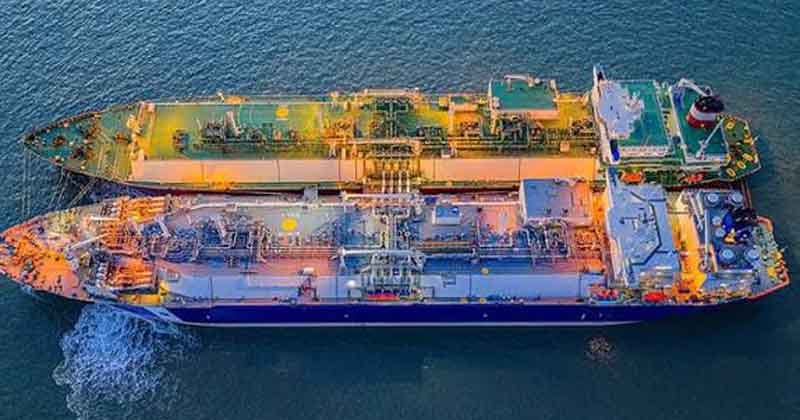
Gas supply from the floating LNG terminals in Moheshkhali is gradually rising as both facilities have resumed operations following weather-induced disruptions in the Bay of Bengal. As of Friday morning, total supply from the two floating storage and regasification units (FSRUs) increased by 60 million cubic feet per day (MMcfd), reaching 670 MMcfd. The temporary disruption occurred after Summit Power Limited’s terminal was forced to halt operations on Thursday afternoon due to severe weather. A Petrobangla official confirmed that supply is steadily improving, noting that operations resumed safely this morning.
Adverse sea conditions triggered by a deep depression over the Bay of Bengal had earlier delayed fresh LNG cargo transfers, leading to a noticeable drop in national pipeline pressure. Maritime ports across Bangladesh have been advised to keep Local Cautionary Signal No. 3 hoisted as high waves and strong winds continue to complicate offshore operations. Despite these hazardous conditions, officials reported that a new LNG carrier has been successfully berthed at the terminal, with offloading set to begin as soon as sea conditions improve.
Officials express optimism that the overall supply situation will normalize by this evening as weather conditions stabilize across the coastal region. A senior official from Rupantarita Prakritik Gas Company Limited (RPGCL), the Petrobangla subsidiary responsible for LNG imports, stated that there is currently no shortage of shipments, with two carriers already awaiting supply transfer. Once full operations resume, both terminals are expected to deliver at their peak combined capacity, backed by eight vessel arrivals this month and another scheduled for late September.
In an official press release, Petrobangla explained that the sudden adverse weather temporarily impaired offshore LNG transfers, resulting in an unavoidable drop in overall national supply. The corporation assured the public that pipeline delivery will normalize swiftly once conditions in the Bay of Bengal improve, while expressing regret to consumers for the unexpected disruption. Bangladesh relies on imported LNG for 35 to 40 percent of its total gas distribution, with the two Moheshkhali FSRUs, operated by Excelerate Energy and Summit Group, providing a total capacity of 1,100 MMcfd.
The weather disruption temporarily disrupted what had been a stable national gas supply, which had returned to regular levels after nearly two months of deficits. Against a daily national demand of 3,800 MMcfd, total supply dropped from 2,600 MMcfd on Wednesday to 2,200 MMcfd by Thursday evening. The drop occurred primarily because Summit’s terminal ran out of stock at 5:00 PM yesterday when high seas prevented cargo transfer, temporarily causing LNG delivery to plunge to 590 MMcfd from its recent average of 1,000 MMcfd.
This latest incident follows a major disruption on July 21, when a fire at Excelerate’s floating terminal caused a complete shutdown and triggered a nationwide gas deficit. Although that facility was fully restored by mid-August, supply ramp-ups were initially constrained by vessel arrival schedules. Imports had successfully normalized earlier this month, allowing the national grid to recover until the current severe depression over the Bay of Bengal temporarily disrupted offloading operations once again.