Gas Supply to Normalize Within Days: Finance and Planning Adviser
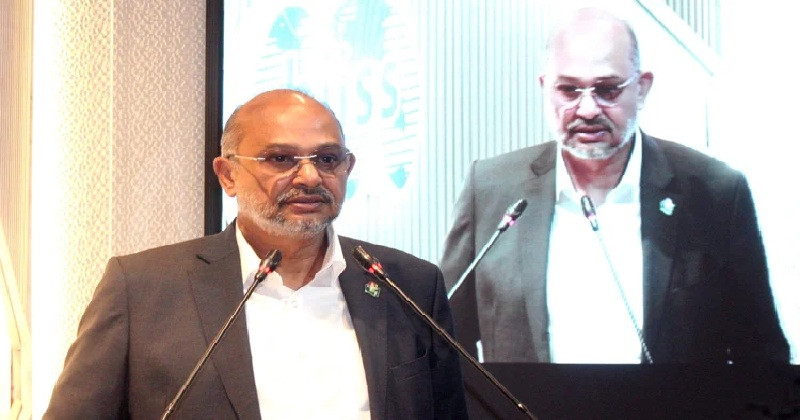
Gas supply in the country will return to normal within the next few days due to government initiatives and gas imports from alternative sources, said the Prime Minister’s Finance and Planning Adviser, Professor Dr. Rashed Al Mahmud Titumir. He made the remarks as the chief guest at a seminar titled “Energy Security in Bangladesh: From Crisis Management to a Resilient Energy Transition” held today at the auditorium of the Bangladesh Institute of International and Strategic Studies (BIISS) in the capital.
Dr. Titumir said the country’s power and energy sector was in a highly fragile state when the current government took office. The sector was facing a severe financial crisis, while there was also no clear strategic direction. Expressing frustration, he said, “Today’s situation shows that the previous policies trapped us in an administrative and economic trap.”
He alleged that the previous government had strategically made the country’s energy sector heavily dependent on imports. Sector experts believe the current energy crisis has placed deliberate pressure on the people of Bangladesh, the industrial sector and overall investment. The adviser stressed the need to reduce dependence on fossil fuels and move towards a sustainable and balanced energy mix to build a strong and competitive energy system.
He said the government has taken several initiatives to increase gas supplies nationwide. These include building new LNG infrastructure, expanding and modernising pipelines, and drilling new wells to explore domestic gas resources.
Regarding the Rooppur Nuclear Power Plant, Professor Dr. Titumir said the plant would begin commercial production only after ensuring full international nuclear safety standards. It is expected to become fully operational in 2027. “At any cost, first of all, we want to ensure overall safety,” he said.
The adviser also said that if gas could be imported directly through VLC cargoes, LPG prices in the country would fall significantly. Referring to the previous government’s role, he said it had established oligarchs, or vested interest groups, in every sector. He added that if the government’s new decision to import gas is implemented, LPG prices in the open market would certainly become affordable for ordinary people.
He stressed that Bangladesh’s energy policy decisions should never be based on short-term considerations. Instead, such policies should take into account national interests, long-term energy security and global economic stability. Defining the true meaning of energy security as ensuring access to affordable, reliable and increasingly clean energy, Dr. Titumir said the country must also develop resilient infrastructure that does not have a negative impact on financial stability, pressure on foreign exchange reserves or the balance of the diversified external sector.