Bangladesh tops world in measles, dengue
- Prime Minister to Launch Special Cleanliness and Public Awareness Program Today to Prevent Dengue
- Experts Blame Health Ministry’s Failure and Lack of Coordination in Control Efforts
- Measles Vaccination Program to Resume Nationwide from September 25; Treatment Services Strengthened at Peripheral-Level Hospitals to Ease Dengue Patient Pressure: Health Minister
Hasan Sohel / Eklas Haque
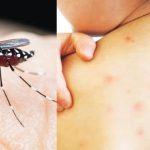
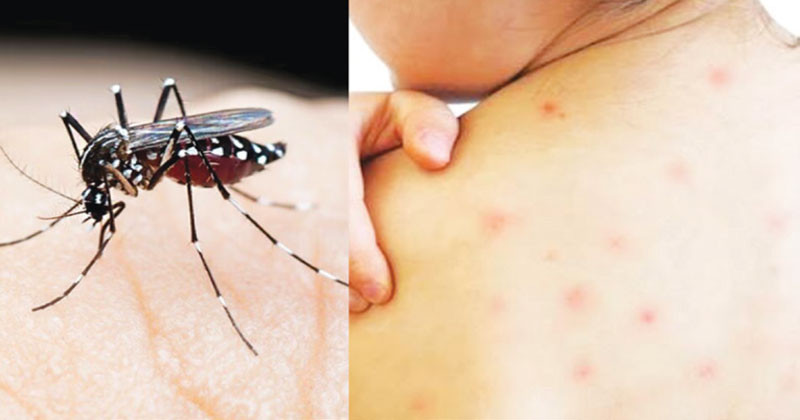
The country is facing the most severe health crisis in its history, as a globally record-breaking measles outbreak and a sharp surge in dengue simultaneously overwhelm the nation’s fragile healthcare sector. According to the latest data from the Directorate General of Health Services, this crisis, which began in March 2026, has already claimed the lives of more than a thousand children from measles or measles-like symptoms, with the number of cases exceeding 187,000 — a national record and a severe measles outbreak. During the same period, the number of Aedes-mosquito-borne dengue cases has exceeded 45,000, with more than 130 deaths. The country has already become one of South Asia’s most high-risk hotspots. Both diseases have been spreading for nearly a year. More than six months have already passed since the current government took office, yet the Health Ministry has completely failed to control measles and dengue. Allegations have emerged of a lack of coordination and proper oversight in the work, resulting in a severe shortage of hospital beds and emergency medical supplies nationwide. Prime Minister Tarique Rahman, however, has been extremely concerned about the matter from the outset. He has already called for the highest level of caution, considering the coming three months a high-risk period for tackling the dengue outbreak. At the same time, the Prime Minister has instructed that special emphasis be placed on cleanliness and public awareness rather than relying solely on mosquito-eradication activities. Meanwhile, to ensure active public participation alongside government initiatives, the Prime Minister will today launch a three-month special cleanliness and public awareness program to prevent dengue. The Prime Minister has said that dengue control cannot rely solely on mosquito-eradication activities; special emphasis must be placed on cleanliness and public awareness. He has directed that field-level activities be carried out in a coordinated manner involving local administration, voluntary organizations, and students. It is not possible for the Prime Minister or the government alone to curb the current outbreak of dengue and measles; however, BNP is a large political party. Local government and city corporation elections lie ahead, and there are about three hundred fifty members of parliament combined from the ruling and opposition parties. Thousands of leaders and activists will take part in the local government elections. If, instead of shaking up the streets and parliament, these leaders across the country gave importance to awareness in preventing dengue and measles, a considerable degree of control would have been possible.
Experts say the Health Ministry has failed to control both measles and dengue, with lack of coordination particularly to blame. Although the two diseases differ in nature, timely detection, effective surveillance, and swift preventive measures should be taken in both cases. In children, measles can quickly turn severe; malnutrition, delayed treatment, and co-occurring infections increase the risk of death. When measles infection appears in an area, hospital treatment alone is not sufficient — it is necessary to identify children who came into contact with the infected person, check their vaccination status, arrange vaccination as needed, and regularly collect data on the spread of infection. But these activities are weak at the field level. In a densely populated city like the capital, public health management requires advance preparatory measures; preparation should begin before the period of likely risk rather than starting operations after the number of patients has already risen. At the same time, concern over dengue in Dhaka is also growing. Although the spread of Aedes mosquitoes and the number of dengue patients increase every year during the monsoon, questions have long persisted about mosquito control activities. City residents complain that regular mosquito-eradication activities are not visible in many areas; where spraying does take place, it is not consistent. Although Aedes mosquito larvae are found in stagnant water in houses, under-construction buildings, rooftops, abandoned spaces, and various structures, there is insufficient monitoring to remove them. Those concerned say steps such as destroying Aedes breeding sites, regular inspection, monitoring of under-construction structures, raising awareness among homeowners and residents, and identifying hotspots by analyzing patient data need to be taken. According to experts, this dual crisis of measles and dengue has placed enormous pressure on Bangladesh’s health system. Maintaining regular healthcare services while simultaneously tackling preventable infectious diseases has now become a major challenge. Measles is one of the world’s most contagious diseases; although it typically causes fever and a distinctive rash, it can be prevented through two doses of vaccine. Professor Dr. Mahmudur Rahman, former director of the Institute of Epidemiology, Disease Control and Research (IEDCR), said that due to shortfalls in vaccination in 2024 and 2025, Bangladesh failed to meet its measles elimination target. He said he was not aware of so many measles-affected children ever dying before in Bangladesh, nor of such a large number of cases occurring in a single year previously. The most tragic aspect, he said, is that a large portion of those infected and killed are children. To bring the situation under control, he said it is urgent to quickly address vaccination gaps, expand vaccine coverage, and strengthen public awareness. According to sources, news of child deaths from measles is coming in from across the country, including the capital Dhaka, while the dengue outbreak is simultaneously posing a risk to public health. Yet there are widespread public complaints about the activities of city corporations and health departments in preventing infectious disease, quickly identifying the infected, ensuring treatment, and controlling mosquito-borne disease. City residents say the situation is becoming increasingly complex day by day due to gaps in field-level monitoring and coordination, delays in disease detection, and weaknesses in preventive activities.
Alongside allegations of mismanagement in the health sector, there has also long been debate over the capacity of the treatment system. The initiatives of relevant agencies to tackle two simultaneous public health risks like measles and dengue in the capital are still not particularly visible. Ordinary people have been hit hardest by this twin crisis of measles and dengue. On one hand, they must rush to protect their children from measles; on the other, they must constantly fight against mosquitoes to protect themselves and family members from dengue. The situation is especially difficult for low-income families. When a child falls ill, the family faces the financial burden of taking the child to hospital, arranging tests, buying medicine, and losing several days of work. Analysis shows that disruptions in the vaccination system in recent years have played a significant role in the current measles situation. During the political unrest of 2024 and 2025, regular vaccination activities were disrupted, and some important vaccination programs were postponed or cancelled, leaving many children without timely vaccination. According to Health Ministry data, since the outbreak began last March, more than 187,000 suspected measles cases have been identified in Bangladesh, of which 20,000 have been laboratory-confirmed as measles. This outbreak has been linked to 1,012 deaths, of which 100 deaths have been definitively identified as measles-related. Additionally, more than 146,000 suspected patients have been hospitalized. Meanwhile, three more children died nationwide from measles symptoms in the past 24 hours, with 1,111 new cases identified during this period. This brings the total number of measles-related deaths from March 15 through yesterday to 1,012, of which 100 died from confirmed measles and 912 from measles symptoms. This information was provided yesterday in the Directorate General of Health Services’ updated report on measles. Additionally, two more people died from the mosquito-borne disease dengue in the past 24 hours, with 790 new dengue patients hospitalized during this period. This brings the total number of dengue deaths this year to 141, and the total number of cases to 49,220. At various hospitals in the capital, it has been observed that an increasing number of children are being treated for fever, breathing difficulties, cold and cough, and body rashes. In many cases, patients had already been ill for several days before arriving at the hospital, causing delays in diagnosis and treatment. At the same time, questions remain about how effectively the measles vaccination program’s coverage, identification of children left out, and monitoring in high-risk areas are being carried out.
Meanwhile, the country’s healthcare system has come under severe pressure due to the surge of patients, overcrowding at hospitals, and shortages of medical equipment. Although an emergency nationwide vaccination program began last April, the outbreak has persisted. According to a list published on the website of the US Centers for Disease Control and Prevention (CDC), Bangladesh currently has the world’s largest measles outbreak. Experts say the situation began deteriorating after disruptions to regular vaccination activities in 2024 and 2025, a period during which political unrest prevailed in the country following the movement against autocrat Sheikh Hasina. Political instability caused gaps in vaccination activities and a shortage in vaccine supply, putting children under nine months of age particularly at risk, since children of this age are not yet eligible for regular measles vaccination, making them more vulnerable to infection. Weak program oversight, insufficient monitoring, and changes in vaccine procurement policy during the interim government’s tenure disrupted vaccine supply, leaving a large number of children unprotected against measles. The World Health Organization (WHO), UNICEF, and other health agencies have also highlighted the disruption in the regular vaccination schedule. In the early stage of the outbreak, about 80% of those infected were children under five years old. Over the past decade, Bangladesh had made significant progress toward measles elimination; apart from a slight dip during the COVID-19 pandemic, measles vaccine coverage in the country had mostly remained at or above the WHO-recommended 95%. Dr. Nanda Dulal Saha, acting director of Shaheed Suhrawardy Medical College Hospital in the capital, said the number of patients is so high that it has become extremely difficult to accommodate everyone. He said the hospital has 60 beds for measles patients, but patient pressure is so high that many have to be treated on the floor. The hospital, built for 1,350 patients, currently has more than 2,350 patients receiving treatment. Meanwhile, a shortage of pediatric saline needed for treating children has made the situation even more difficult. For families, this outbreak means prolonged uncertainty, repeated trips to hospitals, and extra treatment costs. Under Bangladesh’s emergency measles-rubella vaccination program, a target was set to vaccinate about 18 million children aged six months to under five years. According to Health Ministry data, more than 19.7 million children have been vaccinated so far. However, experts say the emergency program alone is not sufficient; alongside strengthening regular vaccination activities, a catch-up vaccination program is also needed for children who were left out.
Health Minister Sardar Md. Sakhawat Hossain said the measles vaccination program will resume nationwide from September 25 to tackle the outbreak. He said most of the vaccines have already arrived in the country through UNICEF, and the remaining vaccines will arrive by September 17. He said that when infection was found to persist even after completing the measles vaccination campaign, the government conducted mop-up activities, under which 1.4 million more children have been newly vaccinated against measles. He said the previous government left no vaccines in the country; in such a situation, the current government procured vaccines for 18.5 million children and completed the vaccination drive within just 21 days.
He said that to ease the pressure of dengue patients on hospitals in Dhaka, treatment services have been strengthened at peripheral-level hospitals. Isolation beds have been kept ready at every hospital, and mobile hospital arrangements have also been made. Alongside ensuring necessary treatment for patients at the upazila level itself, coordination and necessary guidance have been provided to upazila-level physicians through the Society of Medicine in order to reduce pressure on tertiary hospitals.