Students and Teachers Barred from Classrooms Over Hijab, Sparking Diplomatic Tensions Between Baku and Ankara
Hijab Controversy Sparks School Protests and Strains Azerbaijan-Turkey Relations
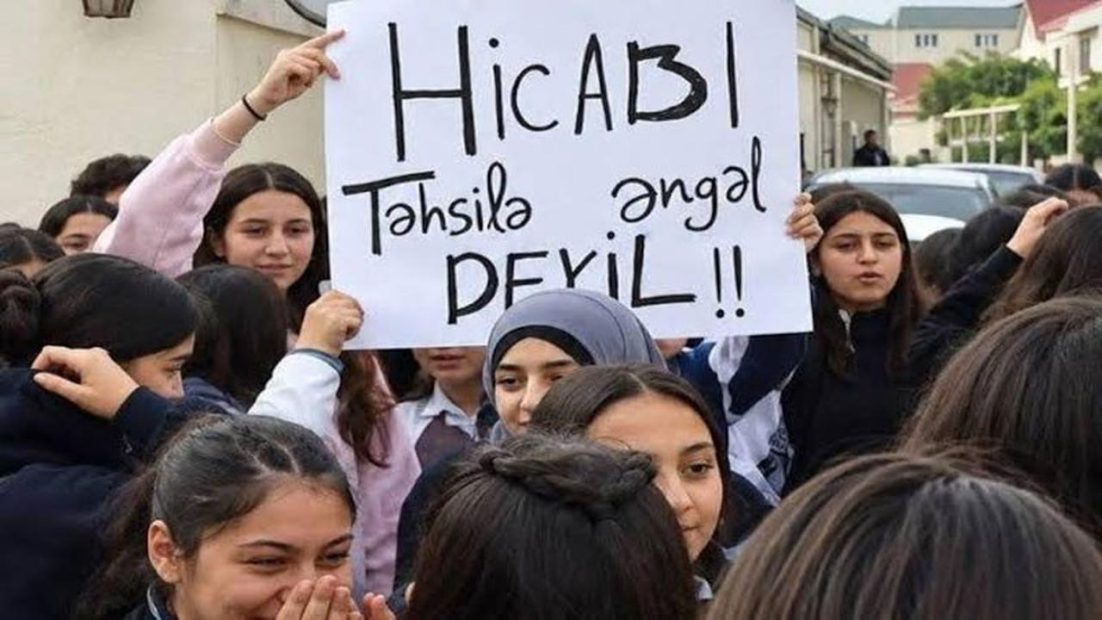
A wave of anger and protests has spread across Muslim-majority Azerbaijan after students and teachers wearing hijabs were barred from entering classrooms under revised school dress codes. The dispute began after the country’s Cabinet introduced new rules requiring schools to uphold the principle of secularism in general education and enforce a uniform dress code. The controversy has extended beyond Azerbaijan’s domestic affairs, creating diplomatic tensions with its traditionally close ally, Turkey.
Although the new rules do not explicitly mention the hijab, they prohibit clothing deemed incompatible with secular principles. However, several school administrations have reportedly ordered female students wearing hijabs to leave classrooms. Several teachers, including Gulshan Aliyeva, who has 23 years of teaching experience, said they were denied entry to their schools for refusing to remove their hijabs.
Videos of female students leaving classrooms in tears went viral on social media, prompting male students to boycott classes and stage strikes in solidarity with their classmates. Azerbaijan’s Interior Ministry arrested at least 37 people over alleged disciplinary violations and confrontations with school staff. Baku temporarily restricted access to TikTok, Instagram and X to prevent videos of the protests from spreading, according to the report.
Oktay Saral, chief adviser to the Turkish president, said on social media that denying students the right to education because they wear hijabs was unacceptable. He urged Baku to reverse the decision immediately.
A faction of Ilham Aliyev’s ruling New Azerbaijan Party accused the Turkish media and some sections of the Turkish political establishment of artificially fuelling tensions. It issued a stern warning, saying that the two countries’ close historical friendship did not give either side the right to interfere in the other’s domestic education policies.
The Azerbaijani government maintains that the country is constitutionally secular and that strict dress codes are necessary to ensure discipline and uniformity in schools. Protesters, however, argue that more than 96 per cent of the country’s population is Muslim and that religious observance and the right to education should not be treated as mutually exclusive.
Since the collapse of the Soviet Union, Azerbaijan has consistently maintained a strict secular stance to prevent the spread of extremism and political Islam. However, the crackdown on hijab-wearing students and teachers has placed the government under significant domestic and international pressure over civil rights, religious freedom and its diplomatic relations with Turkey.
Source: Al Jazeera