Historic Sadarghat Falls Silent as Fuel Prices Surge
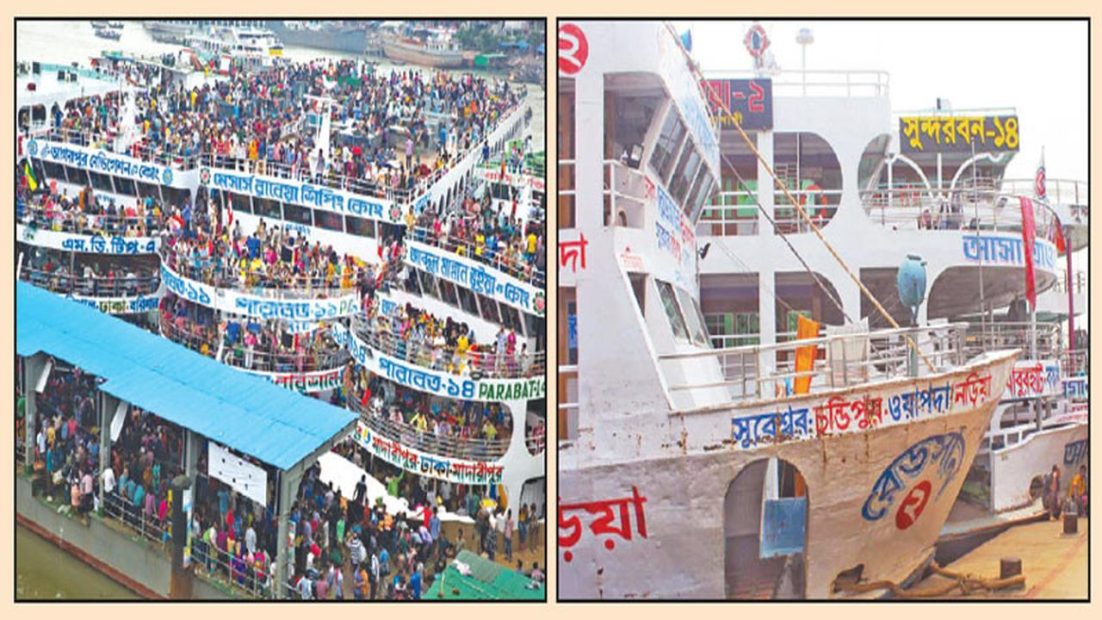
Sadarghat in Old Dhaka, one of the main gateways for people travelling to southern Bangladesh, no longer sees the familiar bustle that once continued well into the evening. Launch services and daily trips have declined on several river routes, leaving operators struggling with losses as passenger numbers fall. The downturn has also affected the livelihoods of porters, hawkers, shopkeepers and others who depend on the terminal. Without proper measures and government intervention, experts warn that Dhaka’s century-old river transport hub could gradually lose its historic significance.
People involved in river transport say the opening of the Padma Bridge has significantly changed road connectivity between Dhaka and the southern region. With road journeys now taking less time, many passengers have switched to buses and other road transport. Travelling to Sadarghat through Gulistan from different parts of Dhaka has also become more difficult. Heavy traffic congestion and pollution have encouraged many people to seek alternatives.
At the same time, fuel prices, workers’ wages, maintenance and repair costs have increased, while launch operators’ earnings have failed to keep pace. The combined pressure of declining passenger numbers and falling revenue has created a serious crisis for the long-established river transport sector.
According to the Bangladesh Inland Water Transport Authority (BIWTA), the number of active launches serving 43 river routes from Dhaka has fallen from 210 to 170. Daily departures from Sadarghat have also declined sharply. Previously, around 140 launches left the terminal each day, but the number has dropped to 40–45. On the Barishal route, the number of daily launches has fallen from eight to two.
Meanwhile, the number of launches operating on 42 routes, previously around 90, has declined to 62 on 36 routes. Services on six routes have reportedly been suspended entirely because of a lack of passengers. For people in southern Bangladesh, overnight launches were once more than just a means of transport. They were an established part of everyday travel. Passengers travelling to Barishal and other districts relied on launches that left Dhaka in the evening or at night and reached their destinations the following morning.
The opening of the Padma Bridge has changed that pattern. Direct road links between Dhaka and many southern districts have become faster and easier, prompting passengers who prioritise time to switch to road transport. This has directly reduced the number of passengers travelling on launch decks.
However, river transport remains important for many destinations in the southern region. In some areas, waterways are still the more convenient option. As a result, the impact of declining launch services varies by route and location.
The launch owners’ association says the basic cost of operating a vessel remains almost the same even when seats and cabins are empty. Owners must continue to pay for fuel, staff salaries and wages, engine and equipment maintenance, repairs and other operating expenses. But when passenger numbers fall, income from ticket and cabin sales declines. As a result, some trips are struggling to cover their operating costs.
Siddiqur Rahman Patowary, general secretary of the Sadarghat Launch Owners’ Association, said, “Passenger pressure has declined somewhat because of the Padma Bridge. However, the biggest problem we have faced is the increase in fuel prices. Launch maintenance costs have also increased. Another major problem is the heavy traffic congestion on the road from Gulistan to Sadarghat, which is driving passengers away.”
He said they had requested the ministry long ago to build a flyover from the Gulistan Flyover to Babubazar. If implemented, he believes the project would help reduce the passenger shortage at Sadarghat and increase the number of launch trips.
“Although the distance from Zero Point to Sadarghat takes 30 minutes on foot, traffic congestion can make the journey take two hours or even longer. As a result, many people are choosing alternative routes to save time,” he said.
He added that complaints about rude behaviour by porters at Sadarghat and excessive charges, which were common in the past, were no longer frequently seen. Passengers can now reach their destinations without harassment.
Regarding passengers travelling to areas that depend heavily on river transport, including Kaliganj in Bhola, Mr. Patowary said, “We always consider alternatives to ensure that services are not disrupted and passengers do not waste time in areas that depend on river transport. If a trip is cancelled, we try to accommodate them carefully on the next available trip.”
However, a launch at Sadarghat provides employment not only for owners, drivers and crew members but also supports a large informal economy. Porters, vendors, hawkers, small shopkeepers and local transport workers depend on the number of people using the terminal each day. The decline in launches and passengers has directly affected their earnings.
The crisis, therefore, goes beyond the financial losses of a single transport sector. It also threatens the livelihoods of many low-income people. Azharul Haque, a 52-year-old porter, said, “I used to earn Tk 1,500 to Tk 2,000 a day. Now there are fewer people. It has become difficult to earn even Tk 400 to Tk 500. Some days are really bad. Worrying about my income has become an everyday issue. If things continue like this, my family and I will end up on the streets.”
Robiul Islam, a tenant from Hazaribagh in Old Dhaka who was travelling to Barguna, was seen weaving a fishing net while sitting on the deck of a launch. He said, “Three or four years ago, the launch decks were so crowded at this time of year that there was no room to sit. For the past few years, I have been seeing a different picture. The entire deck remains almost empty. Those who are here are lying down and resting. I am also taking the opportunity to weave my net.”
People involved in the sector say several measures are needed to attract passengers again. These include maintaining schedules, ensuring safety, keeping vessels clean, making ticketing more transparent and reducing harassment at the terminal.
They also stressed the need to review passenger demand on each route, identify areas with higher demand and adjust the number and timing of launch trips accordingly. The decline is not merely a story of a transport sector losing market share. It affects connectivity with southern Bangladesh, employment, the small businesses surrounding the terminal and the future of the country’s traditional river transport system. Sadarghat’s ability to attract passengers again will depend on how well river transport adapts to changing travel patterns and becomes more modern, reliable and competitive.
Sadarghat leaseholder Mohammad Sumon Bhuiyan said, “Passenger launches used to operate on 42 river routes from Sadarghat. The number of launches has now fallen by 70 per cent, and those that continue to operate are all incurring losses. Several routes from Dhaka to the southern region have already been closed because of the lack of passengers.”
He added that even when traffic congestion was not the main obstacle, many passengers were choosing alternatives to save time. Passenger numbers at the terminal had fallen sharply, and goods transportation had also declined considerably.
“Thousands of people are directly and indirectly employed in operating launches and boats at Sadarghat river port. They include launch workers, porters, transport workers and related business operators. There is little income at the terminal now, and how these workers will support their families is a serious concern,” he said.
He called for effective government measures to restore Sadarghat’s historic appeal and protect the livelihoods of day labourers. He also stressed the importance of public awareness in preserving the terminal’s heritage. Regarding traffic congestion between Gulistan and Sadarghat, Bhuiyan said they maintained regular communication with the relevant government authorities. The government had already taken several visible steps, and he hoped the concerned ministry and city corporation would soon make the journey from Gulistan to Sadarghat easier and more comfortable.
Afsana Haque, a professor in the Department of Urban and Regional Planning at Jahangirnagar University, said investment in road development was made every year, but river transport did not receive similar attention. Natural changes were also narrowing waterways each year. “Passengers will decline if destinations are not accessible and waterways do not offer sufficient advantages. This problem can be resolved if a master plan is developed for river transport, just as it is for road transport,” she said.