Humanitarian Teachings of Islam in Building a Poverty-Free Society
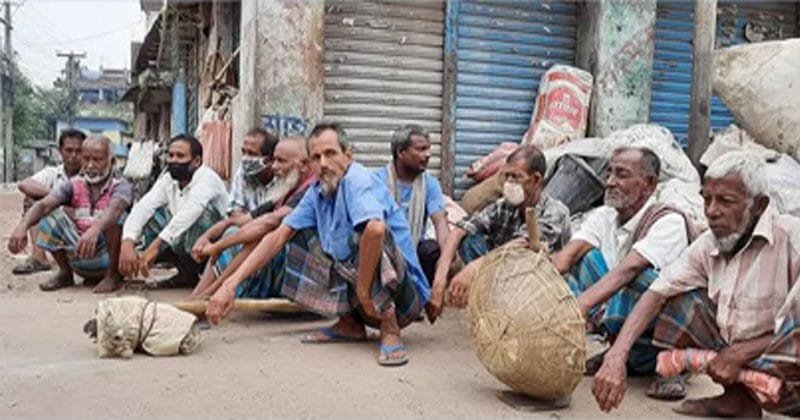
Poverty extends far beyond a mere lack of financial resources, functioning as a severe barrier to fundamental human rights, education, healthcare, nutrition, and a dignified life. Driven by systemic issues such as unemployment, unequal wealth distribution, and inadequate social safety nets, deprivation creates a cycle where families struggle for basic survival. When children are forced out of school or sick individuals cannot afford treatment, the crisis goes beyond personal hardship and challenges society’s collective humanitarian progress. Addressing these multi-faceted challenges requires a coordinated response that integrates economic reforms with moral and religious values.
Within this framework, Islamic teachings establish poverty alleviation as a fundamental religious, moral, and humanitarian obligation alongside personal worship. The Quran explicitly commands the selfless expenditure of wealth for human welfare, highlighting actions such as feeding the needy and protecting the vulnerable. As stated in Surah Al-Insan, the righteous give food despite their own love for it to the needy, the orphan, and the captive. Assisting the vulnerable is thus framed not as an act of pity, but as a core human responsibility aimed at earning Allah’s pleasure.
Zakat is the primary mandatory economic instrument for poverty eradication in Islamic jurisprudence, becoming obligatory for capable Muslims when specific conditions are met. Surah At-Tawbah outlines specific categories of recipients, ensuring that funds reach people with low incomes, people in need, those in debt, and travelers. When properly collected and transparently distributed according to Sharia rules, Zakat directly addresses basic needs while laying the foundation for long-term economic stability and development among disadvantaged populations.
Addressing economic inequality also requires ensuring the just circulation of wealth to prevent it from concentrating exclusively among the wealthy, as emphasized in Surah Al-Hashr. Islamic economic principles advocate collective societal welfare through fair wages, job creation, and strong support for small entrepreneurs. By bridging the wealth gap and expanding economic access for marginalized groups, societies can effectively mitigate the structural causes of income inequality and foster broader financial resilience.
Beyond financial aid, Islam places profound emphasis on protecting the social rights and personal dignity of people experiencing poverty, orphans, and neighbors. Surah An-Nisa mandates responsible, righteous behavior toward relatives, orphans, and travelers as essential to moral life. Furthermore, Surah Al-Ma’un strongly condemns indifference toward orphans and people in need, urging active cooperation instead of neglect. True support goes beyond temporary monetary assistance; it requires actively preserving the recipient’s honor and social standing.
The traditions and teachings of the Prophet Muhammad (PBUH) further reinforce this commitment by encouraging believers to actively relieve human distress and support the helpless. The Prophet (PBUH) stated, ‘Whoever relieves a believer’s distress of the distresses of this world, Allah will relieve him of one of the distresses of the Day of Resurrection,’ emphasizing the eternal rewards of humanitarian work. Additionally, he highlighted the value of self-reliance through honest labor, noting that the upper hand is better than the lower hand, while cautioning against charity that compromises society’s dignity.
In addressing the care of society’s most vulnerable, the Prophet (PBUH) elevated the status of orphan care by declaring, ‘The guardian of an’orphan and I will be in Paradise like this,’ and joining his index and middle fingers. This profound teaching underscores that orphans should assume full responsibility for an orphan’s education, nutrition, medical care, and safe upbringing. Tackling poverty through these targeted interventions ensures that vulnerable children receive the developmental foundation necessary to escape cyclical deprivation.
Beyond moral directives, tackling poverty effectively requires comprehensive state and societal policies focused on structural reform, job creation, and human capital development. Key initiatives must include expanding job opportunities across industrial and agricultural sectors, providing targeted tech and vocational training, and ensuring women’s economic empowerment. Furthermore, affordable healthcare access, robust social security frameworks, and rigorous anti-corruption measures are vital to ensure that public resources successfully reach legitimate beneficiaries.
Ultimately, eliminating poverty requires a unified, multi-tiered approach combining systemic policy reforms, institutional accountability, and active individual participation. By merging spiritual obligations like Zakat and Sadaqah with modern strategies for self-reliance, education, and economic justice, societies can forge a permanent path away from deprivation. Through collective dedication to humanitarian values and equitable resource distribution, communities can build a just future where no individual is denied a dignified life.