India-China Tensions Resurface Over Dispute Border After Indian Official’s Remarks
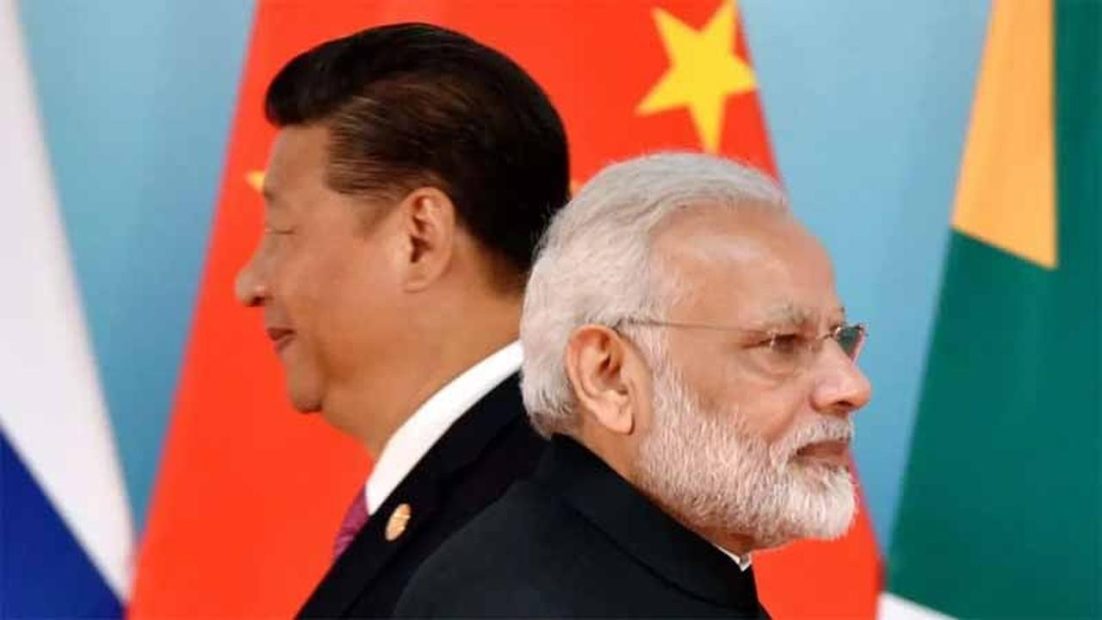
Amid ongoing efforts to normalize diplomatic relations between India and China, a fresh controversy has emerged over their contested border. According to Shatrujeet Singh Kapoor, chief of India’s border guarding force, Chinese troops pitched tents several kilometers inside territory claimed by India along a disputed sector in Arunachal Pradesh. His statement has raised doubts about the durability of recent diplomatic progress.
Speaking at an event in Rajasthan, Mr. Kapoor, Director General of the Indo-Tibetan Border Police (ITBP), stated that face-offs between Indian and Chinese personnel occurred at multiple locations in Arunachal Pradesh starting in July. Although both sides initially disengaged, Chinese troops returned in larger numbers days later and erected tents roughly six to seven kilometers inside what India considers its side of the Line of Actual Control (LAC).
Mr. Kapoor’s remarks prompted criticisms from the opposition Indian National Congress, which accused Prime Minister Narendra Modi’s government of ceding ground to China. The Indian government has not explicitly denied the border chief’s account.
Indian Ministry of External Affairs spokesperson Randhir Jaiswal noted that border stability is disrupted whenever Chinese troops deviate from established patrolling protocols. He added that military and diplomatic channels remain active to resolve outstanding issues.
In response, a spokesperson for China’s Foreign Ministry maintained that Beijing strictly adheres to bilateral agreements and conducts routine border patrols to safeguard national sovereignty.
India and China share a 3,440-kilometer border that remains largely undemarcated, sparking decades of territorial disputes. Beijing claims Arunachal Pradesh as part of South Tibet, an assertion firmly rejected by New Delhi, which regards the state as an integral part of India.
Bilateral relations deteriorated sharply in June 2020 following a violent clash in Ladakh’s Galwan Valley that left 20 Indian soldiers and four Chinese troops dead. Following extensive military and diplomatic talks, the two nations reached an agreement in 2024 to ease border tensions.
Subsequent confidence-building measures included plans to resume direct flights and ease visa restrictions. In September, Chinese President Xi Jinping visited India to attend the BRICS Summit, his first visit in seven years. While these steps signaled a thaw, the latest developments along the border highlight the fragile nature of this momentum.
Former Indian Foreign Secretary Shyam Saran told the BBC that Chinese incursions of this nature along the Arunachal border have persisted for some time. While not escalating to full-scale conflict, such moves appear aimed at altering ground realities incrementally.
Beyond security concerns, economic ties remain substantial. Two-way trade reached $151 billion last year, with Indian imports from China accounting for nearly $131 billion. India relies heavily on Chinese machinery, EV batteries, rare earth magnets, and pharmaceutical raw materials, leaving key domestic industries vulnerable to renewed geopolitical friction.
Border communities are also feeling the strain. Tongam Rina, a senior journalist with the Arunachal Times, told the BBC that Chinese incursions have cut off local villagers from traditional grazing lands, creating a pervasive sense of insecurity.
Analysts note that while Beijing seeks to avoid direct military conflict, it leverages long-standing border friction for strategic leverage. The latest incidents serve as a reminder that diplomatic engagement alone does not guarantee lasting peace along the frontier.
Source: BBC