India’s Unilateral Water Withdrawal
India’s Unilateral Water Withdrawal Drives Bangladesh’s Rivers to Extinction Amid Encroachment
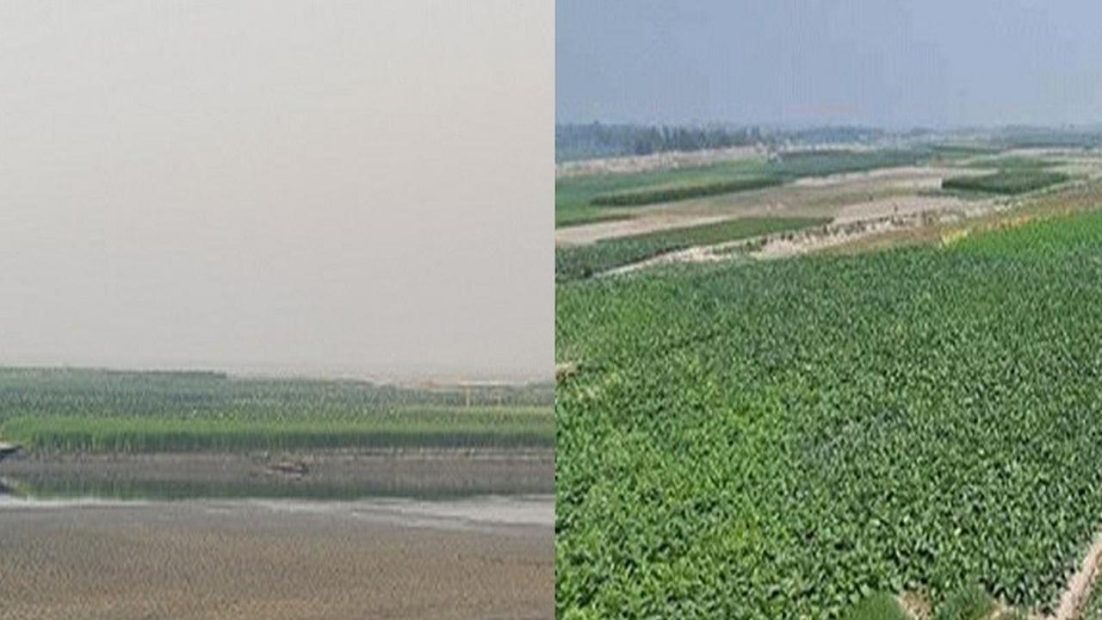
Almost all rivers in the Rangpur region are facing severe water shortages and declining navigability as India withdraws water unilaterally during the dry season through upstream dams and barrages. More than 100 rivers in the region are gradually disappearing from maps due to declining water flows and encroachment. Many have turned into dry channels, while others have lost their existence altogether.
Even in the 1980s, these rivers flowed strongly. But with water levels declining, many are now on the verge of disappearing. The situation is adversely affecting the region’s environment, nature and agriculture.
According to a field investigation, the greater Rangpur region, comprising Rangpur, Gaibandha, Lalmonirhat, Kurigram and Nilphamari districts, has numerous rivers, many of which are now under threat.
In Gaibandha, the Alai, Ichhamati, Karatoa, Katakhali, Kalpani, Gangnai, Ghaghat, Teesta, Nalea, Brahmaputra-Jamuna, Mara, Maruadaha, Maila, Manas, Mashankura, Bangali, Lenga, Shakha Teesta and Holholi rivers are facing the threat of extinction.
In Kurigram, the Antai, Kaljani, Kalo, Kursa, Koteshwar, Khalishakuri, Gangadhar, Gadadhar, Girai, Goddhar, Ghorialdanga, Ghagua, Chandakhola, Jalshira, Jinjiram, Teesta, Torsa, Dudhkumar, Dharla, Naojal, Nagdaha, Phulkumar, Brahmaputra, Sonabhari and Hardiar Dara rivers have dried up.
In Nilphamari, the Auliakhan, Karatoa, Kalomdar, Kumlal, Kharkharia, Khalisadingi, Chara, Charalkata, Chikli, Teesta, Deonai, Dhaijan, Dhum, Nautara, Bamandanga, Burikhora, Jamuneshwari and Shalki rivers have lost navigability and are at risk of disappearing.
In Lalmonirhat, the Gidari, Chatra, Teesta, Dharla, Bhateshwar, Ratnai, Sakowa, Saniajan and Singimari rivers are also at risk.
In Rangpur, the Akhira, Ichhamati, Karatoa, Kathgari, Khoksha Ghaghat, Ghaghat, Teesta, Nalshisa, Jamuneshwari, Shakha Chikli and Sonamati rivers are facing similar problems. Almost all rivers in the region are now in a critical state.
As recently as the 1990s, sailboats plied these rivers. But over the past 20 to 25 years, many have been pushed to the brink of extinction due to water shortages. Their beds are now being used for cultivation. The Teesta is experiencing its lowest-ever water flow, according to the report.
The 112-mile-long Teesta River in Bangladesh has dried up amid India’s unilateral withdrawal of water through upstream barrages. The Karatoa, which once swelled during the monsoon, is also facing an existential crisis due to water shortages. The Alaikuri River in Pirgachha has turned into a dry channel, while the Ghaghat in Gangachara is gradually drying up. The Mara River in Badarganj has been completely lost to encroachment.
The drying up of rivers has left hundreds of fishermen unemployed. River experts say dredging the waterways would benefit agriculture and fisheries.
The Ghaghat River originates in Kuripara village in Kishoreganj upazila of Nilphamari. It flows through Rangpur Sadar before joining the Jamuna in Sadullapur, Gaibandha. However, water shortages have caused it to dry up, leaving it vulnerable to encroachment. The river, once navigable by sailboats, is now being used for cultivation.
A 1776 map by James Rennell shows a branch of the Teesta flowing from Jalpaiguri in West Bengal into Domar in Nilphamari before joining the Karatoa. An earthquake and severe flooding in 1787 changed the course of the Teesta. Over time, the branch narrowed and is now almost extinct.
The Barind Multipurpose Development Authority (BMDA) has taken steps to restore lost rivers and remove encroachments. It has dredged the dead Teesta in Badarganj to restore its flow. According to the authority, dredging 13.50 kilometres of the Mara Teesta and 3.26 kilometres of the Ghirnai River has helped revive the waterways.
River experts say restoring lost rivers through excavation and dredging is essential to address drought and restore water flows. The restoration of the dead Teesta could serve as an example. They have called on the government to take stronger measures to save the country’s rivers, particularly by implementing the proposed master plan for the Teesta, the lifeline of northern Bangladesh, without delay.