Initiative Launched to Reopen Closed Jute Mills in Phases
State Minister for Textiles and Jute Md Shariful Alam has said the government has taken initiatives to reopen closed mills in phases through domestic and foreign private investors, following the instructions of Prime Minister Tarique Rahman. Several mills have already resumed operations, creating jobs and contributing to the national economy. Initiatives are also underway to reopen Latif Bawani and Karim Jute Mills through private entrepreneurs.
He said unused machinery from the Sonali Bag project was being handed over to Mawlana Bhashani Science and Technology University to ensure the proper use of state-owned resources and support research into new jute-based products and technologies.
The minister made the remarks on Thursday at Latif Bawani Jute Mills in Demra, Dhaka, during a ceremony to hand over machinery from the Sonali Bag project and sign a tripartite memorandum of understanding. Shariful Alam said research findings must be turned into technologies and products that can be used in practical and commercial applications rather than remaining confined to laboratories. Although the Sonali Bag project had achieved technological progress, production costs could not be reduced to commercially viable levels. As a result, valuable machinery remained unused after the project ended.
He said the government had decided to transfer the equipment to the university for research rather than allow these public assets to deteriorate. Around 53 items of equipment and other materials, worth approximately Tk 200 million, are being handed over.
The minister said the initiative was not limited to transferring machinery; it also entrusted the university with the responsibility of advancing research in the national and public interest. He stressed that everyone must act responsibly to ensure the proper use of public resources and that valuable assets should not be wasted simply because of a lack of decisions.
Addressing the university’s teachers and researchers, he urged them to preserve the equipment properly and use it to study jute cellulose, environmentally friendly jute products and the diverse applications of jute. He also called for research facilities to be made available to researchers from other research institutions, relevant government officials and private-sector researchers. He stressed the need to ensure that the benefits of the initiative were accessible to all.
On diversifying jute products, Shariful Alam said research was necessary to develop value-added products and increase exports in line with international market demand. He added that the Bangladesh Jute Research Institute, the Bangladesh Agricultural Development Corporation (BADC), the Ministry of Agriculture and other relevant organisations were working together to reduce dependence on imported jute seeds and achieve self-sufficiency.
He also highlighted opportunities to create new economic value by expanding the use of jute leaves and jute sticks. At the event, a tripartite memorandum of understanding was signed among the Bangladesh Jute Mills Corporation (BJMC), the Bangladesh Climate Change Trust and Mawlana Bhashani Science and Technology University.
The minister handed over the project machinery and materials to the university’s Vice-Chancellor, Professor Dr ABM Shahidul Islam. BJMC Chairman Brigadier General Md Kabir Uddin Sikder signed the agreement on behalf of BJMC, Assistant Director Mostafa Kamal represented the Bangladesh Climate Change Trust, and Acting Registrar Professor Dr AKM Mohiuddin signed on behalf of the university.
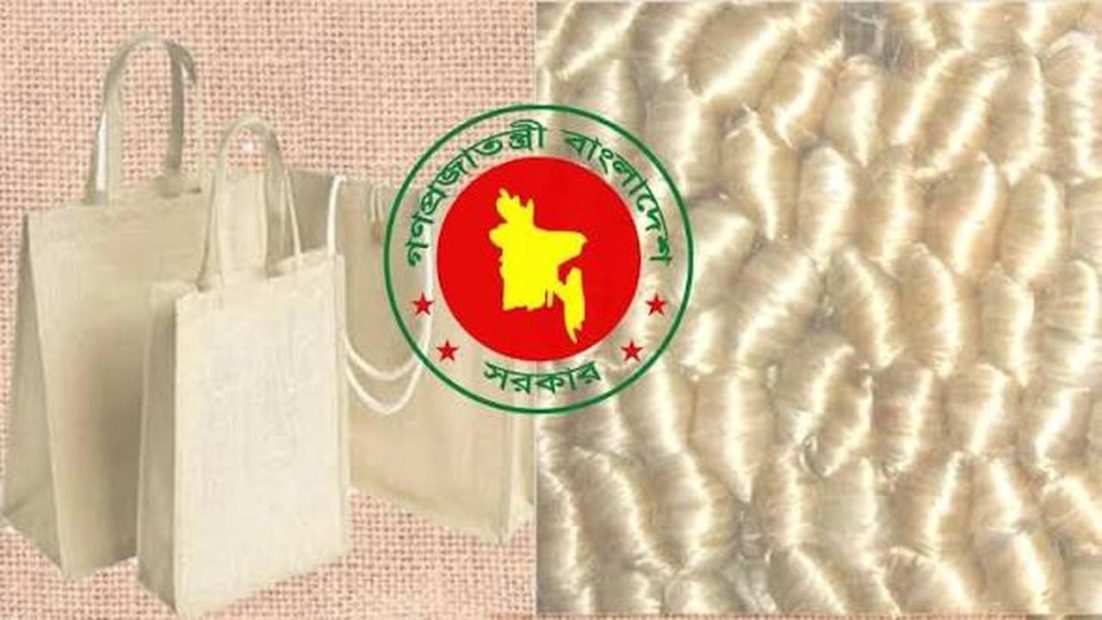
The Sonali Bag research project was launched under BJMC in 2017 to develop environmentally friendly and biodegradable bags made from jute cellulose. Tangail-2 Member of Parliament Md Abdus Salam Pintu, Textiles and Jute Ministry Secretary Sharaf Uddin Ahmed Chowdhury, BJMC Chairman Brigadier General Md Kabir Uddin Sikder and university Vice-Chancellor Professor Dr ABM Shahidul Islam attended the event. Officials from the Ministry of Textiles and Jute and BJMC, along with university teachers and researchers, were also present.