Inspector Sanjit Acts As Ranjit’s Advisor On Waterway Travel
Allegations have surfaced regarding the Gowainghat police station in Sylhet becoming a highly lucrative posting following missions, driven by massive financial transactions. Securing the position of Officer-in-Charge is locally perceived as an opportunity that permanently resolves financial struggles for generations. Controversial police official Omar Faruk Mondal managed to secure a posting to this station through covert influences. This move was allegedly backed by a well-connected individual in Sylhet who profited during the fascist regime and maintained close ties with ousted Sylhet City Corporation Mayor Anwaruzzaman Chowdhury.
The individual leveraged a close relationship with a top-ranking police official who had ascended to the highest policymaking position. Utilizing high-level lobbying, this figure successfully secured Omar Faruk’s appointment as the Officer-in-Charge of Gowainghat. Heavy sums of money were reportedly spent to gain the silent and vocal consent of politicians, ministers, and family members. Due to these financial incentives, no political quarters raised concerns regarding the appointment of this tainted officer. Furthermore, senior local law enforcement officials kept him out of scrutiny, resulting in border security and policing duties being quietly turned over to activists of the banned Awami League.
Omar Faruk Mondal is the son of Abdul Malek from Rajnagar village in Sunamganj’s Dharmapasha Sadar. His father was a frontline leader of the now-banned Awami League, and Omar Faruk was closely associated with the Chhatra League during his student days. Following his posting after the 13th National Parliamentary Election, illegal activities including smuggling, sand and stone extraction, looting, drug trafficking, and riverine extortion began operating openly. Although sand quarries were officially leased on paper, the police raised no objections to environmental degradation or unauthorized extraction in prohibited zones after reaching financial settlements with leaseholders.
Wherever corruption, extortion, and looting occurred in Gowainghat, the involvement of the local police was widely alleged. While some local Bangladesh Nationalist Party leaders bore public blame for these incidents, activists of the banned Awami League regained their former influence. To maintain their long-standing hegemony, these activists utilized certain ruling party members to serve their interests by placing handpicked individuals in administrative positions. Consequently, even though administrative personnel functioned under the shadow of local BNP leaders, their underlying political alignments reportedly remained tied to Awami League supporters.
Expressing deep frustration over the political dynamics, a Gowainghat BNP leader stated, ‘By turning us into pawns, the remnants of the autocracy continue to secure administrative appointments. The beneficiaries of the autocracy sit in positions of power and serve their party’s interests. At the same time, our leaders willingly look the other way to serve their own interests, thereby harming the party. Whenever an official’s conduct is questioned, it is brushed aside by claiming that the official is close to a certain leader. We never hear them say the official is loyal to the party. Because things are run this way, Ranjit Chandra Sarkar dared to pull off a political gathering right under our noses.’
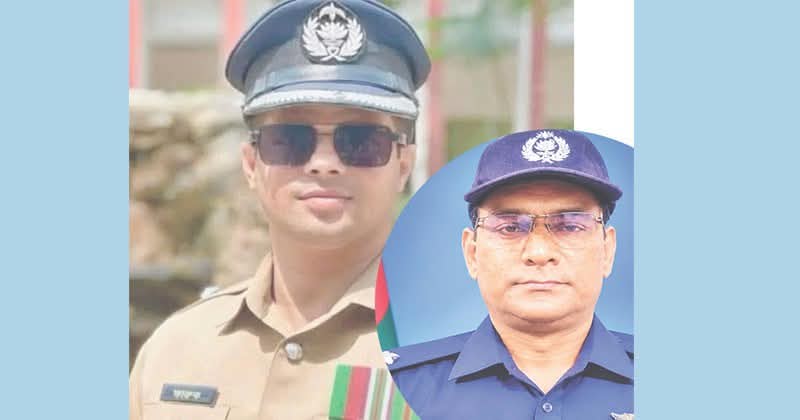
Multiple sources indicate that the Salutikar Police Investigation Center, a vital outpost under Gowainghat police station, has long been overseen by In-charge Sanjit Chandra Das. Sanjit is known to be a police official close to former fascist regime MP Ranjit Sarkar. Consequently, smuggling networks and contraband transport received special clearance and patronage for activists of the banned Awami League. Located at the crossroads of land and river routes connecting Companyganj and Gowainghat, any illegal shipment of Indian goods moving across the area had to pass through this strategic checkpoint.
The illicit operations hit a major snag when covert political connections were exposed during Ranjit Sarkar’s gathering at the Sohel Square Eco Resort. Owned by district Jubo League activist Sohel Ahmed, the resort transformed into a strategic communication hub situated near the residences of local BNP and Youth leaders. Due to family connections with local leaders, the venue operated with perceived immunity. Deals dividing the proceeds of illegal businesses were routinely brokered at the resort, and police officers frequently spent time there, with prominent visitors linked to local Sylhet BNP leaders being directed to stay at the facility.
The holding of the meeting at the resort demonstrated that while local interest groups within the BNP might overlook past political persecution, the banned Awami League remains determined to regain influence. Ranjit Sarkar’s arrival and departure were meticulously planned via river routes. Police insiders revealed that following Omar Faruk’s posting, Awami League activists became highly active under implicit police patronage. As a result, duty-bound police officers preferred to overlook these political activities rather than report them to the OC and risk facing internal reprimands.
Sources noted that Ranjit Sarkar arrived at the venue via speedboat on the Piyain River, escorted and secured along the way by Salutikar Police Investigation Center In-charge Sanjit Chandra Das. Mr. Sanjit had previously served in the Sylhet court, where he developed a close relationship with Ranjit Sarkar during his legal practice. Leveraging this relationship, Mr. Ranjit monitored security and administrative intelligence throughout his travel to ensure a smooth departure. Traveling from the investigation center to the resort by river takes 12 to 15 minutes, followed by a short walk from Chourangi Ghat to the resort.
Had Sunamganj police not uncovered the gathering, local officers would have kept the operation hidden. A local BNP source claimed that police officers close to Ranjit were fully aware of his arrival and went to great lengths to keep it secret. Given the reputation of the Salutikar Investigation Center in charge of collecting extortion along the waterways, observers noted it was highly implausible that he was unaware of Ranjit’s river journey. The role of Inspector Sanjit Chandra Das in facilitating the meeting within his jurisdiction has now come under severe administrative scrutiny.