International Girl Child Day: Historical Roots, Present Commitments and Future Aspirations
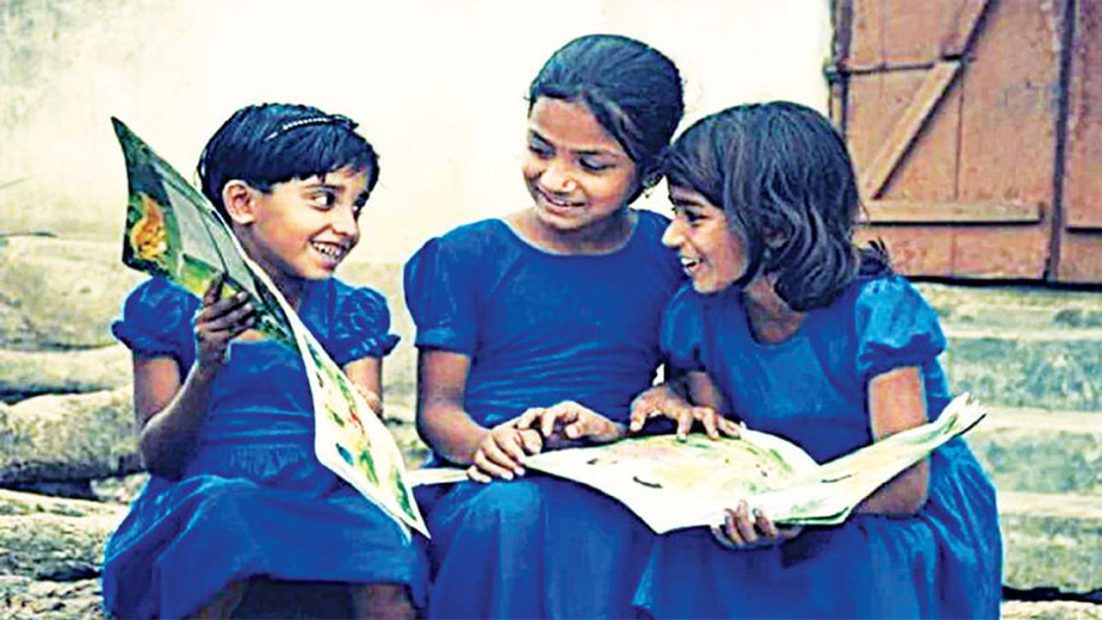
Ms. Tahmina, a 16-year-old girl from Ukhiya in Cox’s Bazar, was preparing to study in Grade 10. But her future was suddenly at risk because of her family’s financial difficulties and her father’s illness. Instead of supporting her education, her family began considering her marriage. Ms. Tahmina was devastated when she heard about the plan and cried regularly. However, rather than accepting the decision, she chose to speak up for herself. Her story appeared in a UNICEF report in 2023, highlighting the harsh realities facing girls in Bangladesh in terms of their rights, social status and position in society.
A country’s future depends largely on how its girls grow up today. A society that protects girls’ childhoods, treats education as a right, allows them to pursue their dreams regardless of their families’ financial circumstances, and gives them the freedom to make decisions about their own lives does more than transform one generation. It also builds a stronger foundation for the next. By contrast, when girls’ futures are sacrificed to child marriage, insecurity, poverty and social prejudices, many of a country’s development achievements remain incomplete. The well-being of girls is therefore directly linked to Bangladesh’s human resources, economy, social justice and future development.
October 11 is the International Day of the Girl Child. The theme for 2026 is “End child marriage and invest in girls’ rights.” Its significance lies in recognising that protecting girls means more than ending a harmful practice. Education, health, social protection, safety, leadership and the right to determine one’s future must also be part of the discussion.
Recent data from the United Nations and UNICEF indicate that more than 10 million girls worldwide are married before turning 18 every year. At the same time, investment in education, legal reforms and social protection over the past 25 years has helped prevent an estimated 68 million child marriages. A 2025 UNICEF report also highlighted that girls in rural areas face greater risks than those in urban areas. Child marriage is also more common among girls from poor families and those with limited education.
Enrolling girls in school is therefore not enough. The next priority must be to keep them in school, help them complete secondary education, and create pathways to higher education and employment. Although the problem remains serious, change is possible when sound policies, sustained investment and social progress work together.
Bangladesh faces the same dual reality. The country has made significant progress in girls’ education over the past few decades, but child marriage remains a major obstacle. According to the Bangladesh Multiple Indicator Cluster Survey (MICS) 2025, 47.2 per cent of women aged 20–24 were married before turning 18, while 13.4 per cent were married before the age of 15. Girls from rural and poor families face even greater risks. Although Bangladesh has made progress in bringing girls into schools, much remains to be done to protect their childhood and adolescence and ensure their freedom to make decisions about their lives.
This is why girls’ development must be understood not only in terms of rights but also in terms of capabilities. Amartya Sen’s Capability Approach reminds us that having a right on paper is not the same as having the ability to exercise it in practice. A girl may have the right to attend school, but if poverty forces her to leave, insecurity restricts her movement, her opinions carry little weight in family decisions, or she is married at an early age, that formal right does not translate into real freedom. Development becomes meaningful when girls not only receive opportunities but also gain the ability to use them.
The history of progress in girls’ education in Bangladesh is particularly important in this regard. During the 1990s, stipends and other incentives for girls in secondary education helped increase their participation in schools. Later, during the BNP government led by Begum Khaleda Zia, the state’s investment in girls’ education became more visible. The underlying principle of the universal stipend policy for girls, which brought significant changes to the country’s education sector, was clear: a girl’s education should not depend entirely on her family’s financial capacity. The state should also share responsibility for her future.
The programme’s long-term impact helped accelerate progress towards gender equality in education. In 2026, at a meeting of the Education Assistance Trust chaired by Prime Minister Tarique Rahman, officials were instructed to review the experience of the universal girls’ stipend introduced during Begum Khaleda Zia’s tenure and examine the possibility of reintroducing it for girls from Grade 6 through the undergraduate level. The meeting also emphasised reducing school dropout rates and providing nutritious and safe food at schools.
This reflects a broader continuity in public policy. During the tenure of Shaheed President Ziaur Rahman, initiatives were taken to strengthen the institutional framework for women’s development. The establishment of the Women’s Affairs Division in 1976 and the Ministry of Women’s Affairs in 1978 gave women’s development a distinct place in state policy. Later, large-scale state investment in girls’ education under Begum Khaleda Zia linked that institutional foundation to human resource development.
Under the leadership of Prime Minister Tarique Rahman, there is now a policy emphasis on viewing women not merely as recipients of social assistance but also as active participants in household economic decisions and the national economy. This progression should not be viewed solely as political history. It can also be understood as an evolving policy philosophy on women’s development. The first stage involved establishing institutional recognition for women within the state. The next stage focused on opening the doors of education to girls. The current challenge is to transform education into economic independence, security, personal agency and decision-making power. In other words, the policy focus is gradually moving from welfare to capability and from capability to empowerment.
The government’s Family Card programme also reflects this shift. In March 2026, the first phase began by bringing 37,567 women under the programme, with monthly assistance of Tk 2,500. The money is transferred directly to beneficiaries’ bank accounts or mobile financial service accounts. Plans have also been made to expand the programme.
The importance of the Family Card extends beyond the monthly payment. Its broader significance lies in placing social protection resources directly in women’s hands. From the perspective of gender economics, household income matters, but so does control over that income. When women receive resources directly, they may gain greater influence over decisions concerning food, health, education and their children’s future.
The connection between this support and girls’ well-being is even more direct. A girl’s future depends not only on her talent and effort but also on her family’s financial circumstances. When a family struggles to afford food, healthcare and housing or to manage debt, it may be more likely to withdraw a daughter from school or arrange her marriage at an early age. If social protection programmes such as the Family Card reduce these pressures, they can become an effective means of protecting girls’ rights.
The same principle applies to education. At an Education Assistance Trust meeting in August 2026, Prime Minister Tarique Rahman emphasised reducing girls’ dropout rates, providing stipends and ensuring nutritious and safe food at schools. He also instructed officials to examine the possibility of reintroducing universal stipends for girls from Grade 6 through the undergraduate level.
Education and nutrition must be treated as interconnected policy priorities because a child’s ability to learn cannot be separated from physical well-being. Under Human Capital Theory, education and health should not be viewed merely as social expenditure. They are investments in future productivity.
Investment in girls has a much broader meaning. It is not simply about improving examination results. It is about building the foundation for a future generation of skilled workers, entrepreneurs, teachers, researchers, doctors, administrators and informed citizens. An educated woman can transform her own life while also influencing the education, health and development of her children. The social returns on investing in a girl’s education therefore extend beyond her individual life and benefit future generations.
However, Bangladesh faces another important question: what happens to a girl’s future after she enters school? If education does not lead to employment, practical skills, entrepreneurial opportunities and the freedom to control her own income, the full benefits of investment in human resources cannot be realised. This is where the government’s plans for women’s development connect directly with the broader question of girls’ rights.
The current BNP government’s emphasis on SME loans, training and financial assistance for women entrepreneurs, expanded academic and vocational opportunities for girls, women’s participation in decision-making, safe mobility and care infrastructure such as daycare facilities should not be viewed as isolated initiatives. When considered through a life-cycle approach, their broader purpose becomes clear: the goal is not merely to bring a girl into school but to help her reach a stage where she can turn her education and skills into income, a career and greater control over her decisions.
The MICS 2025 data further highlight the relationship between child marriage and inequality. The rate of marriage before the age of 18 is 65 per cent among women from the poorest households, compared with 41 per cent among those from the wealthiest households. Among women with higher education, the rate is 13 per cent.
Child marriage is therefore not merely a social custom. It is closely linked to poverty, educational disadvantage and unequal access to opportunities. Addressing it requires more than law enforcement. Keeping girls in school, providing social protection to families, ensuring adolescent girls’ health and safety, and creating practical pathways from education to employment are equally important.
Ultimately, girls’ development is as much about agency as it is about opportunity. The state must create opportunities, families must allow girls the freedom to use them, and society must move beyond the outdated belief that a girl’s future should revolve primarily around marriage. True empowerment means more than educating a girl. It means enabling her to make decisions about her future, earn her own income and gain greater control over her life.
The course of women’s development in Bangladesh shows how public policy and investment have evolved over time. From the efforts to establish an institutional foundation for women’s development under Shaheed President Ziaur Rahman, to large-scale state investment in girls’ education during Begum Khaleda Zia’s tenure, and now to an approach that links social protection, education, skills and economic capabilities under Prime Minister Tarique Rahman, this journey reflects an evolving policy direction.
The ultimate goal remains the same: to establish women not merely as people in need of protection but as active participants in the country’s development. This goal is especially important for girls. Investing in them is not an additional expense; it is an investment in Bangladesh’s human resources, productivity and future economy.
On the International Day of the Girl Child, our commitment must therefore be clear: girls must not only be protected but also empowered. They must not only be given opportunities but also the freedom and ability to use them. A country’s future becomes stronger when every girl can speak up and make decisions about her education, career, income and other important aspects of her life. The capabilities of girls are among the most valuable investments Bangladesh can make in its future.
Author: Member of the Senate and Syndicate of the University of Dhaka; Professor, Department of Marketing, University of Dhaka.