Iran Maintains Strategic Control Over Hormuz
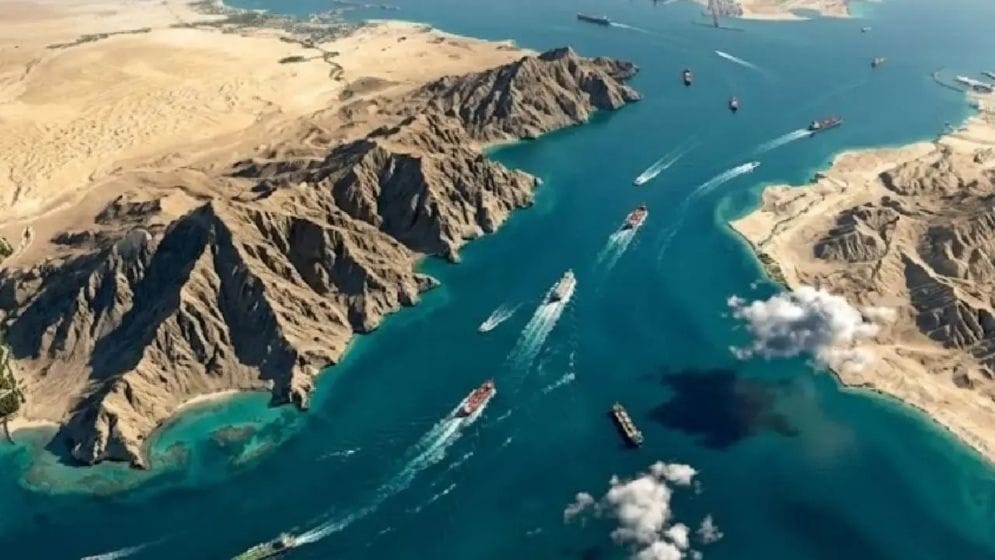
Iran and Oman are reportedly close to reaching an agreement to reopen the Strait of Hormuz, one of the world’s most strategic energy supply routes. If finalised, Tehran would assume significant control over ships entering the vital Persian Gulf waterway. The Strait has remained largely closed since the war began in February this year, and both countries have been negotiating a cooperative framework to manage maritime traffic.
Iran has stated that it will no longer allow the Strait of Hormuz to function as a completely free international waterway, as it did before the conflict. About one-fifth of the world’s oil shipments pass through the route. According to reports, Iran would oversee inbound vessels, while Oman would supervise outgoing traffic. The initial agreement could remain in force for 60 days. While the United States continues to support unrestricted navigation, Iran has proposed charging service fees for “maritime assistance and environmental protection” in accordance with international law.
However, Iranian sources have disputed US President Donald Trump’s assertion that the agreement would be concluded quickly. According to Reuters, Tehran believes that although broad policy agreement has been reached, several key conditions remain unresolved. An Iranian source said implementation would remain on hold until US sanctions are lifted, adding that the Strait cannot fully reopen while port-related sanctions remain in place.
Analysts also cite naval mine clearance, continuing sanctions, and coordination among shipping companies as major obstacles. They believe Washington may eventually adopt a more flexible approach because of domestic political pressure and the need to stabilise the global oil market. Reuters reported that the United States has “almost completely” exhausted its stock of long-range, high-precision missiles during the five-month conflict with Iran. The report said inventories of ATACMS and Precision Strike Missiles have reached critical levels.
Although President Trump has repeatedly threatened military action, analysts believe missile shortages and pressure from Persian Gulf partners have contributed to delaying a major strike. The White House rejected the report, stating that the United States possesses more weapons than any other nation and that defence contractors are producing missiles at record levels.
Meanwhile, international monitoring organisations confirmed two new attacks on commercial vessels near the strategically important Bab al-Mandeb Strait in the Red Sea. The incidents have heightened concerns over maritime security and global trade. As the Suez Canal links Asia and Europe, repeated attacks have prompted shipping companies to consider alternative routes, increasing transportation costs and threatening global supply chains.
Separately, Iran and Pakistan reaffirmed their commitment to raising bilateral trade to US$10 billion during the 10th session of the Pak-Iran Joint Trade Committee, held in Islamabad from August 3 to 5. Pakistan called for finalising the Pakistan-Iran Free Trade Agreement, while Iran described Pakistan as a long-term strategic trading partner. Both countries also agreed to strengthen road and rail connectivity and resume the Islamabad-Tehran-Istanbul freight train service.
Sources: Al Jazeera, Reuters, The Guardian, and Dawn