Iran Retaliates Against Jordan and UAE
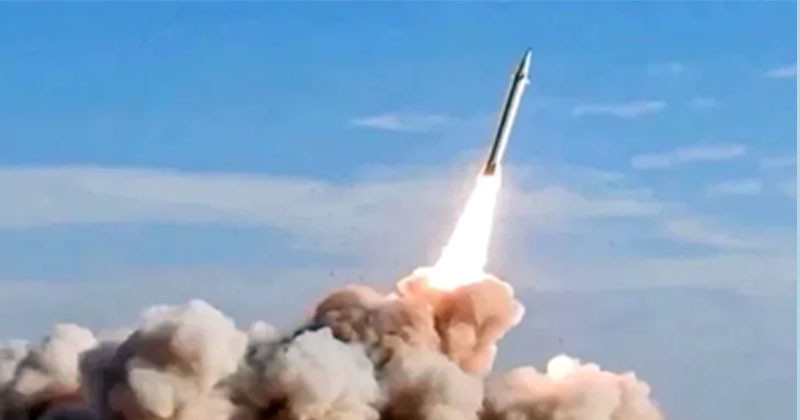
The Middle East crisis has taken a new and dangerous turn after the United States carried out an airstrike on Iran’s Lark Island in the Strait of Hormuz. Iran responded by targeting US military positions in Jordan and US-linked targets in the airspace of the United Arab Emirates (UAE). According to international sources, US Central Command (CENTCOM) targeted two rocket launchers belonging to Iran’s Islamic Revolutionary Guard Corps (IRGC) on Lark Island on Sunday night. The US Department of Defense said the launchers were being prepared for naval mining operations and attacks on commercial vessels in international waters.
CENTCOM said the strike was limited and precise and was intended to protect military personnel and maintain freedom of navigation. Tehran, however, described the attack as a “gross violation of sovereignty”. The IRGC said several Iranian military personnel and civilians were killed in the strike. Iran launched its response within hours. The IRGC carried out drone and medium-range ballistic missile attacks on US military positions in Jordan, including the King Hussein and Al Azraq bases, early the following morning. The Jordanian military said its air defenses intercepted at least eight Iranian missiles in its airspace.
The IRGC’s media department also said several drones were launched toward US helicopters and military positions at Minhad Air Base in the UAE. UAE military authorities denied direct damage to the base but said an Iranian drone had been intercepted over international waters. In an initial reaction, Iranian President Masoud Pezeshkian said, “Iran never wants war, but we will not remain silent in the face of any aggression. We will give a strong response to the aggressors.” The six-month-long US-Iran conflict has already created volatility in global oil markets. The latest escalation has also placed international efforts for peace talks in the Middle East at greater risk.
Cargo ship seized in Strait of Hormuz, MQ-9 drone reportedly shot down:
Iranian authorities have seized a bulk carrier accused of dumping burnt oil and industrial waste into the strategically important Strait of Hormuz, state media reported. Esmail Makizadeh, deputy head of the Ports and Maritime Department in Iran’s southern Hormozgan province, told state news agency IRNA, “Our experts and cleaning teams were sent to the scene after pictures and videos of the oil spill were published. The ship was seized after evidence of marine pollution was found.”
He said the vessel, which was carrying sugar, had discharged burnt oil, bilge water and liquid industrial waste into the sea. Iranian authorities did not disclose the ship’s flag or the nationality of its crew. Authorities said the affected seawater had been cleaned and that the vessel had been handed over to the judiciary for legal action. Meanwhile, the IRGC claimed that it had shot down a US MQ-9 Reaper drone over the Strait of Hormuz. According to the IRGC, its air-defense forces fired a missile at the drone early the same morning, causing it to fall into the Persian Gulf.
‘We never wanted conflict’: Mr. Pezeshkian
Iranian President Masoud Pezeshkian said Iran does not seek war or conflict, but alleged that some groups and circles in the United States want to prolong the fighting. According to Iran’s semi-official Fars News Agency,Mr. Pezeshkian made the remarks during a meeting with Indian Prime Minister Narendra Modi on the sidelines of the Shanghai Cooperation Organization (SCO) summit. Mr. Pezeshkian said Iran had fulfilled its commitments under various regional agreements, while accusing the United States of repeatedly violating its commitments and increasing instability.
He said, ‘We never welcome war. But the United States is showing a tendency to continue the war instead of being sincere in implementing the agreement.’ The two leaders also discussed regional security and geopolitical issues, including international shipping and maritime security in the Strait of Hormuz and developments involving Iran’s Chabahar Port.
Mr. Netanyahu a ‘poisonous snake’:
Iranian Foreign Minister Seyed Abbas Araghchi has described Israeli Prime Minister Benjamin Netanyahu as a “poisonous snake”, accusing him of influencing the US administration to wage war against Iran for his own interests. In a post on X, formerly known as Twitter,Mr. Araghchi alleged that Mr. Netanyahu had used the US media to influence Washington’s decision-making while presenting a different message to the international community. Mr. Araghchi said Mr. Netanyahu openly speaks with confidence about his influence when addressing Israelis in Hebrew, while praising US leadership when speaking in English internationally. His remarks have added to the political tensions surrounding the ongoing conflict.
Oil prices rise amid renewed tensions:
Global oil prices rose following the latest escalation between Iran and the United States. According to Reuters, Brent crude increased 2.8% to $90.60 a barrel in Asian trading on Monday. US West Texas Intermediate (WTI) crude also rose by about 2.5%. Despite the latest increase, the monthly averages for both Brent and WTI remained slightly lower in August. Market movements are being influenced not only by the conflict but also by broader supply and demand conditions.
Meanwhile, the United States is considering further economic pressure on Iran. US Treasury Secretary Scott Bessant said Washington could impose additional sanctions targeting Iran’s financial network. The US has also indicated plans to take action against more banks and financial institutions. Further sanctions could put additional pressure on Iran’s oil exports, foreign revenues and international financial transactions. Nevertheless, a prolonged military conflict and enhanced economic pressure may have more far-reaching implications for the world’s energy markets.
Sources: TASS, Tasnim, Al Jazeera and Reuters.