Italy Bans Burqa, Niqab in Schools, Limits Foreign Students to 30%
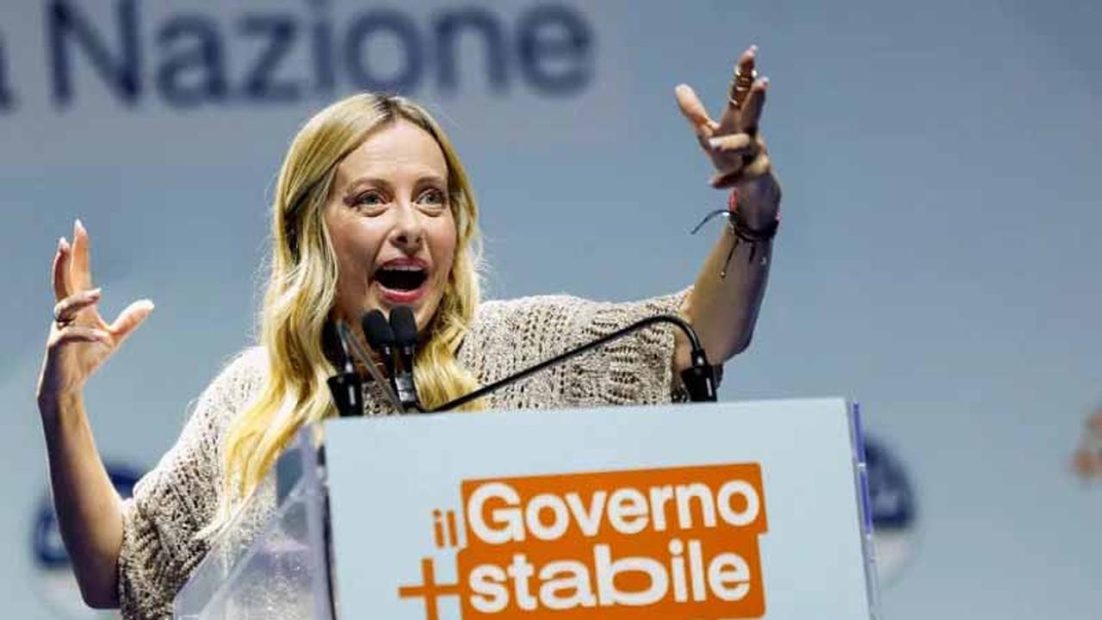
The government of Italian Prime Minister Giorgia Meloni has approved a ban on wearing burqas and niqabs in schools and a provision limiting the number of foreign students in certain classes to 30 percent. The measures will take effect under a new decree-law. Violations could result in fines of up to €1,000.
On Thursday (September 24), the Italian Cabinet approved the decree-law on school education and the integration of foreign students. The plan was first announced last Sunday (September 20) at a youth conference of Meloni’s political party, Brothers of Italy (FdI). A decree-law can take effect immediately, but it must be approved by Parliament within 60 days to become law.
In a message posted on X, Meloni said measures had been taken to limit to 30 percent the number of students in a class who lack sufficient proficiency in Italian, increase opportunities to learn the language and ban burqas and niqabs in schools. She said the measures would help students integrate rather than divide them and ensure equal opportunities in the classroom.
Under the new provisions, students will not be allowed to cover their faces while participating in curricular and extracurricular activities at school, except for specific health or safety reasons. If a minor violates the rule, the fine will be imposed on their parents or guardians. The fine could range from €200 to €1,000.
In addition, if a student has severe difficulties with Italian and this hinders their education or integration with classmates, their family will be provided with access to free Italian-language courses. Parents or guardians who fail to attend the courses could face fines ranging from €200 to €1,000.
The 30 percent limit on foreign students will not apply uniformly to all foreign students. At the primary level, the limit will apply to first-grade classes for students who do not hold Italian citizenship and were not born in Italy or did not receive at least two years of pre-primary education. At the secondary level, the limit will apply to first-grade classes for students who do not hold Italian citizenship and have not successfully studied in Italy’s national education system for at least three years.
However, political opposition parties and teachers’ organisations have criticised the government’s decision. They alleged that adequate consultation and necessary resources had not been ensured before implementing the new provisions. Some school principals have also questioned the feasibility of implementing the policy in areas with high concentrations of immigrants.
According to Italy’s Education Ministry, non-Italian citizens accounted for 11.2 percent of students in the country’s schools in the 2022–23 academic year. During the same period, 7.6 percent of classes had more than 30 percent foreign students.
Although the decree-law takes effect immediately, it must be approved by Parliament within 60 days. The process also requires the signature of President Sergio Mattarella.
Source: Al Jazeera