Khulna in the Master Plan for Development
Asafur Rahman Kajal, Khulna
From Farmer Cards and Family Cards to Major Development in the Southwest, Khulna Gets Special Government Attention
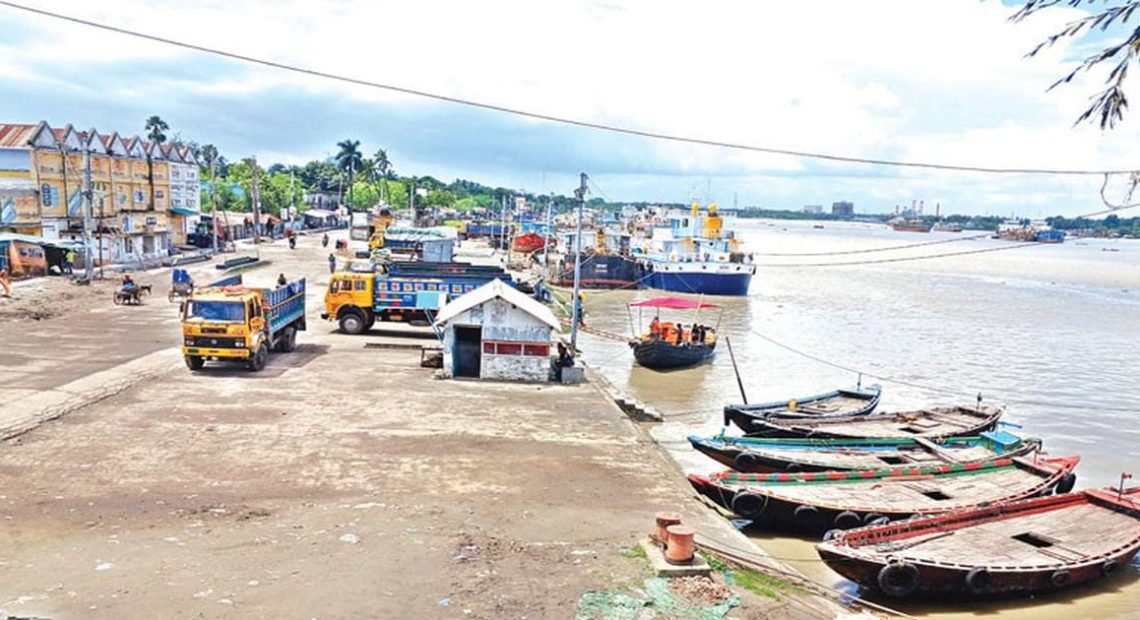
Khulna is the gateway to southwestern Bangladesh. Its economy is driven by industries and ports, while the region also has vast potential in agriculture, fisheries and coastal communities. Long-standing infrastructure constraints, climate risks, an employment crisis and poverty have held the region back. Now, hopes for a better future are gaining fresh momentum as Khulna is being prioritised under various government development initiatives.
The government is undertaking various programmes to develop the southwest and improve the living standards of extremely poor people. Khulna is being given priority in implementing many of these programmes. At the same time, initiatives are underway to formulate various action plans and master plans for the region’s long-term development. As a result, local people believe Khulna is receiving special attention in the government’s development plans.
After the BNP government came to power, it took steps to introduce Farmer Cards for farmers in line with its election pledge. In the first phase, nine unions in Khulna district were selected for the programme. Surveys have already been completed in two blocks of each union, while the survey of the third block is underway. Around 23,000 farmers in the nine selected unions will receive Farmer Cards in the first phase. Over the government’s five-year term, a total of 338,603 farmers in Khulna district will gradually become eligible for the cards.
The Farmer Card programme aims to deliver government assistance directly to farmers, reduce agricultural production costs, increase the use of modern farming technologies and ensure fair prices for farmers’ produce.
The first-phase selected unions are Naihati in Rupsa, Amirpur in Batiaghata, Gazirhat in Dighalia, Sadar in Phultala, Bhandarpara in Dumuria, Chhagladah in Terokhada, Sadar in Dacope, Haridhali in Paikgachha and Sadar in Koyra. A seven-member committee led by the upazila nirbahi officer is conducting surveys and verification to select eligible farmers. So far, the names of 18,479 farmers have been finalised and sent to banks. Initially, around 23,150 farmers were identified as eligible for the cards.
The Farmer Card is not merely an identification document; it will also provide direct financial assistance. Each cardholder will receive a government grant of Tk 2,500 annually. The money is expected to be disbursed through Janata Bank, Sonali Bank and Bangladesh Krishi Bank. According to the Department of Agricultural Extension, cardholders will have access to irrigation facilities at fair rates, agricultural training, farm machinery, pest-control advice, opportunities to sell agricultural produce, training on agricultural insurance, subsidies and incentives, loans and various agricultural inputs.
Md Towhidin Bhuiyan, additional deputy director of the Department of Agricultural Extension in Khulna, said farmers would receive the Farmer Cards through banks. The card can also be used as a debit card. He also reaffirmed the government’s decision to provide each farmer with an annual grant of Tk 2,500.
Earlier, the government’s Family Card programme for poor and low-income families was also launched in Khulna. On March 10, Family Cards were distributed to 4,158 of the 5,275 potential beneficiaries in the first phase in Ward 10 of Khulna City Corporation. The programme was also inaugurated experimentally at 14 locations across the country on the same day. It aims to bring extremely poor, poor and lower-income families under the social safety-net system. Officials concerned said beneficiaries were selected impartially by analysing 49 types of data on women through PM scoring.
The Family Card and Farmer Card are two of the key programmes included in the government’s election pledges. Their pilot and initial implementation in Khulna has created new hope among local people. However, their expectations go beyond financial assistance and social-security programmes. They want an integrated economic zone to be developed by harnessing Khulna’s long-standing potential. Khulna and the surrounding districts are rich in agriculture, fisheries, shrimp, industries, waterways, ports, tourism and natural resources. Yet infrastructure and connectivity limitations, inadequate industrialisation, limited employment opportunities and climate risks have prevented the region from fully realising this potential.
Therefore, the development of the southwest requires an integrated plan rather than a single project. Improving road and rail connectivity, keeping waterways operational, expanding economic activities around Mongla Port, creating opportunities for industrialisation, preserving and processing agricultural produce, modernising the fisheries and shrimp sectors, and creating sustainable employment for coastal communities are essential. There has long been a demand to bring all these elements under a unified development framework.
People in the coastal areas of Dacope, Koyra and Paikgachha in Khulna, Shyamnagar in Satkhira and Bagerhat live in a constant struggle with nature. Salinity, river erosion, cyclones, tidal surges and the effects of climate change repeatedly damage agriculture and livelihoods in these areas. Therefore, development plans for the southwest must focus not only on major infrastructure but also on protecting people’s lives and livelihoods. Climate-resilient agriculture, safe water, sustainable embankments, modern irrigation systems, proper management of fisheries resources and alternative employment opportunities could significantly improve living standards in coastal communities.
If programmes such as the Farmer Card are integrated into this broader plan, their benefits could extend further. Providing farmers with cash assistance alongside opportunities for production, marketing and risk management could make agriculture a major driver of the rural economy.
The development of Khulna does not mean the development of Khulna city alone. It is linked to the economic future of Bagerhat, Satkhira, Jashore and the wider southwestern region. If industrial and commercial activities expand around Mongla Port, economic zones and industrial establishments are developed, waterways are used more extensively and regional connectivity improves, Khulna could emerge as a major economic hub. Poor and low-income people could directly benefit from such development.
Local people believe Khulna’s prominent role in the government’s various development initiatives signals this potential. If welfare programmes such as the Farmer Card and Family Card are integrated with broader infrastructure and economic development plans, their impact will not remain limited to a few thousand or even hundreds of thousands of beneficiaries. Instead, they could bring positive changes to the economy of the entire region.
The people of Khulna are now waiting for that transformation. Their expectation is that development will not simply mean an increase in the number of projects, but that the benefits of those projects will also reach the homes of people at the grassroots.