

Kolkata Tops World’s Most Polluted Cities, Dhaka Ranks 7th
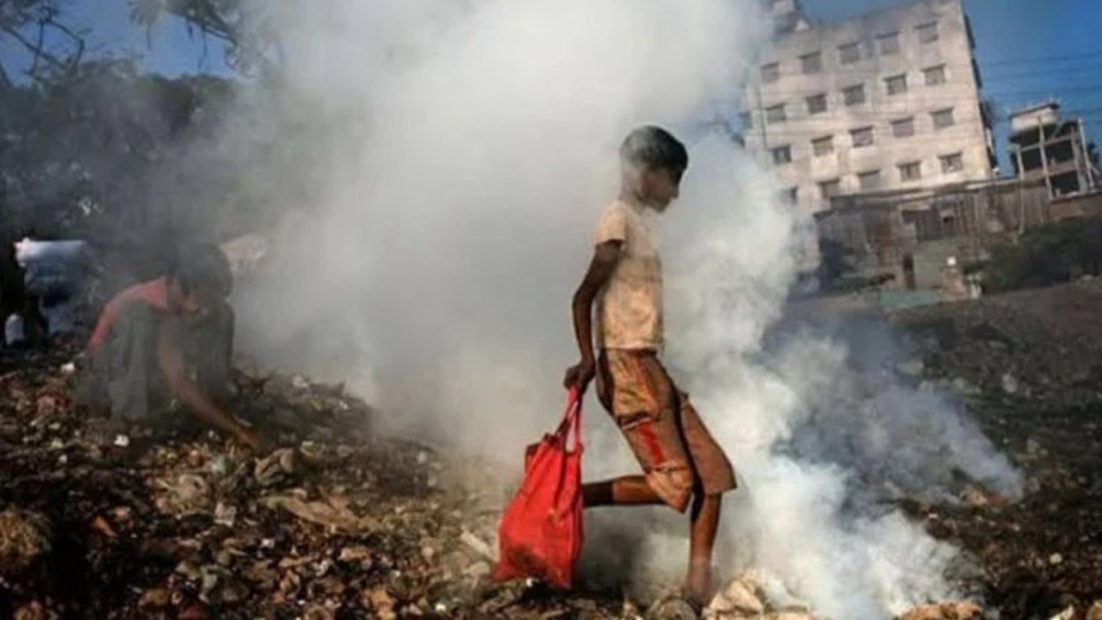
Kolkata has topped the list of the world’s most polluted cities, while Bangladesh’s capital Dhaka ranked seventh, according to IQAir’s real-time air quality index on Tuesday (September 29). Kolkata recorded an air quality score of 196, classified as “unhealthy.” Dhaka recorded a score of 159, also placing it in the “unhealthy” category.
The data came from the real-time index of IQAir, a Switzerland-based air quality monitoring organization. Singapore ranked second with a score of 175, followed by Kuala Lumpur in Malaysia with 172, Lahore in Pakistan with 167, and Doha in Qatar with 160. According to IQAir’s air quality index, a score of 0–50 is considered “good,” while 51–100 is classified as “moderate.” A score of 101–150 is considered “unhealthy for sensitive groups,” 151–200 “unhealthy,” 201–300 “very unhealthy,” and above 300 “hazardous.”
Air quality in Bangladesh is assessed based on several pollutants, including fine and coarse particulate matter (PM2.5 and PM10), nitrogen dioxide (NO₂), carbon monoxide (CO), sulfur dioxide (SO₂), and ozone (O₃). PM2.5 is a particular concern because these tiny particles can penetrate deep into the lungs and enter the bloodstream.
Several major sources have long been linked to Dhaka’s air pollution. World Bank research has found a strong connection between high pollution levels in Dhaka and construction activities, heavy traffic and brick kilns. PM2.5 concentrations in areas with extensive construction and traffic have been found to be significantly higher than the World Health Organization’s 24-hour guideline level.
According to the World Bank, vehicle emissions, construction dust and brick kilns are among the major sources of air pollution in Dhaka. Fine particles from these sources can remain in the air for long periods, exposing people in densely populated areas—especially children and other vulnerable groups—to higher levels of air pollution.