Major Coordination Crisis Stalls Dhaka’s Transport Ambitions
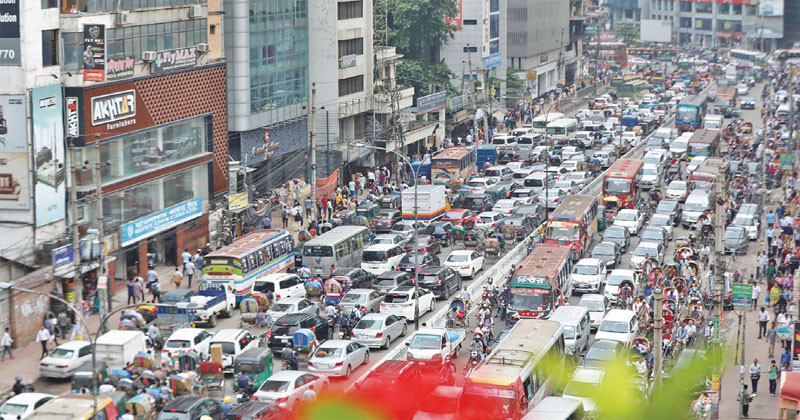
Coordination has emerged as the biggest challenge to implementing Dhaka’s long-term transport plans, as multiple government agencies remain responsible for different parts of the city’s transport system. The Bus Rapid Transit (BRT) project on the Gazipur-Airport route is an example of the difficulties in implementing major transport projects. The project was formally approved in 2012, with a target of introducing a dedicated 20.5-kilometre bus service between Gazipur and the airport. Its scheduled completion was initially set for 2016.
However, construction at the Gazipur depot began only in 2016. By August 2018, six years after the project was approved, physical progress stood at only 20 percent. The deadline and project cost were later revised several times. An Asian Development Bank document for 2022-23 set the revised completion date at December 2024 and the estimated cost at around Tk 4,268 crore. The project remains incomplete. Against this backdrop, the Dhaka Transport Coordination Authority (DTCA) has introduced a new Strategic Transport Plan (STP) for 2026-2045. The plan aims to bring Dhaka metropolitan area and its surrounding regions under an integrated public transport network.
The proposed network includes eight metro rail lines, two BRT lines, six expressways, three ring roads, eight radial roads and 21 multimodal transport hubs. The plan aims to expand the metro rail network to 268.5 kilometres by 2045. The main objective is to connect metro rail, BRT, buses, roads, railways and waterways into one integrated system rather than developing them separately. The DTCA, under the Ministry of Road Transport and Bridges, is the central coordinating body for the plan. Its legal responsibilities include preparing strategic transport plans for Dhaka and coordinating the work of different agencies.
The Road Transport and Highways Department is responsible for road transport policies and the development of national and major roads, BRT and mass rapid transit systems. Eight ministries and agencies are involved in implementing the broader transport plan. The Ministry of Road Transport and Bridges has the leading coordination role. Its agencies include the DTCA, Roads and Highways Department, Bangladesh Road Transport Authority, Bangladesh Road Transport Corporation and metro rail-related bodies. The Ministry of Railways is also important because an integrated transport system requires railways to connect with metro rail, buses and other modes. The secretary of the ministry and the director general of Bangladesh Railway are members of the DTCA governing council.
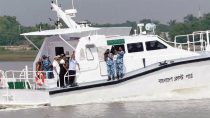
The Ministry of Shipping is responsible for integrating waterways with road and rail networks and developing river transport around Dhaka. The secretary of the ministry and the chairman of Bangladesh Inland Water Transport Authority are members of the DTCA board. Dhaka North and Dhaka South city corporations also have a major role. They are responsible for urban roads, sidewalks, pedestrian facilities, bus stops and local transport infrastructure. The secretary of the Local Government Division and the mayors of the two city corporations are members of the DTCA board. The Ministry of Home Affairs will oversee traffic management and enforcement through the Dhaka Metropolitan Police and other law enforcement agencies. Its responsibilities include traffic control, road safety, enforcement against illegal parking and encroachment, and coordination with new transport systems.
Rajdhani Unnayan Kartripakkha (RAJUK) is responsible for coordinating land-use and urban development planning with transport corridors. It will have to ensure planned development around transport hubs and connectivity between new residential and commercial areas. The RAJUK chairman is also a member of the DTCA board. The Ministry of Environment, Forest and Climate Change will deal with environmental impacts, air pollution and climate-resilient transport systems. The Ministry of Finance will have a key role in arranging the large amount of domestic and foreign funding required to implement the plan. Transport analysts say the success of the STP will depend largely on coordination among these agencies. A metro rail station, for example, must be connected with buses, railways, waterways and pedestrian facilities. If agencies implement individual projects without considering the wider network, the multimodal system will not work effectively.
Land-use and transport planning must also be integrated from the beginning. Transport infrastructure should be planned alongside new residential and commercial developments instead of being added after development takes place. Bus and public transport reform is another major challenge. Metro rail and expressways alone cannot solve congestion. An effective network of buses, walking routes, rickshaws and other feeder services is needed to connect passengers from stations to their final destinations. A former chief engineer of LGED said, “We have to rely on foreign donor agencies to build various physical infrastructures including roads. But due to our negligence and negligence, donor agencies are canceling projects.”
The World Bank recently cancelled $335.33 million, or 67 percent, of its $500 million loan for the Western Economic Corridor and Regional Enhancement Program (WECARE), citing slow implementation and other problems. The cancelled amount is equivalent to around Tk 4,124 crore, leaving $164.67 million available for the project. The World Bank had approved the loan in 2020 to improve road connectivity in Bangladesh’s western region. Project implementation was affected by delays, including changes in project leadership following the change of government in 2024.
Mr. Jay Pem, Director of the World Bank’s Bangladesh and Bhutan Department, told Sangbadhya that about $116 million of the approved $500 million loan had been disbursed over six years. He said the project had faced delays for several reasons, including the Covid-19 pandemic. A recent review examined project delays, contractor performance and environmental and social safeguards. “The Bangladesh government and the World Bank have jointly decided to restructure the project to complete the implementable works within the stipulated time. As a result, $335.33 million has been canceled,” he said.
A senior official of the Economic Relations Division said the World Bank is currently reallocating unused funds from slow-moving projects in different countries. Bangladesh has also seen funds cancelled from several slow projects. The cancelled funds from eight other projects have been allowed to be used in other sectors to address the energy crisis. The use of the cancelled WECARE funds is expected to be discussed at the next semi-annual meeting. Dr Hadiuzzaman, a professor of civil engineering at Bangladesh University of Engineering and Technology (BUET), said the lack of coordination between different transport modes is Dhaka’s biggest transport weakness. He said the initiative to integrate metro rail, BRT, buses, roads, railways and waterways under the new STP is timely. However, he stressed that metro rail and roads alone would not solve congestion.
According to him, multimodal hubs, feeder bus services, pedestrian routes, bicycle facilities and a common ticketing system should be developed so passengers can change between transport modes easily, quickly and at low cost. He also stressed the need to prioritise public transport over private cars. Effective coordination among agencies, clear priorities, phased financing and proper implementation and monitoring will be crucial to the success of the 2026-2045 transport plan.