Massive Investment Needed Without Delay
Bangladesh has got three more years to graduate from the list of Least Developed Countries (LDC). After graduating from LDC, the low interest loans and duty free benefits that Bangladesh now gets from various countries and donor agencies will stop or shrink. The country has not been able to gain the economic ability needed to graduate from LDC, through the time of the fascist Ms. Sheikh Hasina, the interim government and the present government.
So pushing back the time of graduation was always on the table. From the time of the interim government, steps were taken to push back the graduation deadline set for 2026. The present BNP government kept up that step. With more diplomatic activity, it managed to push the date to 2029. The UN General Assembly adopted the proposal unanimously at a plenary meeting on Thursday.
So Bangladesh is getting extra time to prepare. But economic analysts say the way out of the country’s present fragile economy, inflation, stalled investment and deep slump in business is quite hard. They say it is not easy for the government to gain the ability within this time frame.
After placing the first budget of the present government (2026 to 2027), Finance Minister Mr. Amir Khasru Mahmud Chowdhury said at the post budget press conference that it would take four years to fix the fragile economy. Taking this normally, it can be said that the chance of graduating within the three years Bangladesh has got is low. To graduate, GDP growth must rise to about 7 percent.
According to the figures given by the World Bank, the IMF and others, GDP growth this fiscal year may be between 3.2 and 4 percent. In the 2024 to 2025 fiscal year, under the interim government, the rate was 3.49 percent. So there is nothing to call progress in the country’s economy. It is walking backward instead.
It is said that the fascist Ms. Sheikh Hasina government turned the country’s economy into a bottomless basket through endless looting and money laundering, and that the interim government and the present BNP government inherited this basket. But the present government is now in its ninth month. Looking at the economy during this time, almost all indicators are going down.
People’s income is falling. Inflation, unemployment and price rises of daily necessities are growing. Factories are closing one after another. Production and import export trade are stalled. There is a severe crisis of gas, electricity and fuel. Even small shops and markets are closing down. Ordinary people’s lives have fallen into deep crisis because of the economic crisis.
We cannot deny the negative effects of the fragile economy inherited, and of the shaking of the global economy because of the Iran war, for this sad economic situation. But there are questions about how much the government is doing the urgent steps needed to end the immediate and ongoing crisis of ordinary people. Observers say the government has almost no economic success in nine months.
Also, developing countries like ours are not at ease during the global slump. They are taking various steps to get out of the slump. Countries of South Asia such as India, Nepal and Sri Lanka have gained some success in some areas by taking planned steps. We do not see success in any area. Instead, everything is going from bad to worse. Many say the situation is worse than under the Mr. Muhammad Yunus government.
The United States and European countries are also in an economic slump. Because of hardship in living, people in countries such as France and Italy are carrying out large protests and violent movements against the government. In India, the movement against the Modi government also has unemployment and the economic slump as a main cause. The cause behind these movements in country after country is not a big political reason. It is the economic crisis.
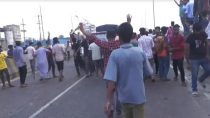
The people of our country are showing great pain and patience, giving the government time to see what it does. If the economic situation is not fixed quickly, it will not take long for the dam of their patience to break. Movements and rallies on this have already started from the opposition parties. Warnings are also being given to the government to improve the economic situation along with the law and order situation.
If ordinary people in need and hardship join their movement, the government will fall into great trouble. The leaders and workers of the fallen and banned Awami League will take this chance. There is doubt how well the government can handle it then. It is needless to say that the only tool to stop the issues of the opposition’s anti government politics, and to get political stability, is economic stability. It is to keep ordinary people at ease. The reality is that they are not at ease. This is very alarming for the government.
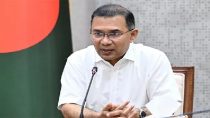
Prime Minister Mr. Tarique Rahman returned home yesterday after a four day visit to Japan. During this visit, Japan promised about 1 trillion Japanese yen (about 6.30 to 6.35 billion US dollars) of private investment in Bangladesh over the next five years. This may create about 200,000 new jobs in Bangladesh. But bringing the promised investment from Japan is the biggest challenge.
Earlier, many agreements, loan agreements and understandings were made with Japan during the time of the autocrat Ms. Sheikh Hasina and the interim government head Mr. Muhammad Yunus. These were not carried out. These promises got stuck because of various problems, from bureaucratic complications to others.
Soon after Mr. Muhammad Yunus took charge of the interim government, various donor agencies, including the United Nations, the United States, Saudi Arabia and the European Union, promised millions and millions of dollars of help to rebuild the fragile economy. People of the country saw that not a single taka of the promised money came, because no effort was made.
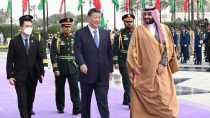
Prime Minister Mr. Tarique Rahman visited China, including Malaysia, from 21 to 26 June this year. Benefits have started to come from the Malaysia visit. But his visit to China was historic. The way Chinese President Mr. Xi Jinping remembered Mr. Tarique Rahman’s father, Shaheed President Mr. Ziaur Rahman, and his mother, the undisputed leader Begum Khaleda Zia, and welcomed him warmly was rare in the history of Bangladesh.
During this visit by Prime Minister Mr. Tarique Rahman, China gave a “blank cheque” for huge investment and all kinds of economic help in Bangladesh. It is needless to say that China is Bangladesh’s top development partner and takes part in various areas, including infrastructure, technology and the economy. China is now the only big investor country in the world.
It is investing in countries from the developed world to South Asia and Africa. Countries have also turned towards China. The people of Bangladesh also strongly support China. They want Bangladesh to take Chinese investment and all kinds of cooperation. During Prime Minister Mr. Tarique Rahman’s visit to China, China proposed a China Myanmar Bangladesh economic corridor.
A Chinese economic zone has been built in Anwara, Chattogram, centred on it. If this corridor is made, Bangladesh will become the centre of communication and trade for South East Asia and other regions. A door of endless possibility will open.
So economists say that in the three years Bangladesh has got to graduate from LDC, the more Chinese investment it can bring, the faster it can get out of the economic crisis. Besides, Bangladesh has no other real option for now. Analysts say that although the United States claims to be a super power, it is no longer in that state. It has become a declining power. It can no longer pull any country up, and it will not be able to. Instead, it is now begging China for help.
So for the time Bangladesh has got to graduate from LDC, Chinese investment will become very important.
We had the possibility of graduating from LDC. We could not use that possibility. We had to push the date back again and again. This means past governments could not move the economy forward and improve it to graduate from this list. This challenge has now fallen on the present government. The sad thing is that, even in its ninth month, there is no good news on investment so far. It has not been able to bring investment.
The two big pillars of export trade, garments and manpower, are also not in very good shape. Because of the economic crisis, garment buyer countries have cut orders in Bangladesh and in some cases cancelled them. Because of the war, many expatriate workers in various Middle Eastern countries are losing jobs and returning home. If this war lasts long, manpower export will fall into a terrible crisis. Remittance will fall. This will cause a big shock to the economy.
In this situation, the government must make a quick plan and carry it out to overcome the economic crisis. It must make strong efforts to raise international and domestic investment. It must raise jobs and people’s income and create a free flow in business and trade. The investment promised from the countries Prime Minister Mr. Tarique Rahman visited must be brought home as soon as possible and in whatever way possible. There is no alternative if the country’s economy is to stand on a strong base.