Mega plan to boost investment and development
- New LNG Terminal, Second Refinery, Laldia Bay Terminal,
- Six Lane Dhaka Chattogram Highway, Monorail, Satellite City
Rafiqul Islam Selim
The government has built a huge development and investment plan around the Chattogram region. The goal is to raise the country’s economy to one trillion dollars. China is investing in a Chinese Economic Zone in Anwara. The same area will host a Korean EPZ. Mirsarai will get the country’s largest national economic zone. A proposed China Myanmar Bangladesh economic corridor adds to this bright picture.
To support these plans, the government is building major projects in energy, communication, housing, tourism, and port facilities. Once completed, these short, medium, and long term projects will turn the region into South Asia’s logistics hub. This industrial growth will help fulfill Prime Minister Mr. Tarique Rahman’s promise of a trillion dollar economy. It will also create jobs for millions of people and change the lives of common citizens.
After the February 12 election, Prime Minister Mr. Tarique Rahman focused on rebuilding an economy weakened by seventeen years of what officials call fascist misrule. He pushed for new factories built with local and foreign investment to create jobs for millions, as promised during the campaign. As part of this effort, his government cleared all obstacles for the proposed Chinese economic and industrial zone in Anwara and started construction there.
Officials expect factories funded by Chinese investment to open within a year, creating jobs for hundreds of thousands of people. The Anwara zone alone is expected to draw about one and a half billion dollars in investment. Once the Mirsarai special economic zone becomes fully operational, it could bring in twenty to twenty nine billion dollars in local and foreign investment. It may create jobs for four to five hundred thousand people.
If the proposed economic corridor is also completed, the whole region will become a hub for development, investment, and logistics. To use this opportunity well, the government has taken up mega projects to secure energy, communication, and port facilities.
The Chattogram Cluster Master Plan
Government sources say the country aims to reach a one trillion dollar economy by 2034. To meet this goal, a strategic outline for July 2026 to June 2031 places the port city and commercial capital Chattogram at the center of major infrastructure change. The government is officially naming Chattogram the commercial capital of the country.
Planners are preparing an integrated Chattogram Cluster Master Plan. Over the next five years, this plan includes the Laldia container terminal, the Bay Terminal, a six lane Dhaka Chattogram highway, and a four lane Chattogram Cox’s Bazar highway running through the Karnaphuli tunnel to Matarbari. It also includes a monorail to ease traffic and a rail cum road bridge at Kalurghat.
The plan further covers the country’s third LNG terminal at Kutubdia in Moheshkhali, funded by Chinese investment. It includes starting the second unit of Eastern Refinery and building a satellite city in Anwara and other parts of south Chattogram.
The plan also proposes an Integrated Growth Network Development program, connecting Chattogram and other major economic corridors across the country. This outline comes from the General Economics Division of the Planning Commission. The full plan targets about eighty billion dollars, roughly ten lakh crore taka, in total investment.
Of this amount, the first phase covers the next five years, from fiscal year 2027 to 2031. It targets around forty billion dollars, or five lakh crore taka, in short and medium term investment. The government does not want to rely only on its own budget for this huge funding need.
For core infrastructure, the government plans to use public funding and guarantees. A large part of the projects will run through public private partnerships, concessional foreign loans, land value fees, green Bangladesh bonds, and municipal bonds.
Securing Energy Supply
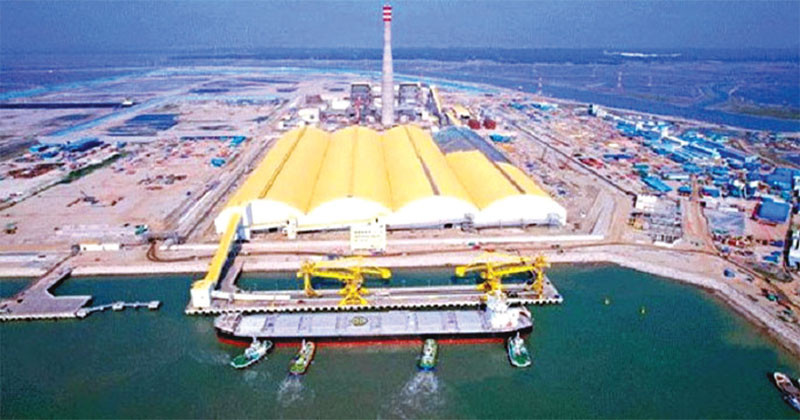
Energy shortage remains the biggest obstacle to setting up new factories with local and foreign investment. To fix this, the government has set two, five, and ten year plans to secure energy supply. By 2028, the government plans to build the country’s third LNG terminal at Kutubdia in Moheshkhali, with a capacity of six hundred to seven hundred fifty million cubic feet.
This terminal will be built with Chinese investment through China National Energy Engineering and Construction Limited (CNEEC). The government expects to give final approval to this proposal soon. Officials are also studying two more LNG terminals at Mongla, Payra port, or another suitable site in the southern region.
To ease the gas shortage, workers have started digging one hundred fifty new gas wells across the country. Today, a new well will add twelve million cubic feet of gas to the national grid. The state owned Eastern Refinery has also begun work on its second unit.
This refinery project costs forty three thousand crore taka. The Islamic Development Bank has already signed a one billion dollar loan agreement for it. Once this second refinery starts by 2029, it will refine an extra thirty to forty five lakh metric tons of crude oil each year, more than double the current capacity.
As a short term step against the energy crisis, the government is focusing on LNG imports. The uncertainty around LNG supply that lasted about two months from July has now ended. Mr. Rafiqul Islam, the newly appointed chairman of the Bangladesh Petroleum Corporation, said the country will not face any fuel import crisis until December.
The government has also started exploring oil and gas in the sea. Between fiscal years 2027 and 2031, the Moheshkhali Matarbari Energy Security Program will build LNG terminals, boost power generation, strengthen the grid, and set up smart substations.
Expanding Port Facilities
New factories built with local and foreign investment will multiply import and export activity. This will make it urgent to expand port facilities. The government has taken several steps to meet this need.
Construction of the Matarbari deep sea port is moving fast, with a target to open it by 2029. The Japan International Cooperation Agency is giving financial and technical support for this port. Once open, it will allow large ships with a capacity of eight thousand two hundred TEUs and one lakh DWT to dock there, making it a key transit port for South Asia.
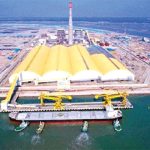
Work to expand Chattogram Port is also underway. A leading global container terminal operator will run the new Laldia Terminal, and construction has already begun. This terminal, built on forty nine point one five acres of land along the Karnaphuli river at Patenga, will draw five hundred fifty million dollars in investment.
This makes it one of the largest European foreign direct investments in the country’s history. Once construction finishes in 2029, ships carrying up to six thousand TEUs will be able to dock at this terminal. This will raise the port’s capacity by eight lakh TEUs, or forty four percent.
The government has also taken steps to build the Bay Terminal, which will double the port’s overall capacity. To secure energy supply, officials have proposed a two hundred ninety five kilometer gas pipeline between Moheshkhali and Bakhrabad. Cox’s Bazar airport has already been upgraded to international standard.
The government also plans to turn Chattogram airport into a full passenger and logistics hub, complete with a cargo village.
Road Infrastructure
To use the investment opportunity fully, the government has taken up mega road projects. With Chinese financial help, Asia’s largest road tunnel under the Karnaphuli river has already opened. To make travel easier between this tunnel, the Moheshkhali energy hub, and the Matarbari deep sea port, the government is widening the Chattogram Cox’s Bazar highway to four lanes.
The Dhaka Chattogram highway, the country’s main economic route, will be widened to six lanes. With the proposed China Myanmar Bangladesh economic corridor in view, the government plans major communication upgrades across this region. Construction has begun on an eleven thousand five hundred sixty crore taka rail cum road bridge at Kalurghat.
The government also plans a marine drive along the coast from Teknaf through Mirsarai to Bhola. It has taken steps to build a double track railway between Laksam and Chattogram. To reduce traffic jams, planners will study the feasibility of a monorail around Chattogram city.
The country’s second largest elevated expressway has already opened in Chattogram city. A city outer ring road along the coast from Patenga to Fouzdarhat has also opened. Another ring road along the Karnaphuli river, running from Karnaphuli bridge to Kalurghat bridge, is now in its final stage of construction.
Housing and Tourism
The government plans to build a satellite city across the Karnaphuli river, centered on the Karnaphuli tunnel and the Anwara industrial zone. The Chattogram Development Authority has proposed planned housing in south Chattogram, modeled as a twin city in its master plan.
To use the investment opportunity in tourism, the government has taken up new projects. Near the Karnaphuli tunnel, along the coast, a star rated resort has been built at a cost of about five hundred crore taka. The Tourism Corporation is also building a tourism complex in Anwara.
The government plans to develop Patenga sea beach, Parki beach, and Guliakhali beach in Sitakunda into international standard tourist spots. To reduce the number of people traveling abroad for medical treatment, the government plans to build an integrated Medical and Wellness Hub across the Chattogram Cox’s Bazar region.
Between fiscal years 2028 and 2031, this project will include a tertiary hospital, trauma and emergency care, and a digital health platform. To fix Chattogram city’s major waterlogging problem, the government is also starting an Urban Waterlogging and Flood Drainage Management Program.