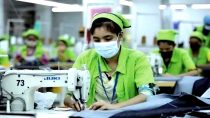
Minimum Wage Dispute for Garment Workers Settled

The minimum wage for workers in the country’s garment sector has finally been set at Tk 17,000. Following several days of discussions and negotiations among representatives of workers, employers and the wage board, the new wage structure was determined through a vote among wage board members last Tuesday. As a result, the minimum wage for garment factory workers in Grade 4 has been raised from Tk 12,500 to Tk 17,000. This decision could have been reached much earlier through discussions and negotiations among employers, workers and the wage board. However, amid the country’s energy crisis and adverse economic realities, garment workers were brought onto the streets rather abruptly, primarily with the aim of destroying the prospects and market of this sector. The fallen Awami League and Indian agents were actively involved in the recent labour unrest, sabotage, arson and destructive activities in the garment sector. Their objective is to push this country’s leading sector for investment, employment and export trade towards anarchy, disorder and paralysis through sabotage. Before the country’s independence in 1971, jute and jute products were Bangladesh’s principal export sector. After independence, corruption, plundering, labour unrest and sabotage in the state-owned jute sector led to its destruction. As major jute mills in Bangladesh shut down amid losses, the country’s jute market shifted in India’s favour. While Bangladesh’s jute mills were closing, new mills were being established along the Hooghly River in West Bengal through domestic and foreign investment.
Bangladesh ranks second only to China in the global competitive market for readymade garments. Its closest competitors include India, Vietnam, Pakistan and Sri Lanka. However, India’s keen interest in Bangladesh’s export trade has created an unusual atmosphere beyond normal competition. Evidence has emerged linking activists of the banned Awami League and Chhatra League to recent sabotage involving labour unrest, vandalism at factories, arson and blockades of roads and highways, disrupting production and public life. It is readily apparent that top Awami League leaders, while in hiding in India, are directing, provoking and instigating party activists to engage in sabotage in the garment sector. Among the two sectors that serve as golden-egg-laying geese for the country’s investment, employment, remittances and overall economy, the garment sector is one, while overseas employment is the other. The readymade garment sector has made an extraordinary contribution to women’s employment and reducing socio-economic inequality. Through the implementation of a blueprint to destroy this sector, Indian agents and the Awami fascist clique seek to push the country towards a severe catastrophe. Sheikh Hasina’s utopian message about returning to the country, attempts by the Awami League to regain ground in Gopalganj and elsewhere, and efforts to create sabotage and instability in the garment sector may all be interconnected.
In an export-oriented industry where the interests of employers and workers complement each other, it is impossible for either side to achieve its desired goals without the other. Who are those claiming wage increases while allegedly seeking to burn down their own factories and paralyse public life by blocking roads and highways? In whose interests, and at whose instructions, are they carrying out such sabotage? It has become imperative to uncover the facts. Such activities by purported garment workers are not new. However, the recent pattern of sabotage in the name of labour movements has been abnormal and undesirable. At a time when the war in the Middle East and the rampant looting and money laundering by the ousted and fugitive fascist regime have raised concerns over major crises in the country’s electricity, energy and production systems, the sudden incidents of labour unrest and sabotage, seemingly out of nowhere, were part of a conspiracy by anti-national forces.
In any case, amid labour dissatisfaction over wages, the closure of hundreds of garment factories, instability and insecurity, and fears that Western buyers may cancel orders, reaching an agreement on the minimum wage for garment workers at a level between the proposals of workers and employers may be considered a major achievement. Even while a joint meeting of employers, workers and the wage board was underway last Tuesday, workers at several factories in Gazipur were engaged in clashes over demands for Tk 30,000 in wages, prompting authorities to declare holidays at 70 factories. With an agreement finally reached on the minimum wage, it is reasonable to hope that peace, stability and normal productivity will return to the garment industry.
However, conspiracies by anti-state forces are unlikely to cease. They may again attempt to create disorder and sabotage in the garment sector or elsewhere, disrupting the country’s stability and progress. Factory authorities, intelligence agencies, law enforcement agencies and labour union leaders must maintain necessary vigilance and remain alert. Organisations such as BGMEA and BKMEA should take appropriate awareness-building initiatives regarding the activities of foreign agents posing as workers and accomplices of the fascist regime. Ensuring investment and employment security is just as important as guaranteeing workers fair wages for their labour. Following the determination of the minimum wage at an increase of nearly 36 per cent, it is hoped that peace and security will return to garment factories in Gazipur, Ashulia, Narayanganj and Narsingdi.