Mother Hilsa Sold Openly in Mehendiganj as Locals Call Government Crackdown a ‘Deception’
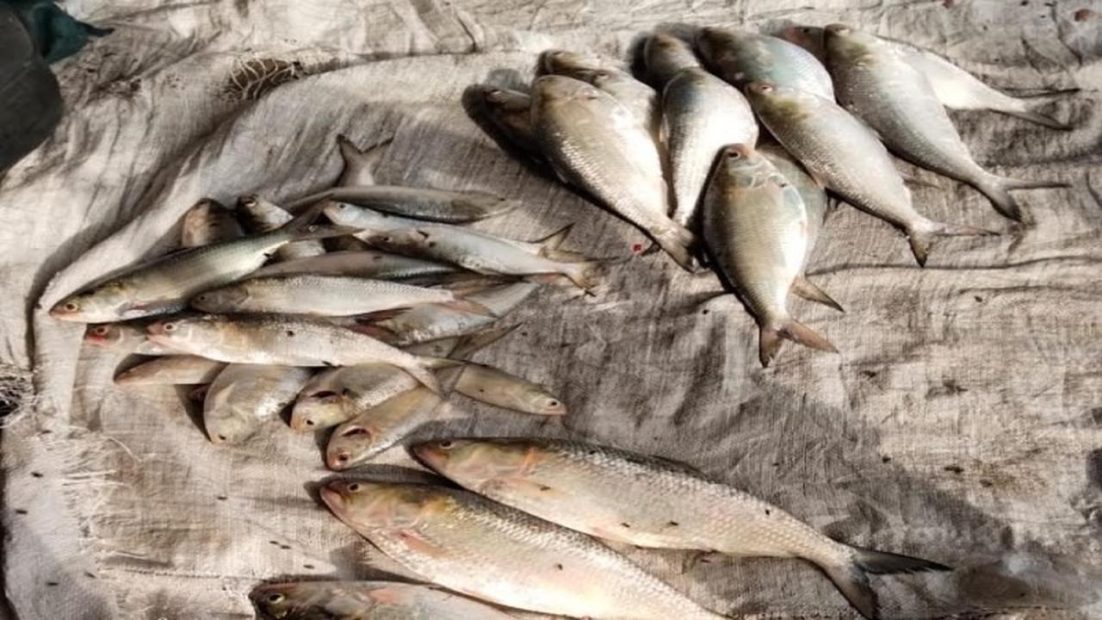
Tonnes of mother hilsa are being sold openly in Mehendiganj, while administrative action appears limited to cameras and formalities, locals allege. Officials are reportedly using the area’s location near a district border as an excuse for their inaction. Meanwhile, the upazila fisheries officer has not been answering journalists’ calls for seven days.
Despite the government’s fishing ban and announcement of strict operations to protect mother hilsa, the situation in Mehendiganj upazila of Barishal presents a different picture. Hilsa fishing continues freely at various points, including the Meghna River.
The open sale of tonnes of mother hilsa at different river landing stations has sparked strong criticism of the administration among concerned residents and affected buyers. Many locals have described the campaign as a “deception”, “ridiculous” and a “cat-and-mouse game” between the administration and dishonest groups.
Over the past seven days, journalists visited several localities and riverbanks, including Burir Pol, both sides of Kaliganj Bridge, areas near markets, Aliganj ferry terminal, the northern char of Char Ekriya, Majherchar, Bouduba, Nalbunia in Darir Char Khajuria, Rahman’s Hat in Joynagar, Lal Kharabad, the riverbank near Barirder Kona in Chanpur, Shuknakati, Char Gopalpur, Maldip Char in Bhasanchar, Baghorja, Alimabad and Sreepur. They observed widespread trading in mother hilsa in these areas.
Open sale of banned fish
Locals allege that fishermen and wholesalers openly sell tonnes of banned mother hilsa to retail buyers along both banks of the canal, from Kaliganj Mosque Ghat to the sawmill area in Lalganj. However, they say there is no visible administrative action during these sales.
Problems arise when ordinary people buy a few pairs of the prized silver fish and head home. Teams from the river police and local police then seize the fish they have purchased. According to allegations, authorities target ordinary buyers on their way home, even though they were not involved in catching or transporting the fish from the river or landing stations.
Angry buyers said fishermen continued catching hilsa in the Meghna River without obstruction, while wholesalers were also allowed to sell the fish freely. They alleged that the administration launched only token operations after journalists intervened and published reports. As a result, ordinary men and women were suffering serious losses on roads and along the way home.
Several women reportedly had fish worth thousands of taka seized. However, many refused to speak on camera, fearing embarrassment and social stigma. Women were noticeably more numerous than men among the buyers at the locations where the allegations were reported.
Crores of taka in trade, with a different picture in Gobindapur
The situation at Fish Landing Station No. 8 and in Gobindapur is reportedly different. Sources allege that more than 100 wholesalers from Noakhali and Lakshmipur, with the support of some dishonest individuals from Mehendiganj, are involved in a thriving mother hilsa trade worth crores of taka every day.
No one seems to be watching
Journalists visited Lalganj, Hajirhat and areas around Chikon Khal in South Ulania Union and found evidence supporting the allegations. They also sent several video clips to senior Fisheries Department officials, the Mehendiganj Upazila Nirbahi Officer (UNO) and other officials involved in the enforcement operations. However, no strong or immediate action was observed, according to the report.
Locals alleged that officials carried out token operations at night, after the fish trade had already ended. When Daily Inqilab’s correspondent drew the matter to the attention of Mehendiganj UNO Riazur Rahman, he said, “We are aware of the matter. However, the fish landing station in Gobindapur is in a remote area, and conducting an operation there is extremely risky because it is located along the border between two districts.”
District Fisheries Officer Dr Hadiuzzaman said, “Inform the UNO of Mehendiganj and the upazila fisheries officer about the problems. I have told them.”
Journalists said they had tried to contact Upazila Fisheries Officer Saiful Islam for three to four days, but his official Grameenphone number was switched off. He did not answer calls to his personal number either. At around 10am on Tuesday, journalists again called the UNO to seek his comments on why the fisheries officer could not be reached and on the alleged widespread failure of the mother hilsa protection campaign. The UNO did not answer the call.
Locals questioned whose interests the government ban and the costly enforcement campaign served if the administration remained inactive, citing the risks and complications of operating in a border area. They demanded an end to token operations and called for action against smuggling networks and wholesale syndicates. Without such action, they warned, the government’s efforts to protect mother hilsa would remain confined to paper.
Locals also fear that the campaign will fail if enforcement continues as a “50-50” cat-and-mouse game, ultimately leading to the destruction of the silver hilsa. The administration’s lax operations have drawn widespread criticism, from tea stalls to other public places across Hizla and Mehendiganj.