Muslim Candidates Make History in the U.S. Amid Rising Religious Polarization
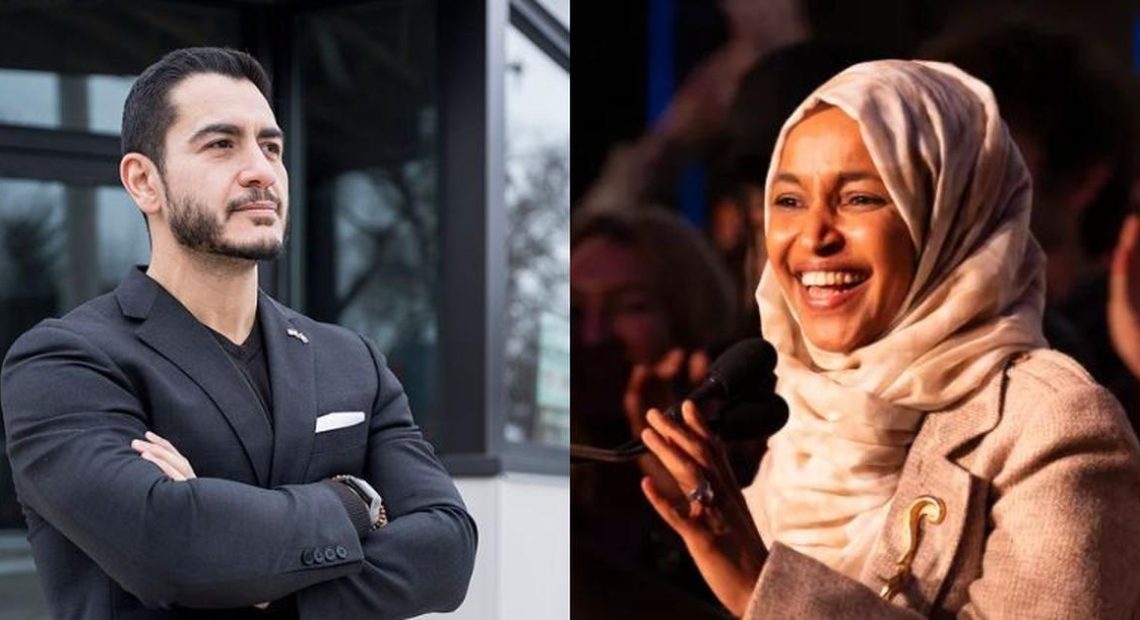
In the post-9/11 political climate of the United States, Muslim candidates have often faced the challenge of proving their political loyalty and acceptability. The challenge becomes greater when they openly criticize Israeli policies and the ongoing conflict in Gaza. However, U.S. Representative Ilhan Omar and Egyptian-American physician and former Detroit Health Director Dr. Abdul El-Sayed have broken through these barriers and made history.
Ahead of the upcoming midterm elections, the ruling Republican Party has been accused of fueling religious polarization and anti-Muslim sentiment. On Tuesday, President Donald Trump described Democratic candidates as “jihadists.” His remarks came shortly after Dr. Abdul El-Sayed won the Democratic primary in Michigan. President Trump later targeted Dr. El-Sayed in several Truth Social posts, accusing the candidates of trying to take over ordinary Americans’ homes and property. He had also previously called Dr. El-Sayed anti-Semitic and claimed his political rise would bring “crime, destruction and shame” to the country.
Other Republican leaders also attacked Dr. El-Sayed. South Carolina Representative Nancy Mace described Muslims holding public office as “Trojan horses” and threats to national security. Alabama Senator Tommy Tuberville called Dr. El-Sayed a “terrorist” and a “radical Islamist.”
Despite such attacks, U.S. Representative Ilhan Omar secured a landslide victory in Minnesota’s 5th Congressional District primary, receiving more than 80 percent of the vote. A Somali-born former refugee, Representative Omar was first elected to the U.S. House in 2019. She is one of the first two Muslim women elected to Congress and the first Somali-American member of the House. She is also a prominent figure in the Democratic Party’s progressive “Squad” and a strong critic of U.S. policies toward Israel.
Meanwhile, in Michigan’s Democratic primary on August 4, Dr. Abdul El-Sayed defeated Representative Haley Stevens to secure the Democratic nomination for the U.S. Senate. His victory marked a historic milestone in his bid to become the first Muslim U.S. senator.
The pro-Israel lobbying group AIPAC and allied organizations reportedly spent around $30 million to defeat Dr. El-Sayed, while outside groups spent about $50 million supporting Representative Stevens. In the final five weeks, television advertising alone cost $26.9 million for Representative Stevens, compared with $2.1 million for Dr. El-Sayed. Despite the huge financial advantage and campaign efforts against him, Michigan Democratic voters chose Dr. El-Sayed.
Muslim lawmakers such as Representative Ilhan Omar, Representative Rashida Tlaib and Representative André Carson already serve in the House, but no Muslim has ever served in the 100-member U.S. Senate. Senators represent entire states and play a major role in national decision-making and foreign policy.
Muslim political leaders were frequently judged by standards of “loyalty” and “security” after 9/11, particularly when they supported Palestine or criticized Israel. Against this background, the victories of Representative Omar and Dr. El-Sayed indicate a changing political environment in the United States.
If Dr. El-Sayed wins the November general election, he will become the first Muslim U.S. senator in American history. His victory, along with the growing presence of Muslim lawmakers, reflects the increasing political influence and representation of Muslim Americans.
At a recent roundtable discussion, Representative Rashida Tlaib said nearly 200 Muslims had been elected to various political positions across the United States since she and Representative Omar entered Congress in 2019. She said these achievements had encouraged people to embrace their identities openly and proudly.
Representative Omar said Muslim candidates were previously advised to hide or downplay their religious identity, but that attitude is changing. Young Muslim candidates are now increasingly able to win elections while maintaining their identities.
Dr. El-Sayed said that when Muslim candidates create new paths, they open doors not only for Muslims but also for candidates from other ethnic and religious backgrounds. Their growing political role marks a new chapter for communities whose voices were previously marginalized.